
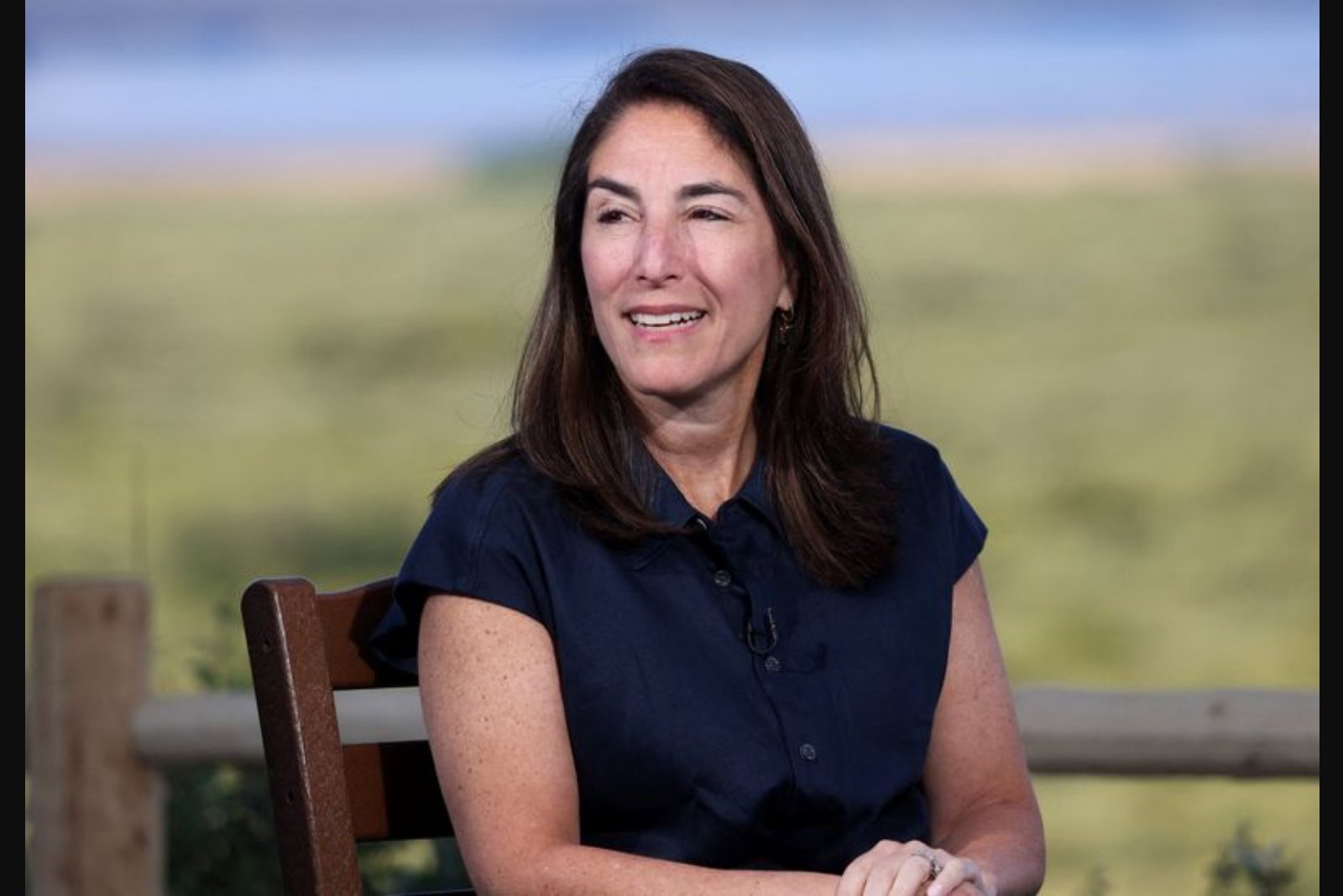
Summary: Federal Reserve Bank of Cleveland President Beth Hammack said in prepared remarks in Columbus, Ohio, that the U.S. central bank does not face an urgent need to change the current stance of interest rates this year and that policymakers could remain on hold for an extended period as they assess incoming data.
Speaking before the Ohio Bankers League, Hammack described the outlook for economic activity as "cautiously optimistic" and indicated a preference for patience in monetary policy. In her prepared text, she said, "we could be on hold for quite some time" with respect to the Fed's target range for the federal funds rate.
Hammack elaborated on that stance, saying, "I believe we are in a good position to keep the funds rate at this level and see how things play out" and that monetary policy was most likely to rest near a setting that neither constrains nor stimulates the economy. She advocated for avoiding short-term tinkering with the funds rate, stating, "Rather than trying to fine tune the funds rate, I’d prefer to err on the side of patience as we assess the impact of recent rate reductions and monitor how the economy performs." She added that maintaining a steady funds rate would be consistent with "positive economic developments."
Hammack, who holds a vote on the Federal Open Market Committee this year, said she supported the Fed's decision at the end of January to hold the federal funds target range steady at 3.5% to 3.75%. The Fed reduced its target by a cumulative 75 basis points last year as it sought to support a softening labor market while retaining enough policy restraint to push inflation back toward its 2% objective, which it has exceeded in recent years.
On the topic of inflation, Hammack reiterated concerns. She said that while the economic backdrop looks positive, inflation remains "too high" and that it was important for price pressures to ease amid a risk they could remain around 3% over the year. She has been cautious about cutting rates given the state of inflation dynamics.
Hammack noted that Fed officials have penciled in rate cuts for the year but have offered little specificity about timing in recent remarks. She also observed that the prospect of rate cuts could reemerge as an issue if Kevin Warsh is confirmed to succeed Jerome Powell as Fed chair when the current chair's term ends in May, and she referenced pressure from President Donald Trump for more aggressive easing, noting that he has said a desire for aggressive easing would be a key criterion for any Fed leader.
On growth and hiring, Hammack suggested some forces should support expansion. "Growth this year should get a boost from easier financial conditions, recent interest rate reductions, and fiscal support, among other factors," she said. Regarding the labor market, she described current hiring patterns as relatively stable, with both official data and business reports pointing to what she labeled a "low-hire, low-fire" environment in which firms are not substantially increasing headcounts but are also not conducting widespread layoffs.
The substance of Hammack's remarks underscores a cautious approach to policy changes. With a vote on the FOMC this year and recent interest rate cuts already enacted, she emphasized monitoring incoming data and the transmission of recent policy moves rather than moving quickly to adjust rates. Her comments highlight the balance policymakers are striking between supporting labor markets and ensuring inflation moves closer to the Fed's 2% aim.
Contextual notes - Hammack delivered her comments at an Ohio Bankers League event in Columbus, Ohio. The federal funds target range was left at 3.5% to 3.75% at the end of January. The Fed lowered its target by 75 basis points during the prior year.