
Economy February 10, 2026

Cleveland Fed’s Hammack: Banking System Sound but Treasury Market Leverage Raises Concerns

Hammack flags rising borrowing tied to Treasuries, urges caution on inflation and supports easier access to the discount window

By Nina Shah
Cleveland Fed’s Hammack: Banking System Sound but Treasury Market Leverage Raises Concerns

Federal Reserve Bank of Cleveland President Beth Hammack said the U.S. banking system remains healthy while expressing concern about growing leverage in the Treasury market driven by elevated government borrowing. She cautioned on the risk of inflation becoming entrenched, emphasized the Fed’s independence, and urged improvements to the discount window and greater regulatory visibility into private credit.

Key Points

  • Cleveland Fed President Beth Hammack said, "The banking system looks pretty good," while highlighting concerns about leverage building in the Treasury market.
  • Hammack warned that the U.S. government's fiscal trajectory is unsustainable and said she is "continuing to watch closely" the increase in borrowing by hedge funds to invest in Treasuries.
  • She stressed inflation risks and the importance of reaching the Fed’s 2% target before further rate moves, and called for easier access to the Fed’s discount window and more oversight of private credit.

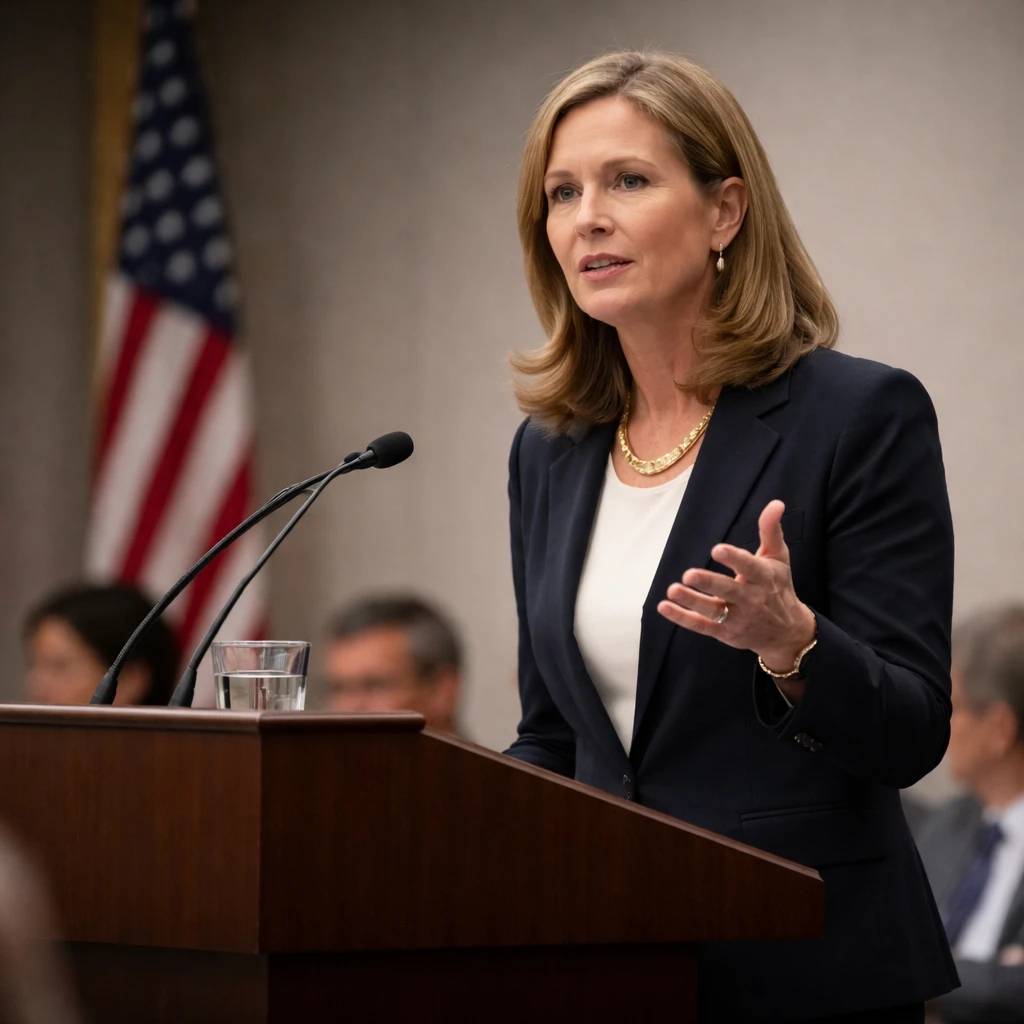
Federal Reserve Bank of Cleveland President Beth Hammack said Tuesday that the U.S. banking system is in generally good condition, but she warned that developments in the Treasury market deserve careful attention.

Speaking in Columbus, Ohio, Hammack said plainly, "The banking system looks pretty good." At the same time, she highlighted a trend she is monitoring: high levels of government borrowing appear to be prompting hedge funds to increase their own borrowing to purchase Treasuries, a build-up of leverage she said she is "continuing to watch closely."

Hammack characterized the U.S. government's fiscal path as unsustainable and reiterated her concern about the associated increase in market leverage. Her comments focused on the specific mechanics she is tracking rather than on prescribing market actions.

On inflation, Hammack signaled apprehension about the possibility that higher price growth could become entrenched in the economy, while noting that, to date, inflation expectations have remained contained. She emphasized that it is "critically important" to reach the Federal Reserve’s 2% inflation objective before taking additional steps to alter interest rates.

The Cleveland Fed president also addressed institutional foundations, calling central bank independence "critical" and saying it "delivers better outcomes." She added that the Fed is both "independent and accountable," underscoring governance as a priority alongside monetary goals.

Turning to supervisory and market plumbing issues, Hammack observed that a meaningful number of banks are still not set up to use the Fed’s discount window. She suggested this situation "makes sense for some firms," while indicating that the Fed aims to make access to the discount window easier.

Finally, Hammack raised a regulatory blind spot: she noted that regulators do not have sufficient insight into the rapidly expanding private credit sector. Her remarks called attention to potential gaps in oversight as that market grows.


This account summarizes Hammack’s publicly stated views on bank health, Treasury market leverage, inflation risks, central bank independence, discount window access, and regulatory visibility into private credit.

Risks

  • Rising leverage in the Treasury market driven by increased government borrowing and hedge fund financing - impacts Treasury market liquidity and could affect fixed-income investors.
  • Potential for inflation to become entrenched despite currently contained expectations - affects monetary policy decisions and interest-rate sensitive sectors.
  • Limited regulatory visibility into private credit as the sector expands - presents oversight and risk-assessment challenges for regulators and market participants.

More from Economy

USMCA Goods Largely Exempted From New 10% Global Tariff, But Review Threat Looms Feb 20, 2026 U.S. Trade Office to Open Broad Section 301 Reviews Covering Major Partners Feb 20, 2026 Supreme Court Term Spotlight: High-Stakes Cases Shaping Law and Policy Feb 20, 2026 Trump Vows Fresh 10% Global Tariff After Supreme Court Limits His Trade Authority Feb 20, 2026 Supreme Court Ruling Narrows Presidential Tariff Options, Treasury Secretary Says Feb 20, 2026