
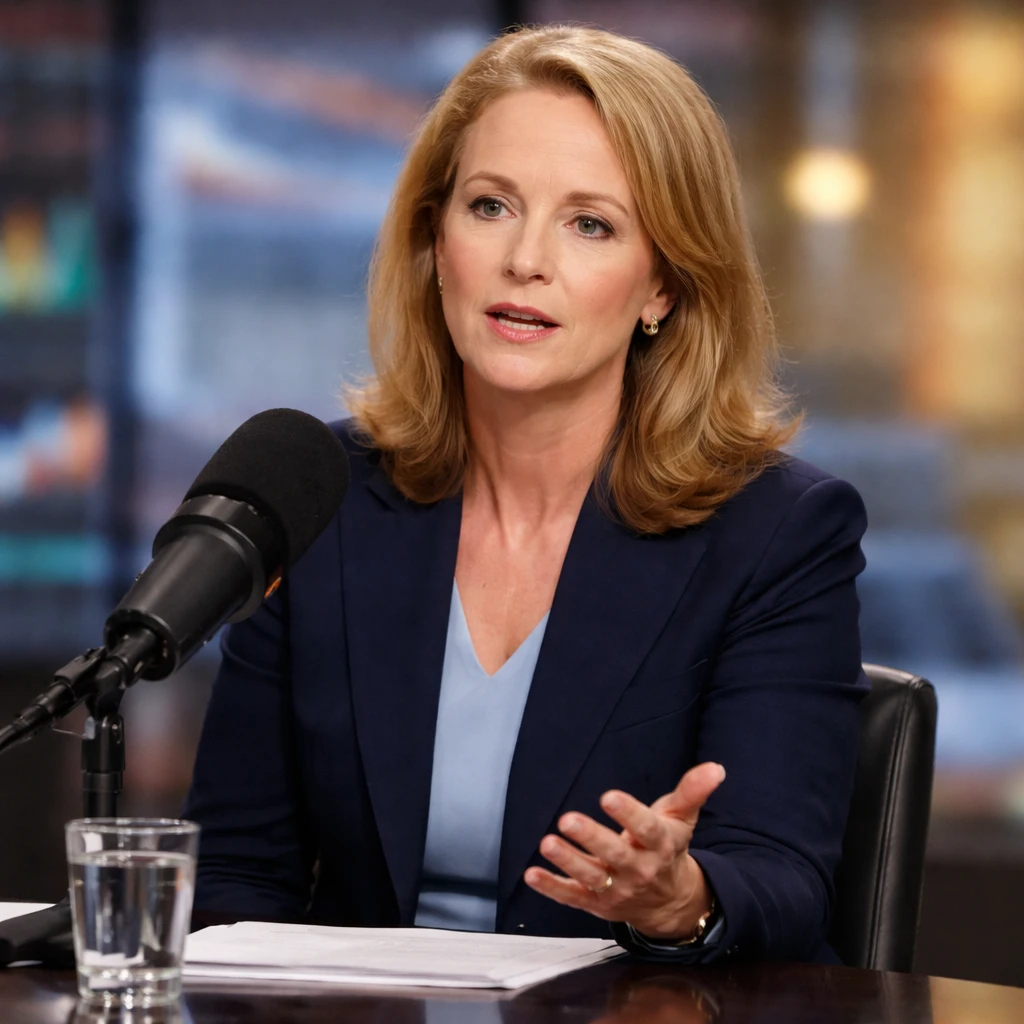
Federal Reserve Bank of Cleveland President Beth Hammack said Friday that the February jobs number was a disappointment, though she added that conditions across the economy are improving.
Speaking on Bloomberg TV, Hammack described the labor market as stabilizing, but stressed that inflation continues to run above the Fed's target and that there has been virtually no progress on that front over the past two years. Those comments framed her broader view that, while the economy shows positive signs, inflation remains the dominant challenge.
Hammack characterized the outlook for interest rates as subject to two-sided risks and said current policy settings are close to neutral. Drawing on conversations with banks and firms, she indicated that policy is not excessively restrictive. That assessment informed her view that the Fed should remain at least around neutral to bring inflation down, and she suggested the central bank could be on hold for quite some time.
On institutional leadership and internal discussions, Hammack said she is looking forward to collaborating with the new chair. She noted that shrinking the Fed's balance sheet is an item the central bank should address. Referencing public comments from Warsh about evolving communication strategy, she said fresh perspectives will prompt productive discussions.
Hammack outlined key balance sheet considerations, saying the central decision is whether to operate under an ample or scarce reserves regime. She added that it is reasonable to question whether the Fed's liquidity should be concentrated in Treasuries or in repo operations, underscoring the technical nature of the choice.
Addressing corporate behavior, Hammack said firms are not inactive amid uncertainty; rather, many companies are discussing hiring to meet ongoing demand. She described the economy as being in a reasonably good place while still emphasizing the need to reduce inflation.
On energy prices, Hammack observed that it is too soon to determine the full effects of the recent rise in oil. She cautioned that higher oil costs could exert upward pressure on inflation while potentially weighing on consumer spending, introducing a dual-channel influence on the near-term outlook.
Bottom line - Hammack conveyed a cautious optimism about the economic backdrop while reiterating that inflation remains persistent and that policy should remain near neutral as the Fed evaluates balance sheet strategy and communication under new leadership.