
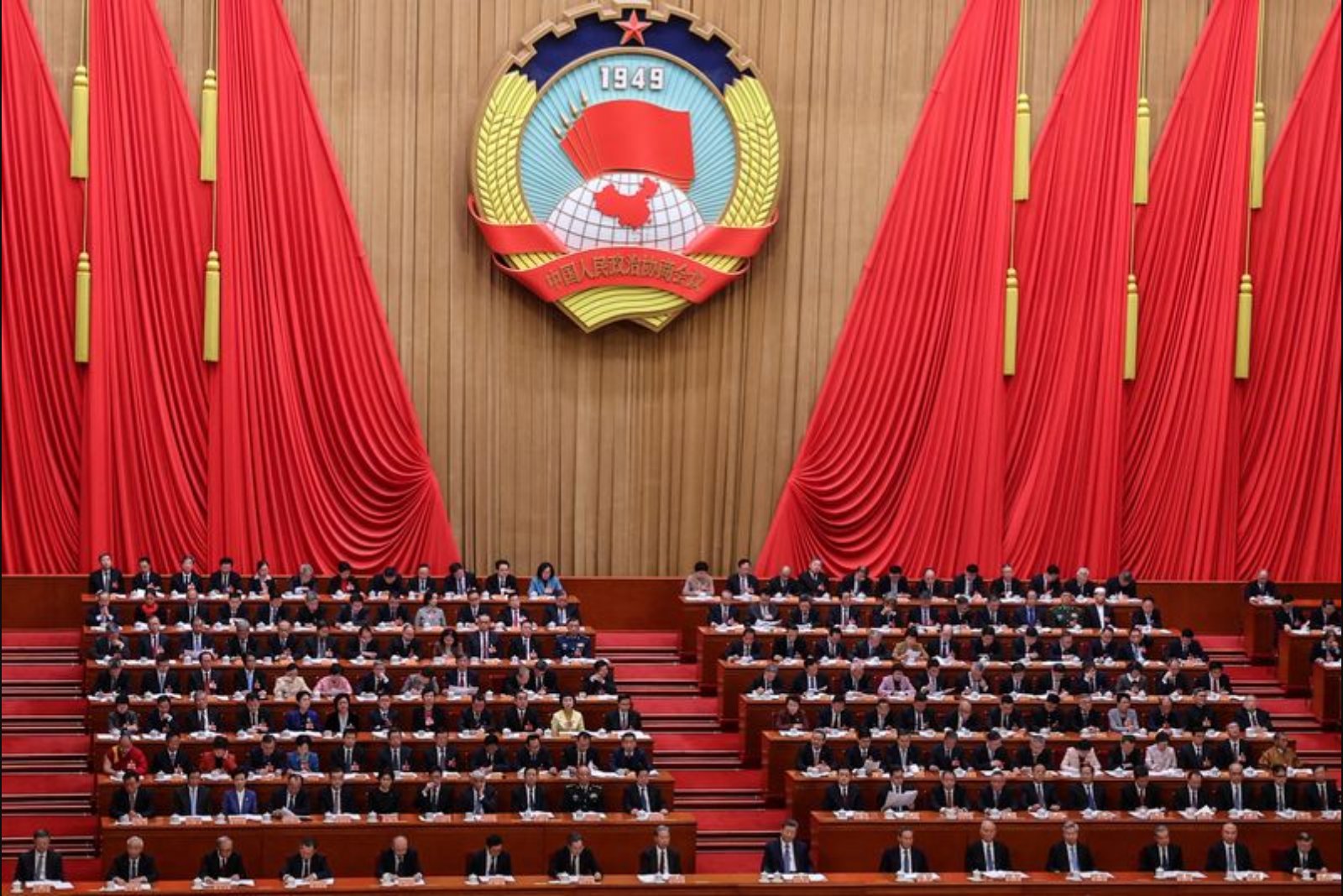
Beijing, March 5 - China’s annual legislative meeting opens with authorities poised to set a slightly lower economic growth target for 2026 and to release a new five-year roadmap aimed at strengthening advanced manufacturing and ramping up domestic demand.
Premier Li Qiang is expected to say the government will target economic growth of between 4.5% and 5% next year, a modest downgrade from the 5% expansion recorded last year. The lower target leaves space for more substantial action to tackle industrial overcapacity, but it does not signal a retreat from long-term commitments to invest in higher-end manufacturing even as competition with the United States intensifies.
Officials will present the 15th five-year plan, which frames strategic policies and objectives for 2026-30 and is scheduled to be released alongside the premier’s report. The document is expected to elevate the promotion of high-tech industries as a central goal. Strengthening domestic demand is also likely to be highlighted - at least rhetorically - as an equally important priority.
Analysts say the two objectives are inherently at odds. Channeling more resources toward producers and industrial upgrading leaves less fiscal and policy space to boost household incomes and consumption unless China increases borrowing at a moment when total indebtedness already stands at roughly three times the country’s annual economic output.
Observers at the Mercator Institute for China Studies captured the tension in blunt terms. "Precariously balanced as it is, China’s economic policy will continue to systematically favour companies over households," MERICS analysts wrote in a note. "Beijing will persist in slow-rolling measures to expand social welfare, while using generous subsidies and tax incentives to drive industrial growth and upgrading." The analysts described public-facing promises to consumers as "hollow," arguing the leadership sees expansive support for key industries as serving national interests most effectively amid great power competition.
Policy makers are expected to signal a pragmatic, flexible stimulus approach rather than a large one-off package. Most analysts forecast the headline budget deficit will remain unchanged at 4.0% of gross domestic product, while allowances for off-budget special debt issuance are likely to rise modestly.
One forecast from Citi anticipates a central government quota of 1.6 trillion yuan in special treasury bonds for 2026, up from 1.3 trillion yuan last year. Citi also expects local authorities will have a quota of 4.9 trillion yuan for special bonds in 2026 versus 4.4 trillion yuan in 2025.
Macquarie’s chief China economist Larry Hu said fiscal levers would be applied with flexibility depending on how the economy evolves in the months ahead. "If exports remain strong, they may tolerate weak domestic consumption. Conversely, if exports falter, they will step up domestic stimulus to defend the GDP target," Hu said.
China’s large trade surplus last year also factors into the policy debate. Former central bank adviser Liu Shinjin told a financial forum in January that the record $1.2 trillion trade surplus helped China reach its 2025 growth target but also reflected weak domestic consumption alongside rising manufacturing competitiveness. Liu said the country needs to shift from a long-standing model reliant on investment and exports toward one driven primarily by innovation and consumption.
"China’s current insufficient consumption is deeply tied to a series of institutional and structural factors, making it unrealistic to fully resolve these issues in the short term," Liu said. "However, leaving them unaddressed is not an option either." He added that manufacturing could be upgraded further even if its share of the overall economy declines over time.
Economists have long argued that a reallocation of tax burdens to benefit households, or a reduction in the role of state-owned enterprises that dominate certain sectors, would free resources for private-sector expansion in services and other areas with stronger local demand. But such measures would also erode elements of the economic model that have supported China’s success as an exporting power and given it leverage in global supply chains.
That trade-off is illustrated by the fallout from a major court ruling last year. China’s top court made avoiding social insurance payments illegal, a change intended to strengthen long-term funding from businesses to workers through welfare channels. Yet firms confronting weak domestic demand, tariffs, high debts and price wars linked to industrial overcapacity largely reacted in ways that reduced their own costs, in some cases lowering wages, and compliance has been uneven.
Patchy implementation of the ruling has left many economists sceptical about how far Beijing will press reforms that shift resources toward households. "This highlights a core tension in Beijing’s structural reforms," said Alicia Garcia-Herrero, chief Asia-Pacific economist at Natixis. As parliament convenes, "expect rhetoric on social security improvements and consumption support, but don’t anticipate radical new enforcement mechanisms" that could impose heavy burdens on businesses and risk destabilising employment, she said.
The coming parliamentary session will therefore showcase a balancing act. Officials are expected to reiterate commitments to upgrade industry and foster innovation while offering assurances about policies aimed at boosting domestic demand. But analysts and former advisers emphasise that many of the fundamental institutional and structural issues limiting consumption will not be resolved quickly, and that policy choices made to strengthen industry may continue to take precedence over measures that directly lift household incomes.
How Beijing navigates this trade-off - whether by leaning on exports, expanding targeted industrial support, modestly increasing special bond issuance, or stepping up consumer-focused stimulus if needed - will determine the near-term trajectory of growth and the distribution of policy support between producers and households.