
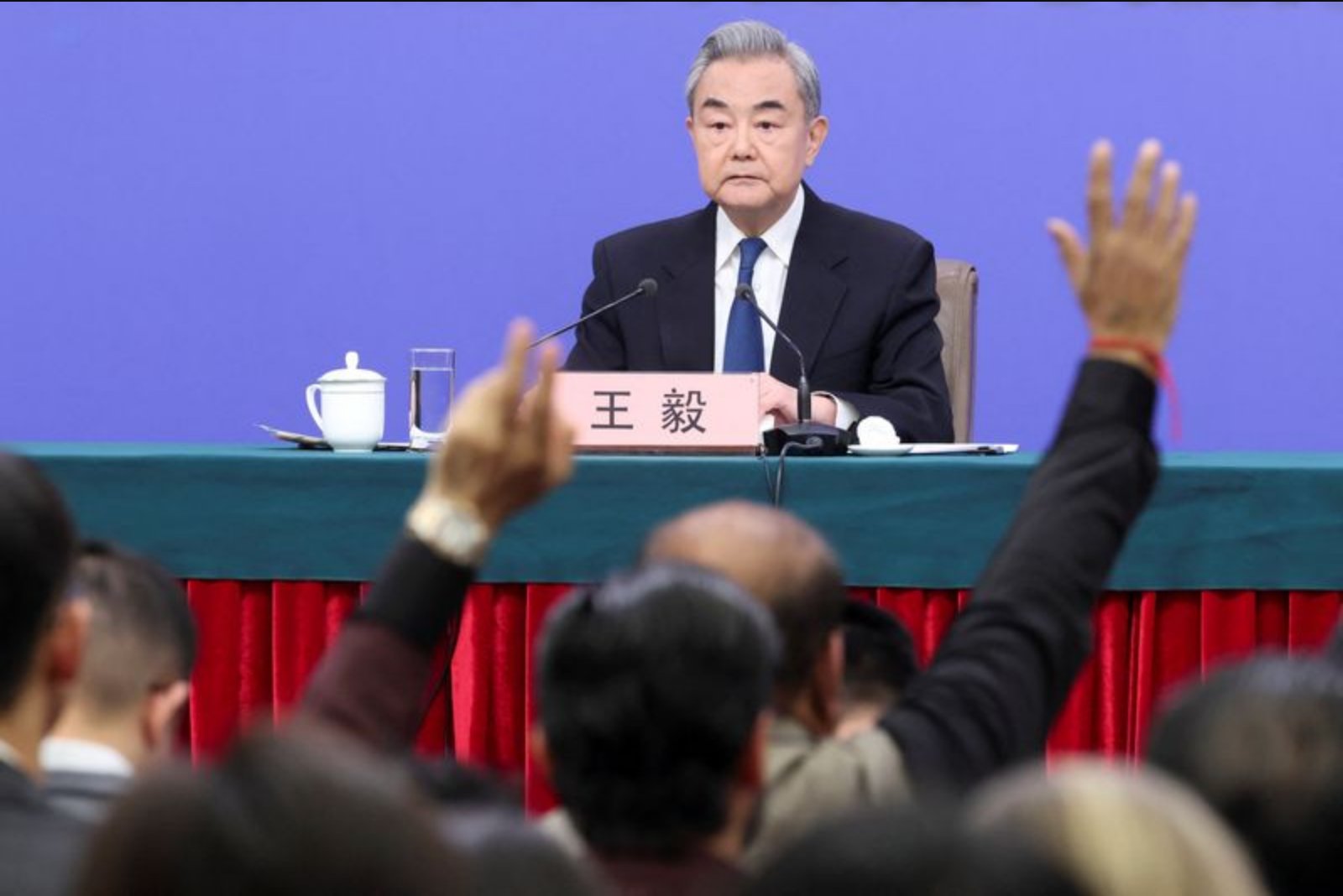
Beijing's top diplomat stressed that continued dialogue with the United States is critical to preventing miscalculations that could have wide-ranging global consequences. Foreign Minister Wang Yi made the remarks at a press conference on the sidelines of China’s annual parliamentary meeting, saying that failure to engage would foster misunderstandings and misjudgements that could escalate into confrontation and harm the world.
Wang’s comments arrive as attention turns to an anticipated summit between President Xi Jinping and U.S. President Donald Trump. The meeting has not been formally announced by China but is expected to take place at the end of the month. Wang said the agenda for high-level exchanges with the United States is on the table, and that both sides need to prepare thoroughly to create a conducive environment to manage existing differences. He did not provide further details on timing or specific topics.
The planned summit comes amid a tense international backdrop. The U.S. president is focused, the article noted, on the war he and Israel launched against Iran. Analysts are watching for signs that Trump’s visit to meet Xi will proceed as expected. According to Tehran, that conflict has killed Supreme Leader Ayatollah Ali Khamenei and more than 1,300 others in the country, the foreign minister’s remarks referenced.
Wang also highlighted other recent U.S. actions that have tested Beijing’s relationships with its partners. He noted that in January President Trump authorised the capture of Venezuelan President Nicolas Maduro, an action portrayed as probing China’s resolve to defend its strategic partners. Wang appeared to criticize what he described as Trump’s "Donroe Doctrine" - a rebranding of a 19th-century policy asserting Washington’s zone of influence in the Americas - saying it poses a stern test of Xi’s flagship "Belt and Road" infrastructure and global security initiatives.
At the parliamentary press conference Wang asked rhetorically whether the region would remain as stable if China behaved like "some traditional major powers" by carving out spheres of influence in its neighbourhood, stoking bloc confrontation, or shifting problems onto neighbours. He did not name the United States in that comment.
The foreign minister’s remarks also referenced other U.S. rhetoric and threats that have raised concern among Latin American states. The article cited recent threats of military action by Trump against Colombia and Mexico, and his comment that Cuba’s communist regime "looks like it’s ready to fall" on its own. Those comments, the article said, have prompted questions in Latin America about how ties with China might insulate countries if they were tested.
Wang framed engagement as necessary to manage differences and to reduce the risk that bilateral tensions become broader confrontations, but he offered limited detail on how Beijing proposes to proceed. With the expected Xi-Trump meeting not formally announced, observers continue to monitor developments closely for confirmation and any signals on the summit’s agenda.
Summary
China’s foreign minister urged ongoing high-level dialogue with the United States to avoid miscalculations that could escalate into confrontation. His remarks came ahead of an anticipated summit between Xi Jinping and Donald Trump, which China has not yet publicly announced but expects by the end of the month. Wang warned against unilateral moves that could challenge China’s global initiatives and relationships with partners.