
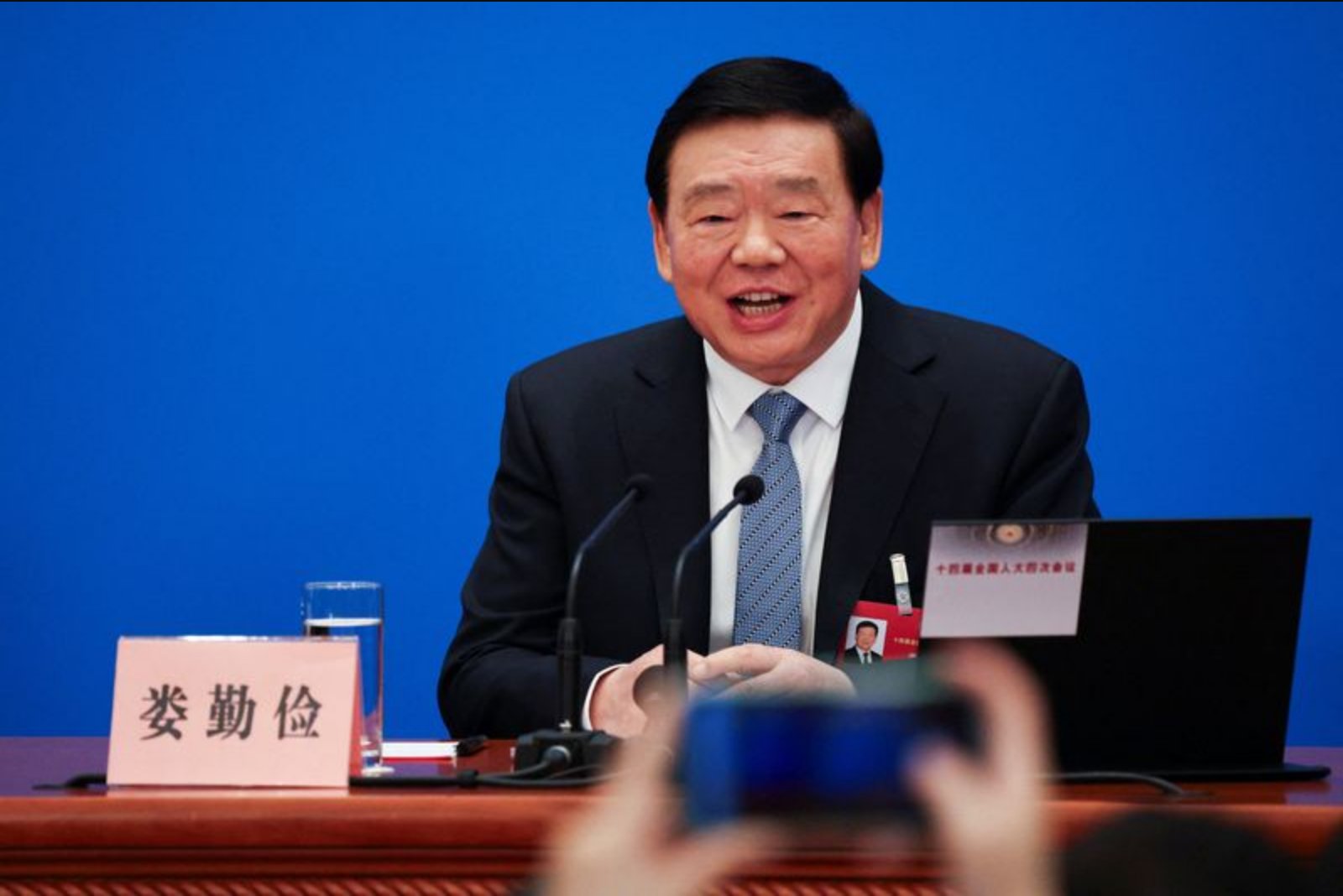
China said on Wednesday it is prepared to enhance communications with the United States at every level, but will continue to uphold its principles and 'red lines,' a parliament spokesperson told reporters as the country readies its major annual legislative meeting.
Lou Qinjian, speaking on behalf of China’s legislature, made the remarks a day before the National People’s Congress opens its annual session on Thursday. The NPC session is scheduled to set the government's economic targets and policy priorities for the year.
Lou framed the comments in the context of a sensitive period for bilateral relations, noting both sides are seeking ways to stabilise ties before an expected summit between U.S. President Donald Trump and Chinese leader Xi Jinping in Beijing at the end of March. He said China and the United States should treat each other with mutual respect and coexist peacefully.
"China has its own principles and red lines, and as always, will resolutely defend its sovereignty, security and development interests," Lou said at the press conference.
He described diplomacy between heads of state as having an "irreplaceable strategic role" in setting the direction of relations between the two countries. Lou urged leaders to broaden the areas of cooperation while narrowing the list of outstanding problems, and he called on the U.S. Congress to adopt an objective view of China and take steps that would benefit bilateral ties.
A White House official confirmed that President Trump is scheduled to travel to China from March 31 to April 2, although China has not issued an official announcement of the visit. Separately, top trade negotiators from both sides are expected to meet in Paris next week to discuss potential business deals connected to the highly anticipated leaders' meeting, according to a report cited on Tuesday.
The developments come as Beijing prepares to set its economic agenda at the NPC, while diplomatic channels between the two powers appear active but bounded by stated national priorities. China’s insistence on defending sovereignty, security and development interests was reiterated alongside an expressed willingness to engage the United States in dialogue.