
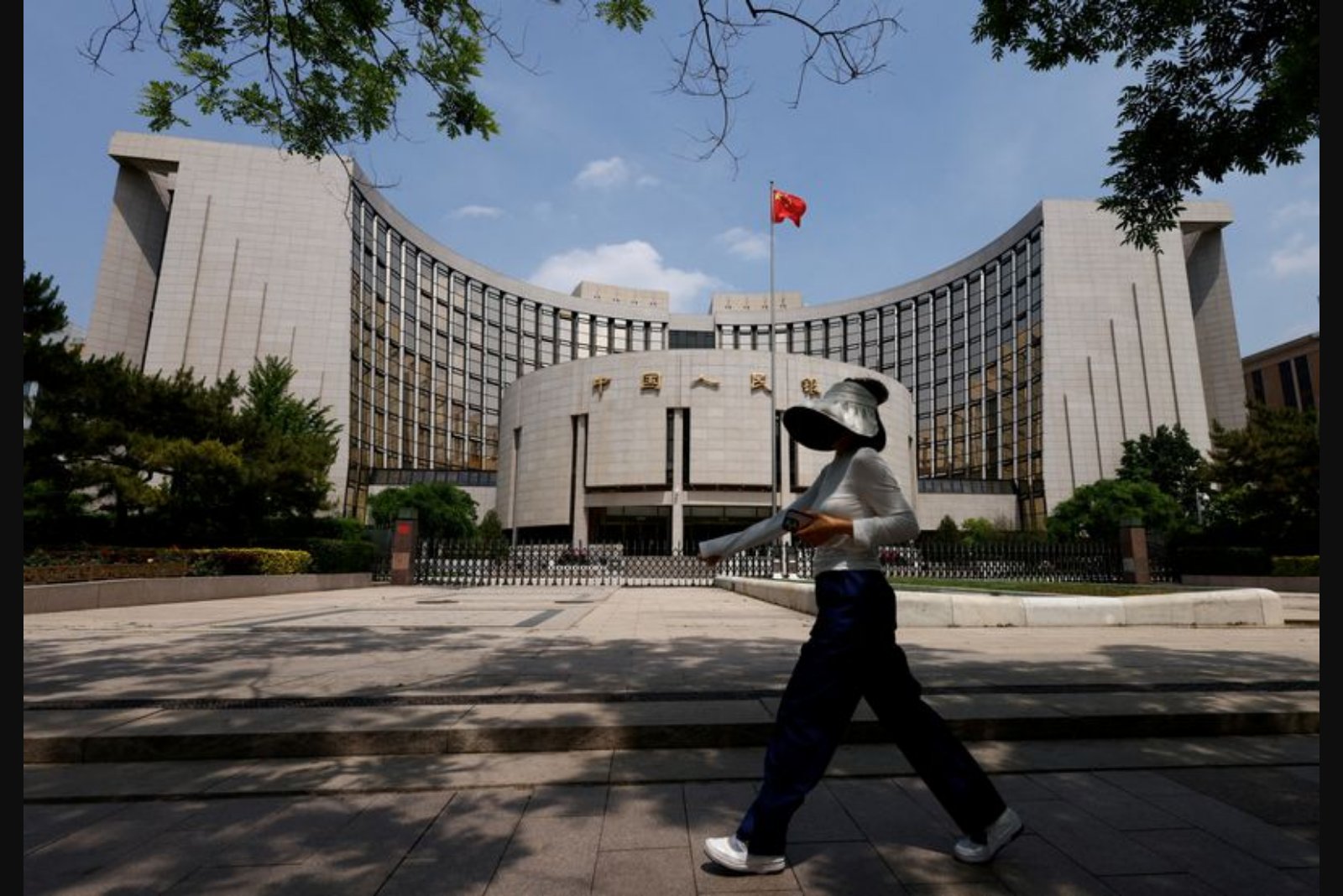
China is widely expected to maintain its benchmark lending rates in March, marking a 10th consecutive month of unchanged Loan Prime Rates (LPR), according to a Reuters survey of market participants. All 20 respondents in the survey forecast the one-year LPR will remain at 3.00% and the five-year LPR at 3.50% when the People’s Bank of China publishes its monthly fixing.
The LPR is set each month after 20 designated commercial banks submit proposed rates to the PBOC. The unanimous expectation for unchanged fixings reflects a combination of Beijing's policy guidance and recent economic data, analysts said.
Policymakers set a 2026 economic growth target in the 4.5% to 5% range, slightly below last year’s 5% expansion. That target, together with better-than-expected indicators of economic activity in the first two months of the year, has reduced the immediate need to deploy additional stimulus measures to shore up the broader economy, according to market watchers.
At the same time, global energy markets have become more volatile. Global oil prices have risen about 50% since the beginning of the U.S. and Israeli war with Iran, creating an oil shock that has unsettled financial markets worldwide. The jump in energy costs introduces uncertainty into China’s inflation trajectory and complicates the outlook for monetary policy.
Standard Chartered analysts noted that a moderate and temporary rise in oil prices would likely have a limited effect on China’s economy. However, they cautioned that a deeper escalation of the Middle East conflict - particularly if it tightens supplies of key commodities - could reverberate through global supply chains and demand, ultimately weighing on China’s exports and growth. In light of these elevated geopolitical risks, the bank has revised its timing for expected monetary easing. It now sees a previously forecast 25-basis-point cut in the reserve requirement ratio being delayed from the first quarter to the second quarter, and a 10-basis-point policy rate cut pushed from the second quarter to the third quarter.
Not all analysts view energy-driven price moves as a decisive factor for PBOC policy. Marco Sun, chief financial market analyst at MUFG (China), said China has sufficient energy reserves and remains relatively insulated from such shocks. He added that energy price spikes are unlikely to force a material change in the central bank’s policy stance. According to Sun, the PBOC will keep monetary policy accommodative and make adjustments to key benchmark rates only as needed to offset domestic pressures that raise financing costs.
The expectation of steady LPR fixings sits alongside a broader global central bank backdrop in which several major institutions have held policy rates. The U.S. Federal Reserve and the Bank of Canada, in policy reviews this week, struck hawkish tones as higher energy prices tied to the Iran conflict raise the prospect of renewed inflationary pressure.
Market participants will be watching forthcoming data and geopolitical developments closely for signs of whether elevated energy prices will be short-lived or become a more persistent factor that could alter the timing and scale of monetary support in China.