
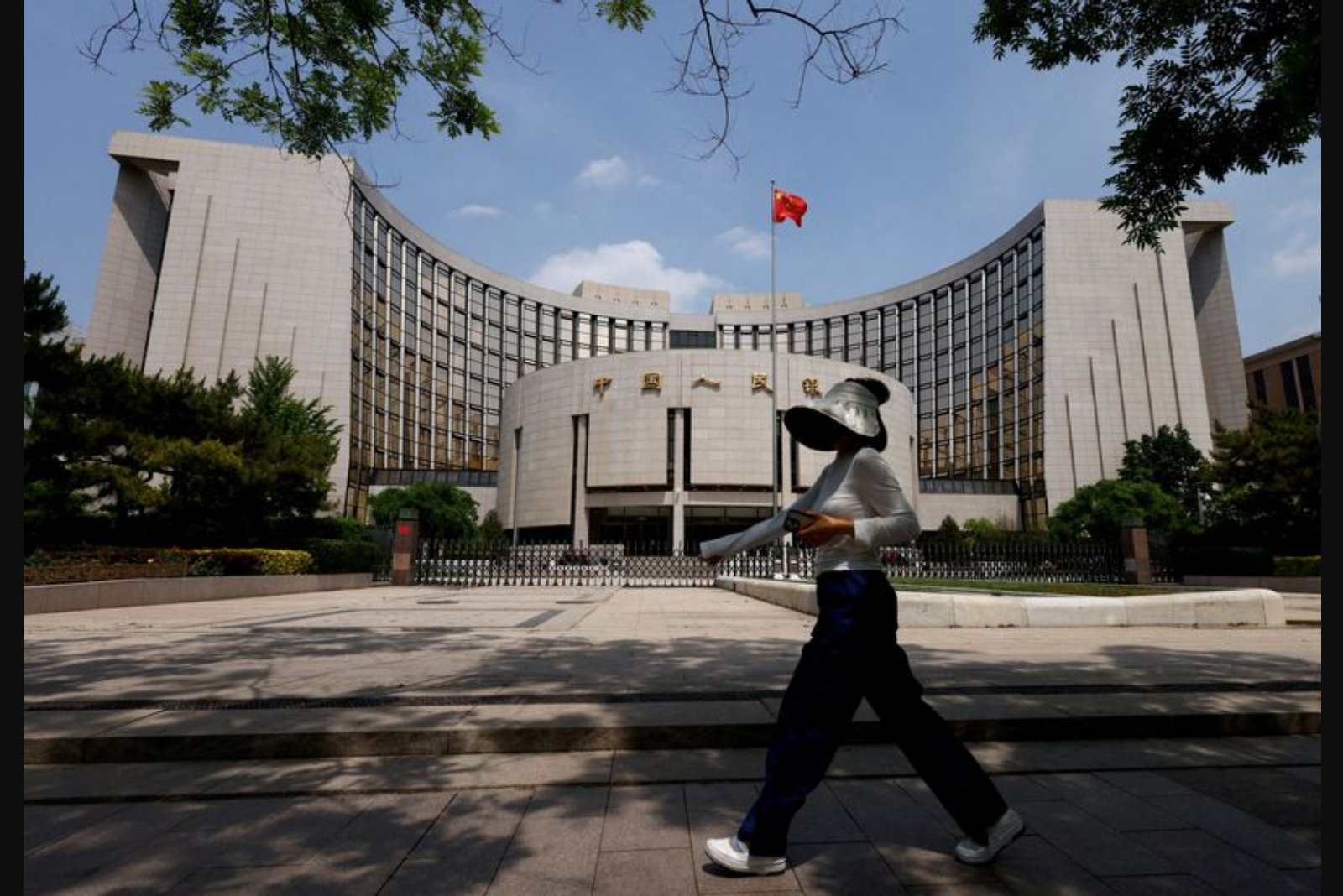
China maintained its benchmark lending rates in February for the ninth month in a row, opting not to alter the loan prime rates that guide lending costs across the economy. The one-year loan prime rate (LPR) remained at 3.00% and the five-year LPR stayed at 3.50%.
Policymakers appear to be moderating expectations for broad-based rate cuts, instead relying on targeted measures to support growth. Earlier this month the central bank said it would step up financial support aimed at boosting domestic demand, citing concerns that industrial overcapacity and weak consumption are weighing on business confidence and the growth outlook.
Last month, authorities reduced interest rates on structural monetary policy tools by 25 basis points - a move described by officials as having a more limited impact on overall growth than cuts to headline benchmark rates. In addition, the central bank has signalled there is room this year for further reductions in banks' reserve requirement ratios (RRR) as well as the potential for broader rate cuts.
Economic results for 2025 showed China achieved roughly its 5% growth target, a result driven in large part by an export boom. Despite that outcome, the outlook is clouded by structural imbalances, ongoing trade frictions and rising geopolitical uncertainty. A forecast included in the reporting indicated that growth is likely to slow to 4.5% in 2026.
Analysts cautioned that while policymakers retain tools to ease policy further, the timing of additional measures remains uncertain.
"The central bank still has room to trim the reserve requirement ratio (RRR) and policy rates and is using them as tools to guide expectations, with flexibility and efficiency seen as key,"
"Further easing is possible this year, but the timing is hard to pin down and the chance of a cut in the first quarter is limited."
In this environment, the steady LPR fixings in February suggest authorities are not rushing into another round of broad monetary easing after implementing sector-targeted rate reductions last month. Some analysts see limited scope for benchmark rate reductions in the first quarter, given the preference for using structural tools and targeted support to influence credit conditions and demand.
Markets and sectors sensitive to funding costs and domestic demand will be watching for any moves on the RRR or further adjustments to policy tools, even as the headline LPRs remain unchanged.
By the numbers
- One-year LPR: 3.00%
- Five-year LPR: 3.50%
- Cut to structural monetary tool rates last month: 25 basis points
- China's 2025 growth outcome: about 5%
- Projected 2026 growth (forecast): 4.5%