
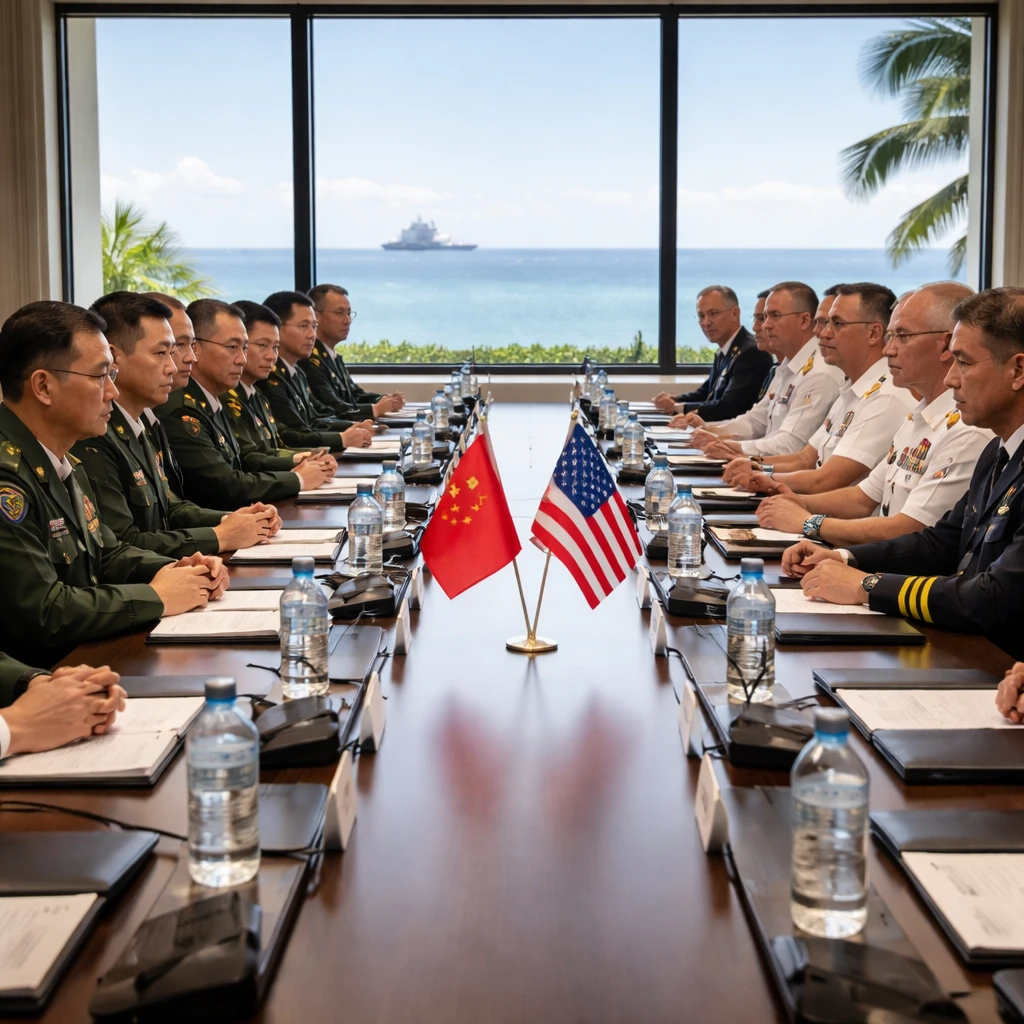
Delegates from the Chinese and U.S. militaries convened in Hawaii on May 28-29 for exchanges centered on air and maritime safety, with participants concluding that enhanced lines of communication can reduce miscalculations and raise the level of professionalism in interactions, the Chinese Navy said in a statement released Monday.
The U.S. Indo-Pacific Command said it hosted representatives from the People’s Liberation Army in Honolulu for discussions designed to lower the risk of unsafe encounters between forces at sea and in the air. Both statements emphasized the role of dialogue in managing operational safety.
The meeting follows a summit held last month between Chinese President Xi Jinping and U.S. President Donald Trump. Separately, top Chinese military officials did not attend the Shangri-La Dialogue, a regional defense forum, in Singapore over the weekend, according to the summaries released about the exchanges.
Issues at the margins of the talks included the broader political context between the two countries. The statement acknowledged that China regards Taiwan as part of its territory and has not ruled out the use of force against the island. It also noted that the United States is legally bound to provide arms to Taipei, a policy that Beijing opposes. The Chinese Navy reiterated its stance that it opposes any action it sees as undermining its sovereignty and security.
Participants from both sides framed the Hawaii meetings as operational and safety-focused, stressing that clearer communication channels can reduce the potential for accidental escalation and help maintain professional standards during encounters. The U.S. Indo-Pacific Command highlighted the intent to address unsafe interactions, while the Chinese Navy stressed the importance of safeguarding national sovereignty and security in its public comments.
Summary
Military representatives from China and the United States held two days of talks in Hawaii on May 28-29 aimed at improving communication to prevent unsafe air and maritime encounters. The discussions were hosted in Honolulu by the U.S. Indo-Pacific Command and were framed as measures to reduce the risk of miscalculation. The sessions followed a recent summit between the two presidents and came as senior Chinese military officials were absent from a regional defense forum in Singapore.
Key details
- The meetings took place May 28-29 and involved representatives from both militaries.
- The U.S. Indo-Pacific Command hosted People’s Liberation Army representatives in Honolulu for talks centered on reducing unsafe encounters.
- The Chinese Navy emphasized communication and warned against actions it views as undermining its sovereignty and security.