
Overview
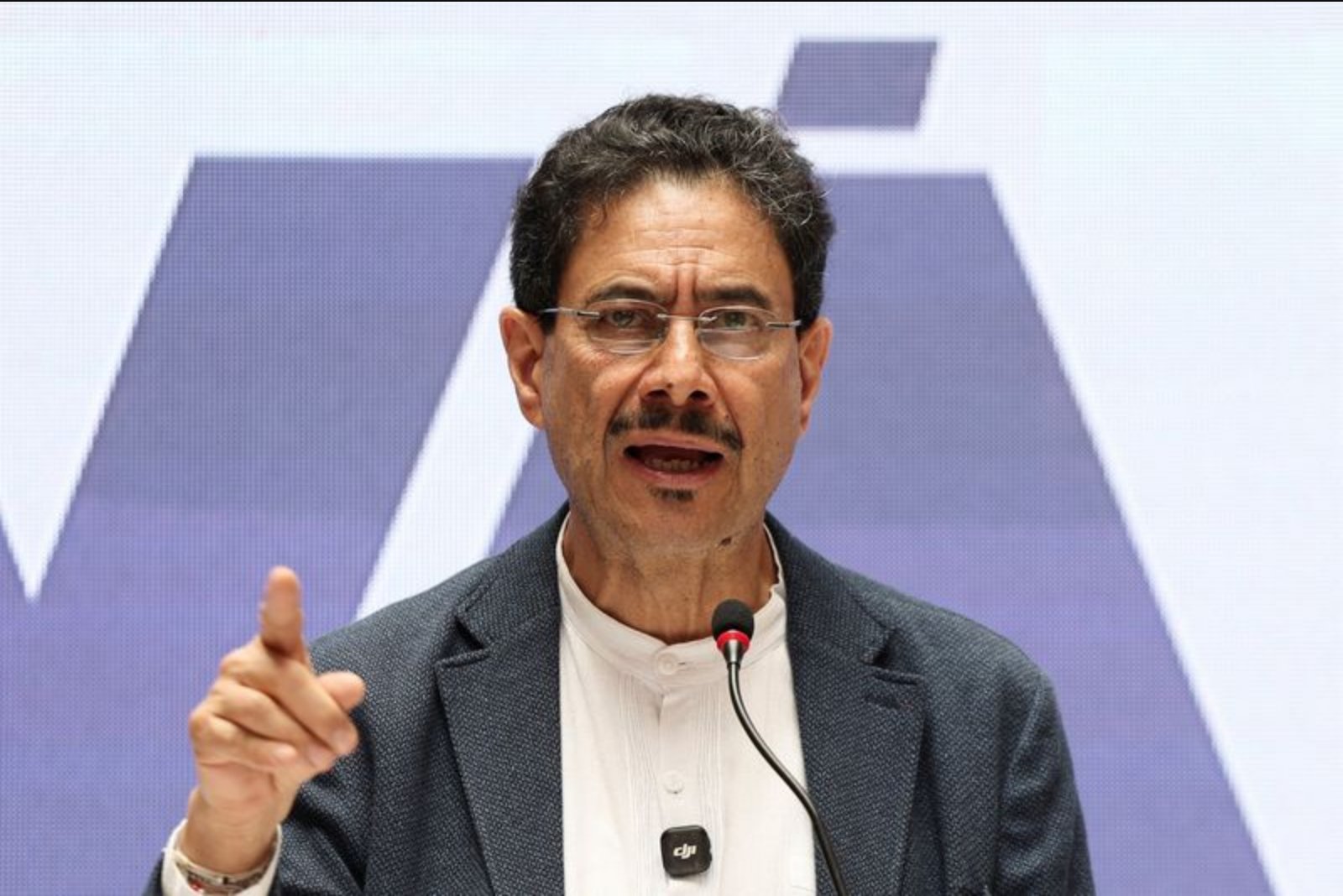
Ivan Cepeda, a veteran leftist activist and current senator, is entering Colombia's presidential ballot this Sunday with a promise to deepen the economic and social changes championed by President Gustavo Petro. Cepeda, 63, is ahead in public opinion polls, but analysts and campaign dynamics indicate he may not win an outright majority, creating the prospect of a runoff on June 21 when right-wing and centrist voters will likely no longer be dispersed among several candidates.
Policy agenda and economic program
Cepeda has pledged to press forward with and in some instances intensify the reforms already pushed by Petro, arguing they are necessary to address long-standing inequality in Colombia. He frames his proposals under the banner of "social capitalism," a policy approach he describes as changing rules to allow community participation in state contracts for construction projects, food production and other services. He has also proposed expanding income support programs aimed at the elderly, poor families and young people, and committing to broader social benefits and improved basic services.
On land policy, Cepeda has promised to accelerate land reform by transferring 1 million hectares to victims of internal conflict. He describes these measures as part of a consolidated program of social reforms that he intends not only to continue but, in certain respects, to radicalize.
Fiscal concerns and political pushback
Business leaders and established conservative and centrist parties have criticized a proposed pension reform tied to the broader reform agenda, warning it could jeopardize Colombia's fiscal health. Those criticisms form a central plank of the opposition's economic argument and are likely to remain prominent if the election proceeds to a runoff, when votes from the center and right could coalesce against Cepeda.
Peace negotiations and security stance
Cepeda has vowed to redouble efforts to negotiate peace with leftist guerrillas and with criminal gangs. He participated in talks that contributed to the 2016 peace agreement between the government and the former FARC guerrillas, and he says he will continue Petro's efforts to reach accords with armed groups. The candidate and his allies acknowledge that such negotiations have had limited results so far under Petro, but Cepeda has nonetheless highlighted them as central to his approach.
Political profile and personal history
Cepeda's life has been marked by his family's deep involvement in leftist politics and by personal tragedy. He is the son of two prominent communist leaders and became active in leftist parties from a young age. As a child his family lived in exile, first in what was then Czechoslovakia and later in Havana. His father, Manuel Cepeda, was assassinated in 1994 in Bogota while driving in his car; Cepeda has recounted that he first saw his father's body from the window of a passing bus while he was on his way to university, initially mistaking the scene for a traffic accident.
Cepeda studied philosophy, law and political science in Bulgaria and France, as well as in Colombia. His national profile rose after a legal case involving former President Alvaro Uribe, who was sentenced to 12 years' house arrest for fraud and bribery in a matter that identified Cepeda as one of several victims. That ruling was subsequently overturned and Cepeda has lodged an appeal against the reversal.
Accusations and denials
Political opponents have alleged that Cepeda maintains close ties with former FARC leaders. Cepeda has denied those claims. His public statements emphasize continuity with Petro's program and a focus on reducing inequality through social and economic measures rather than personal associations.
Campaign closing and personal note
At his final campaign rally, Cepeda appealed directly to supporters, saying: "I warmly invite you to finish the task with a strong victory at the ballot box, and defeat the far right as it deserves." He is married to anthropologist Pilar Rueda.
Implications
Cepeda's platform touches several economic sectors explicitly: construction and contracting, where his proposals would open state projects to community participation; agriculture and food production, through measures that would broaden community access to such contracts; and pension systems and public finance, where proposed reforms have prompted warnings from business and political establishments. His emphasis on negotiations with armed groups also intersects with public security and defense-related sectors.