
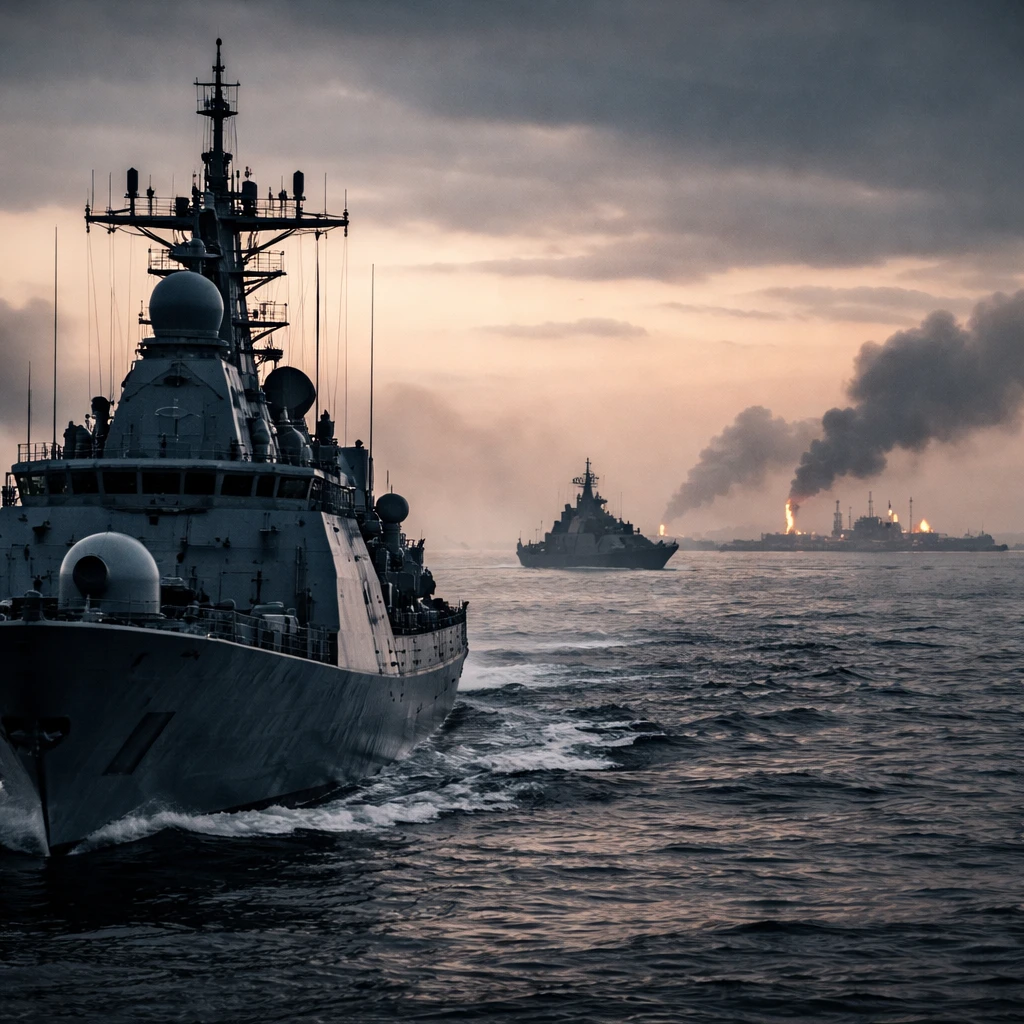
Australia is weighing a formal appeal from Gulf countries seeking defensive military support as Iranian drone and missile attacks raise the prospect of wider instability across the Middle East's energy-producing regions. On the ABC program Insiders on Sunday, Foreign Minister Penny Wong confirmed Canberra is "working through" the request but made clear Australia would not take part in offensive strikes or deploy ground troops inside Iran.
The request for assistance comes against the backdrop of a week-long confrontation between a U.S.-Israeli coalition and Tehran that has unsettled global markets. Brent crude prices have shown continued volatility amid disrupted supply chains, and Australia faces an unusual consular challenge with 115,000 Australians reported to be in the affected area.
Prime Minister Anthony Albanese's government has signalled a firm posture in recent days, expelling Iran's ambassador after allegations of state-sponsored antisemitic activity on Australian soil. The potential provision of assistance is framed by Canberra as defensive in nature and intended to protect Gulf partners that host American forces.
Wong did not outline the precise capabilities being requested. She reiterated that the emphasis remains on "defensive support" rather than offensive operations. Her remarks followed an escalation in rhetoric from President Donald Trump, who indicated the United States would broaden its list of targets in Iran to include locations previously regarded as off-limits.
Scrutiny over Australia's level of involvement has intensified after it emerged three Australian Defence Force personnel were present aboard a U.S. submarine that torpedoed an Iranian vessel in the Indian Ocean. Prime Minister Albanese said those personnel were not involved in the strike, but the episode has highlighted closer operational coordination between Canberra and Washington as the regional confrontation expands.
Australia's consideration of a more assertive posture in the Gulf reflects long-standing concerns over Iran's nuclear ambitions and its backing for proxy groups such as Hezbollah and the Houthis. Wong affirmed Canberra's support for measures aimed at preventing Iran from acquiring a nuclear weapon and for efforts to stop Iran from continuing to threaten international peace and security, aligning with the U.S.-led objective to counter what she described as Tehran's "multi-front" threat.
Decision-makers in Canberra are weighing these security considerations amid a complicated global economic environment. The conflict is disrupting air transport and energy corridors, which has implications for international trade and markets. For Australia, a major commodity exporter, the calculus involves both safeguarding global trade lanes and preserving a diplomatic posture that avoids committing ground forces to a full-scale deployment.
Investors and market participants are watching for a formal determination from the government. Wong said that any decision would be taken with transparency, suggesting Canberra intends to communicate its actions openly as it finalises its response to the Gulf request.
Summary
Australia is evaluating a formal request from Gulf nations for defensive military aid amid rising Iranian attacks that threaten the region's energy infrastructure. The government has ruled out offensive operations and the deployment of ground troops in Iran, while emphasising protection for Gulf states hosting U.S. forces. The situation is contributing to market volatility and a consular crisis for Australians in the region.
Key points
- Australia is "working through" a formal request from Gulf countries for defensive military assistance, with the Foreign Minister ruling out offensive strikes or ground troop deployments in Iran.
- Market and logistical impacts include volatility in Brent crude prices, disruptions to air transport and energy routes, and a consular challenge involving 115,000 Australians in the region.
- The situation has highlighted closer operational ties with the United States, illustrated by three Australian Defence Force personnel being aboard a U.S. submarine that engaged an Iranian vessel, though those personnel were reported not to have participated in the strike.
Risks and uncertainties
- Escalation of the U.S.-Iran confrontation could further destabilize energy supply chains, affecting the energy sector and commodity markets.
- Heightened regional tensions risk additional disruptions to air transport and shipping routes, with potential knock-on effects for global trade and logistics sectors.
- Diplomatic and security decisions by Canberra involve balancing support for allies with avoiding a ground combat commitment, creating uncertainty for political and defense policy outcomes.