
Economy May 26, 2026 01:27 PM

Canada to Reveal LNG Supply Agreement with Germany for Ksi Lisims Project

Planned C$10 billion floating export facility in British Columbia named as source; announcement expected from federal energy minister

By Caleb Monroe

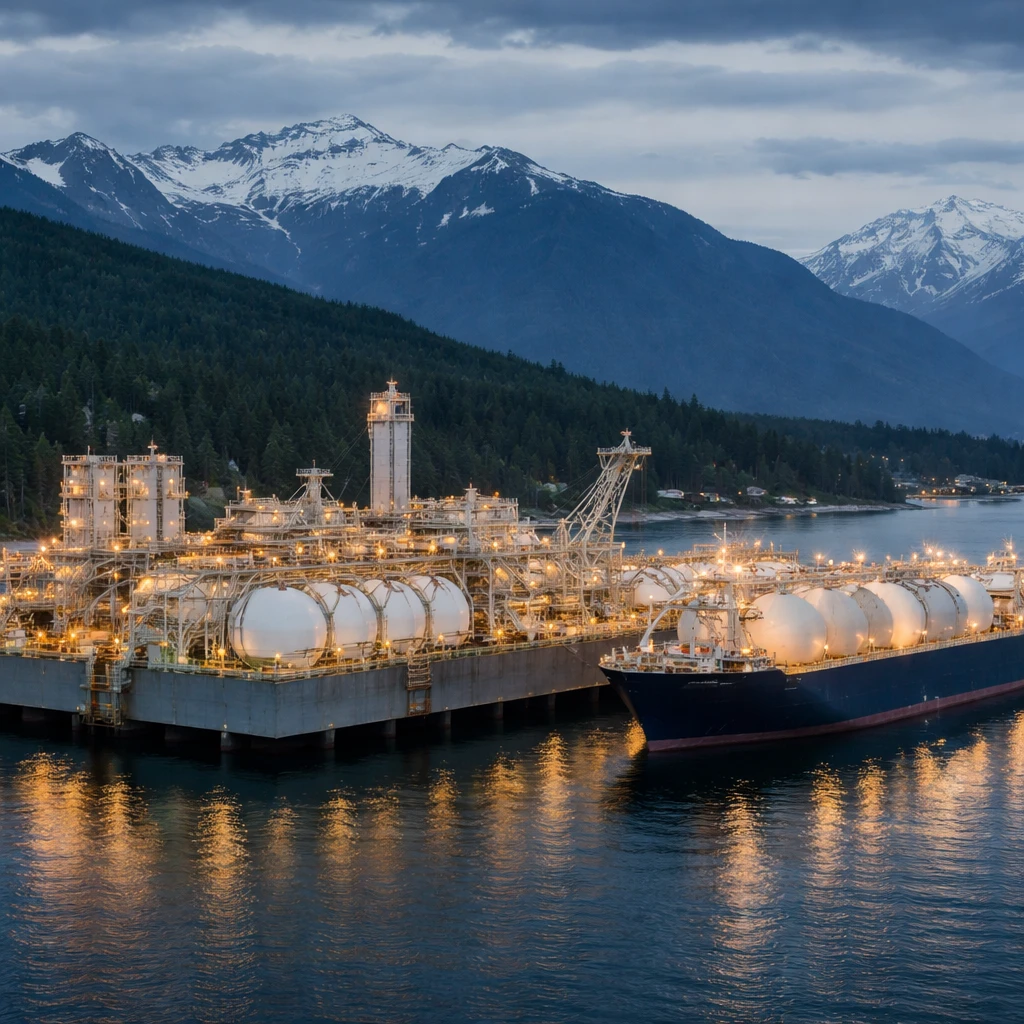
The Canadian government is preparing to announce a liquefied natural gas supply deal with Germany that would source gas from the Ksi Lisims project, a C$10 billion floating export facility on British Columbia’s coast. The purchaser is SEFE, the German state-controlled entity that succeeded a nationalized Gazprom unit. The agreement is expected to be unveiled by Canada’s minister of energy and natural resources, and the Ksi Lisims development remains without a final investment decision.

Canada to Reveal LNG Supply Agreement with Germany for Ksi Lisims Project

Key Points

  • Deal reportedly ties Germany's SEFE to LNG supplies from Canada’s Ksi Lisims project - impacts energy trade and utilities sectors.
  • Ksi Lisims is a C$10 billion floating export facility with regulatory approval but no final investment decision - relevant to energy infrastructure and capital markets.
  • Planned capacity of 12 million metric tons per year makes the project comparable in scale to the first phase of the Shell-backed LNG Canada project - implications for global LNG supply dynamics and shipping logistics.

Canada is poised to disclose an agreement to deliver liquefied natural gas to Germany from a planned export terminal on the British Columbia shoreline, according to a Bloomberg report on Tuesday.

The supplies would originate from the Ksi Lisims project, a floating LNG export facility carrying a reported price tag of C$10 billion ($7.3 billion) that has already secured regulatory approval.

Germany’s state-controlled energy buyer SEFE - the former Gazprom PJSC unit nationalized by the German government following the invasion of Ukraine - is identified as the counterparty. Canadian Energy and Natural Resources Minister Tim Hodgson is expected to announce the arrangement on Wednesday.

Ksi Lisims LNG is backed by a group of investors that includes Western LNG, which is supported by Blackstone Inc., Rockies LNG Partners and the Nisga'a Nation, the Indigenous group that owns the land designated for the development.

Despite the reported agreement, the project has not yet reached a final investment decision to begin construction. The consortium envisages an export facility with an annual capacity of 12 million metric tons of LNG, a scale close to the first phase of the LNG Canada project - a development backed by Shell Plc that began operations last year.

In a recent interview, Minister Hodgson said European nations are actively pursuing dependable sources of gas to replace flows from Russia and parts of the Middle East that have been disrupted by war. He also said European countries are wary of becoming too dependent on U.S. gas supplies, citing trade tensions with the Trump administration and a desire across Europe to maintain a diversified supplier base for energy security.

The reported transaction, if confirmed, would link a large-scale planned Canadian export facility with a major European buyer seeking to shore up alternative supplies amid geopolitical disruptions. The Ksi Lisims project remains at the investment decision stage, and the announcement is expected to formalize a commercial tie-up rather than signal immediate construction activity.


Summary

Canada is expected to announce a deal to ship LNG from the Ksi Lisims floating export project in British Columbia to Germany's SEFE, with an announcement by Minister Tim Hodgson anticipated on Wednesday. The C$10 billion project has regulatory approval but no final investment decision; planned capacity is 12 million metric tons per year.

Risks

  • The project has not reached a final investment decision, creating uncertainty about the timing and realization of the planned exports - affects construction, engineering and equipment suppliers.
  • Supply replacement needs in Europe stem from disruptions in Russian and some Middle Eastern flows due to war, which introduces geopolitical risk into long-term contracting and energy markets.
  • European preference to avoid overreliance on U.S. gas, tied to trade tensions referenced by the minister, could shift sourcing strategies and affect regional gas market balance and trade flows.

More from Economy

ECB Faces Delicate Choice as Inflation Pressures Rise - Five Questions for Markets Jun 5, 2026 RBI Holds Rates at 5.25%, Lowers Growth Outlook as Middle East Conflict Raises Headwinds Jun 5, 2026 Investor Withdrawals and a Short-Seller Report Bring Partners Group’s Rally to a Halt Jun 5, 2026 Japan Warned It Could Become an 'AI Colony' if It Lags in Development, Digital Minister Says Jun 5, 2026 RBI Keeps Policy Rate at 5.25% as Rupee Slides, Citing Global Risks Jun 5, 2026