
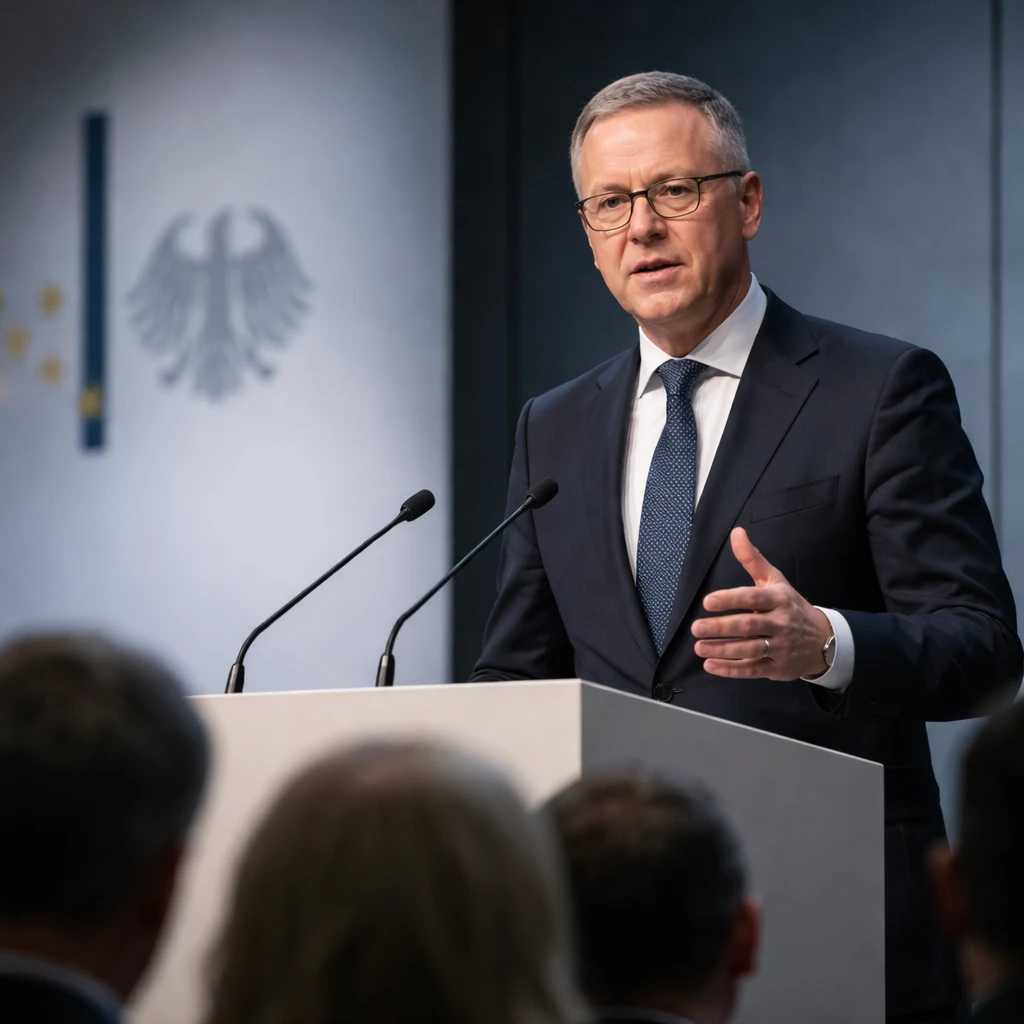
Bundesbank President Joachim Nagel said on Friday that a sharp jump in energy prices risks feeding broader inflation across Europe and that the European Central Bank must be prepared to tighten monetary policy if such "second-round" effects emerge.
The ECB left interest rates unchanged on Thursday, but it increased its inflation projections and cautioned about heightened price risks related to the U.S.-Israeli war on Iran - moves that have reinforced market expectations for at least two interest rate increases this year.
Nagel stopped short of explicitly endorsing an immediate rate hike, but he stressed the mechanics by which a prolonged and larger-than-anticipated rise in inflation raises the odds of secondary inflationary dynamics. He framed the issue around the behaviour of inflation expectations and the risk of higher inflation becoming entrenched.
"Monetary policy cannot prevent a short-term rise in inflation resulting from an energy price shock," Nagel said in a speech. "However, it must act when second-round effects become apparent and longer-term inflation expectations rise above the inflation target, because then high inflation threatens to become entrenched."
According to officials speaking on condition of anonymity, central bankers will need to consider a rate increase at an April meeting if the war continues to exert upward pressure on prices, although those same officials view a June move as more likely for now.
Nagel characterised the situation as one in which the full medium-term implications of the recent inflation surge are not yet clear. For that reason, he said, a cautious, wait-and-see stance remains appropriate at this stage - a posture made feasible by the ECB's ability to respond swiftly should conditions change.
"We are determined to stabilize the inflation rate at 2% over the medium term," he added. "It is crucial to remain highly vigilant in monetary policy."
Summary: Bundesbank President Joachim Nagel warned that an energy-driven spike in inflation could produce wider, sustained inflationary effects that would require the European Central Bank to tighten policy. The ECB has held rates steady while upgrading its inflation outlook and highlighting price risks tied to the U.S.-Israeli war on Iran, reinforcing market expectations of multiple rate hikes this year. Anonymous policymakers said a rate rise may need discussion in April if the conflict continues, though June remains the likelier timing for action. Nagel advocated a measured approach while underscoring the ECB's readiness to act to keep inflation anchored at 2%.