
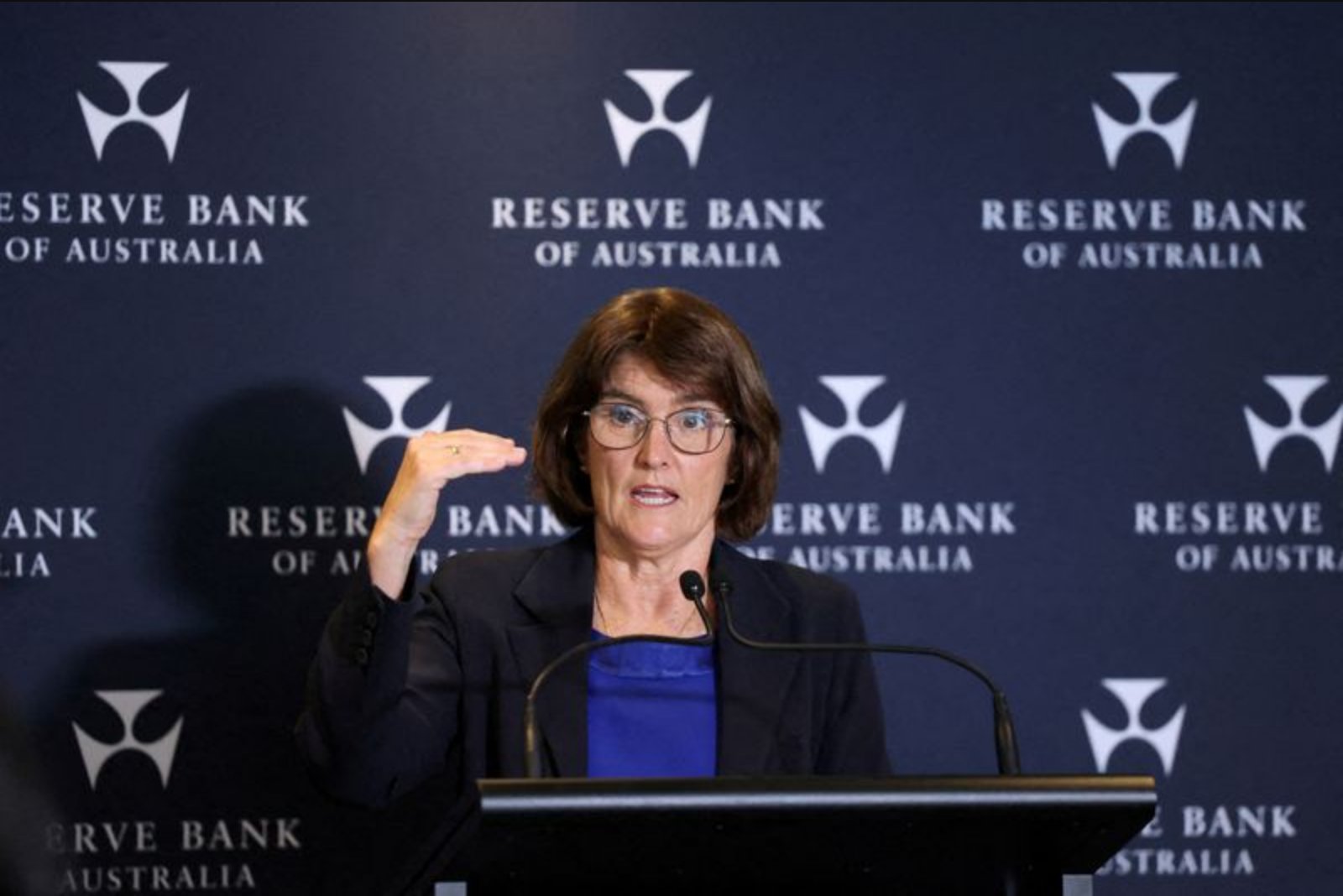
In a speech delivered in Sydney, Reserve Bank of Australia Governor Michele Bullock said recent economic data supported the board's move to increase interest rates in February and cautioned that geopolitical events overseas were an added source of uncertainty for inflation.
Bullock framed the challenge facing policymakers as one of navigating an inherently uncertain environment, where unexpected international developments and changing assessments of domestic conditions complicate monetary policy decisions. She singled out the conflict in the Middle East as a reminder that risks can shift quickly.
"Events in the Middle East are a timely reminder that in this world of geopolitical uncertainty, things can change quickly," Bullock said. "It’s too early to say what the impact will be, events are moving rapidly and there are different ways this can play out."
She added that a supply shock stemming from the conflict could amplify inflationary pressures, while noting that if energy markets were affected for an extended period the consequences could be negative for the global economy. Bullock argued that the RBA must remain positioned to respond if conditions warrant adjustment.
Monetary stance and recent decision
Bullock explained the rationale behind the board's quarter-point rise in February, saying that stronger-than-expected inflation for January and solid jobs data supported the change in policy. She reiterated that the cash rate now stands at 3.85% and said the economy is closer to balance than it was in previous years.
"With the cash rate currently at 3.85%, and the economy closer to balance than it was a few years ago, we believe we are well positioned for such a response if it were to be required," she said.
On the relationship between demand and supply, Bullock emphasised the difficulty of assessing whether monetary policy should move when the economy approaches its supply capacity. She said judgments about whether observed differences from earlier expectations are persistent will determine policy adjustments.
"When the economy is closer to balance and demand is near its supply potential, it becomes harder to know whether monetary policy needs to shift to bring inflation back to target," Bullock said. "Most importantly, if it becomes clear that the economy has evolved differently from our earlier expectations, and that difference is likely to endure, then we adjust the stance of policy, as was the case in February."
Geopolitical developments cited
Bullock referenced recent military activity in the Middle East over the weekend, saying the escalation underscored the unpredictability policymakers face. She noted that the United States and Israel launched military strikes on Iran that killed its Supreme Leader Ayatollah Ali Khamenei, and that Iran responded with missile barrages across the region, creating the risk of a wider, protracted conflict.
While she stopped short of quantifying the near-term impact, Bullock stressed that such events can influence supply conditions and therefore the inflation outlook, reinforcing the need for flexibility in the RBA's policy stance.
The governor's remarks outlined a cautious approach: acknowledging the evidence that motivated the February hike while warning that external shocks can change the trajectory of inflation and growth, requiring readiness to act if developments warrant further policy adjustment.
Summary
Michele Bullock defended the RBA's February 25 basis-point increase, citing strong January inflation and tight labour conditions, and warned that military developments in the Middle East add uncertainty to the inflation outlook and may necessitate policy responses.