
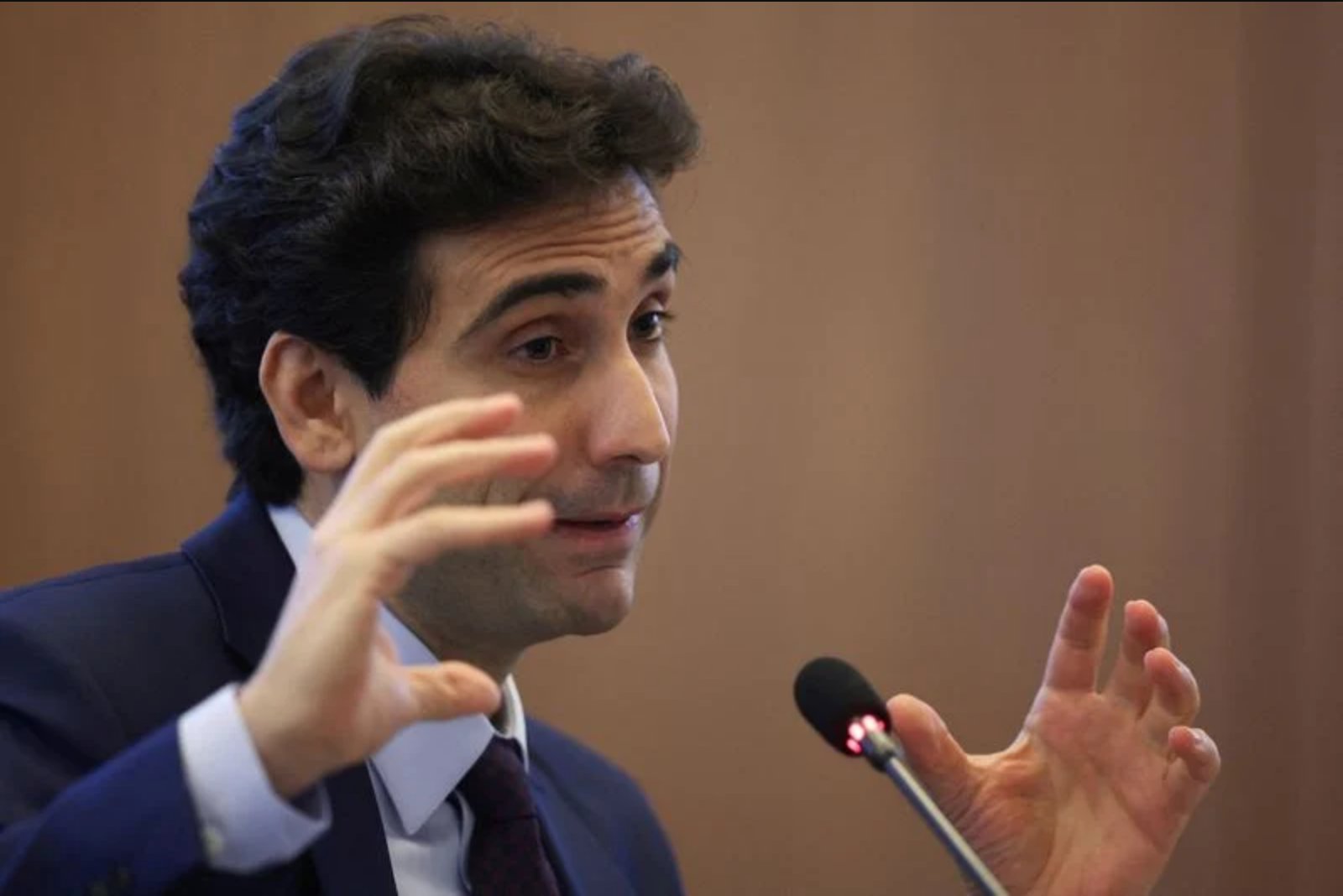
BRASILIA - Brazil's central bank is observing inflationary pressures tied to domestic demand, Governor Gabriel Galipolo said on Wednesday, noting that core measures which exclude supply shocks - including those related to tensions in Iran - point to inflation running at levels incompatible with the 3% objective.
Speaking by videoconference at a forum in Lisbon, Galipolo emphasized that services inflation - a segment sensitive to domestic conditions - reflects a resilient economy. He cited historically low unemployment, record-high income, wage growth that has outpaced productivity, and consumption that continues to be supported by credit as factors behind the persistent inflationary readings in services and other labor-intensive areas.
"We do see the effects of supply shocks on prices, but several core measures that strip out those effects ... especially in services and other labor-intensive segments, show inflation running at levels clearly inconsistent with meeting the target," Galipolo said.
The governor's comments come as Brazilian banks and market participants pare back expectations for further monetary easing. Lenders point to a more challenging domestic inflation outlook as the rationale for scaling back rate-cut bets - a view that takes into account not only the risk of higher oil prices amid tensions in the Middle East, but also the potential impact of domestic fiscal stimulus ahead of the October presidential election under President Luiz Inacio Lula da Silva.
Monetary authorities began easing in March with a 25 basis-point cut, and followed with another 25 basis-point reduction in April, lowering the benchmark Selic rate to 14.5%.
Twelve-month inflation stood at 4.64% in mid-May.
Market participants' views differ on the terminal Selic level for the cycle. In a note on Wednesday, XP said that inflation prospects in Brazil have deteriorated due to both supply and demand factors and now expects two additional 25-basis-point cuts, bringing the Selic to 14.0% - a reduction from its prior forecast of three cuts.
By contrast, BTG Pactual has taken a more hawkish stance. The bank forecasts a final 25-basis-point reduction at this month's meeting, and expects the Selic to be held at 14.25% through the end of the year - up from a previously projected terminal rate of 13.0%.
Economists at BTG led by Tiago Berriel said the outlook could already justify a pause in easing. They cited more adverse inflation readings, resilient economic activity, firm labor and credit data, and unanchored expectations - including those extending to 2028 - as reasons for a more cautious approach.
Summary
Brazil's central bank governor highlighted demand-driven inflation pressures, particularly in services, and said core measures excluding supply shocks show inflation inconsistent with the 3% target. Banks have trimmed expectations for how far and fast the central bank will cut rates, with differing views from XP and BTG Pactual on the likely terminal Selic.
Key Points
- Governor Gabriel Galipolo said domestic demand is contributing to inflation, with services inflation reflecting robust labor and income conditions.
- Policymakers have eased twice this year - in March and April - bringing the Selic to 14.5%; twelve-month inflation was 4.64% in mid-May.
- Financial institutions have adjusted rate-cut forecasts: XP now expects two additional 25-basis-point cuts to 14.0%, while BTG Pactual expects a final 25-basis-point cut and a year-end Selic of 14.25%.
Risks / Uncertainties
- Higher oil prices amid Middle East tensions could add upward pressure to inflation - a risk for energy-exposed sectors and overall inflation dynamics.
- Domestic fiscal stimulus ahead of the October election is cited as a factor complicating the inflation outlook and could influence demand-sensitive sectors and credit-fueled consumption.
- Unanchored inflation expectations, including for 2028, may challenge the central bank's ability to return inflation to target and affect interest-rate sensitive markets.