
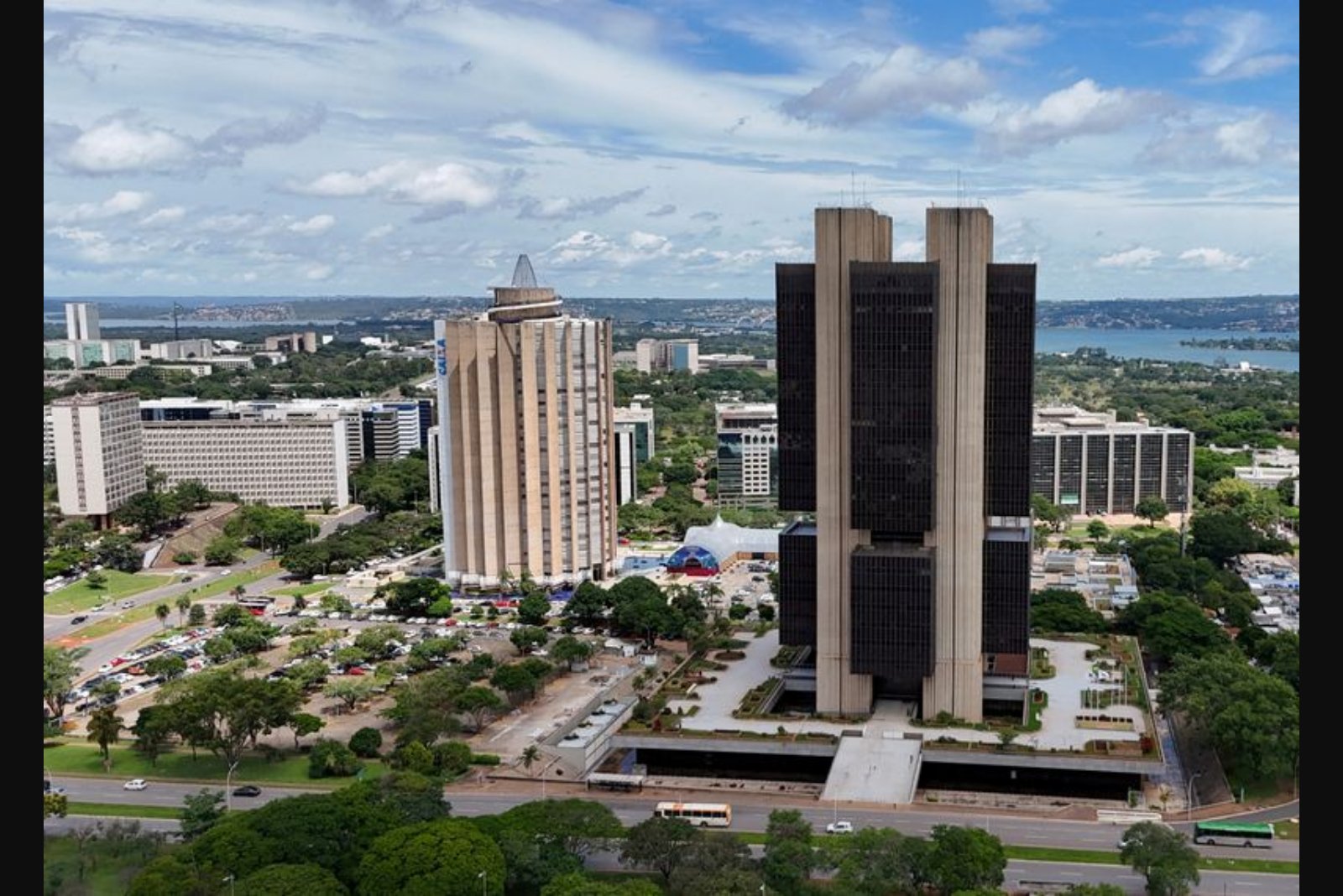
Brazil's central bank is taking a measured, data-driven approach to policy decisions after a jump in oil prices prompted by the U.S.-Israeli conflict with Iran raised concerns about renewed inflationary pressure.
Nilton David, the central bank's monetary policy director, told an audience at an event hosted by Goldman Sachs that higher oil prices have an inflationary character, but the key consideration is duration. "It is natural to assume that if oil prices rise, that has an inflationary characteristic. The question is: for how long?" he said, urging policymakers to remain calm as they assess the evolving picture.
The bank's rate-setting committee will convene on March 17-18. In January it had already signaled the start of an easing cycle. David said that signal remains valid within a broader "calibration" process, but emphasized that the guidance was directed specifically at next month's meeting. "Obviously, events since then are factoring into our considerations," he added.
Market expectations have shifted in recent days as a sharp rise in oil prices tied to the Middle East conflict has altered the implied path for interest rates. Where markets had previously priced in a larger reduction, bets are now split between an initial cut of 25 basis points and a 50 basis point move.
Policymakers had paused an aggressive tightening campaign in July and have kept the policy rate at 15% since then - the highest level in nearly two decades - as they work to steer inflation back toward the central bank's 3% target. Consumer prices in the 12 months to mid-February increased by 4.1%.
David also highlighted political and market dynamics ahead. With general elections scheduled for October, he said Brazil can expect heightened market volatility through the end of the year, a factor that can blunt the potency of monetary policy. "This extra layer of interest rates that we have at the moment will be quite useful during this period," he said.
On the economy, David observed that growth appears to be running close to potential and welcomed signs of a recent slowdown in inflation momentum. Regarding foreign exchange operations, he explained that the monetary authority chose to scale back the rollover of FX swaps because the previous volume was believed to be interfering with price formation.
Context and implications
The central bank's message is one of cautious adjustment: policymakers acknowledge inflationary pressures from global oil market developments but are resisting hasty conclusions, preferring to reflect those developments in their forthcoming deliberations while maintaining the framework established in January.