
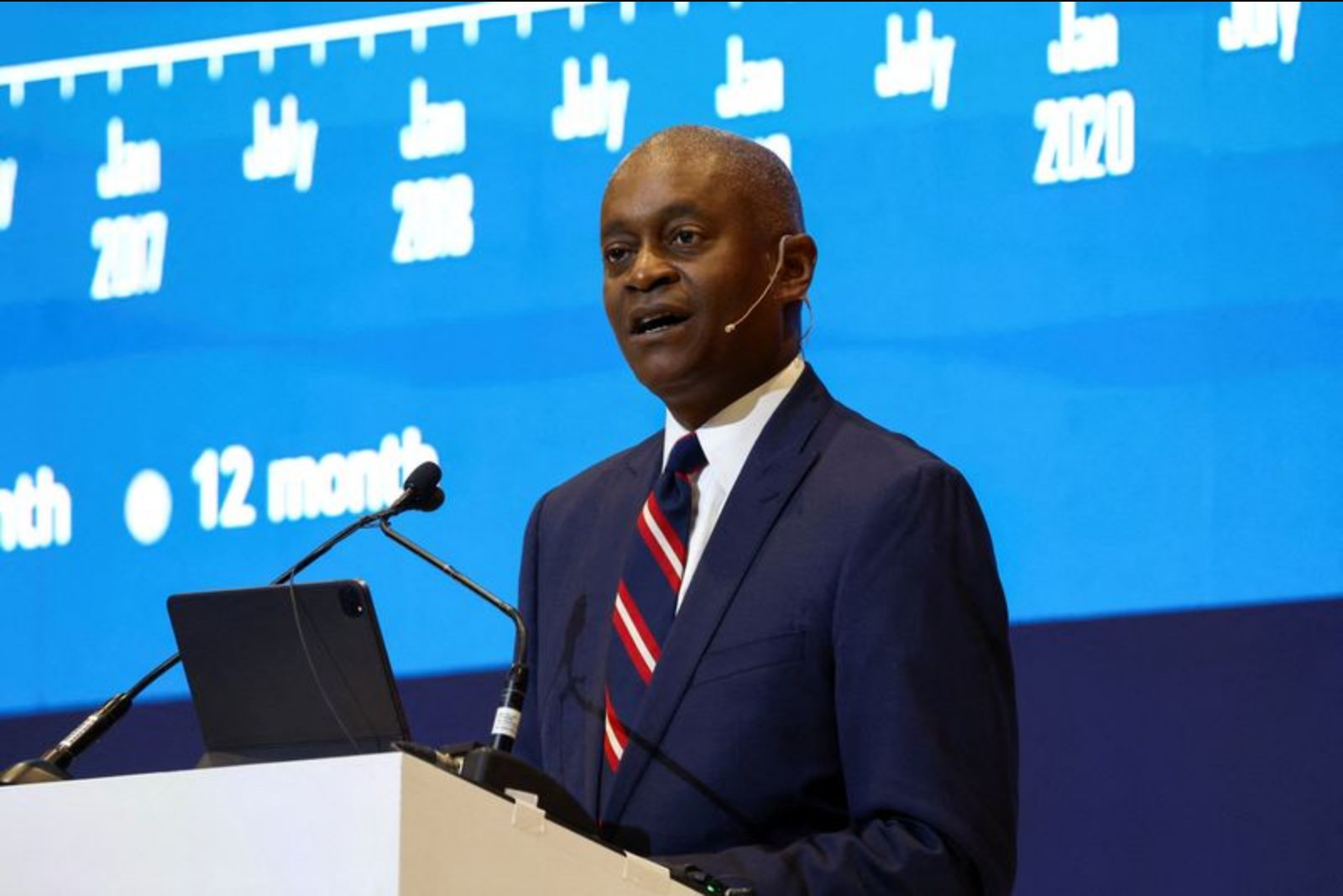
WASHINGTON, Feb 25 - Raphael Bostic, who is stepping down as president of the Federal Reserve Bank of Atlanta this week, warned on Wednesday that the intense political fights over the Fed risk undermining public trust in the institution's independence. Bostic, whose term ends on Friday, framed his remarks in an essay published on the eve of his departure that was cast largely as a farewell letter.
In the essay Bostic said his recent travels had made clear that "the legal and rhetorical battles raging around the central bank right now have caused people across a wide cross-section of our population to begin to doubt the Fed's independence." He said that this erosion of trust is a "major concern" that touches directly on U.S. economic performance and the country's role in the global economy.
Bostic underscored the link between an independent central bank and better economic outcomes, writing that "decades of lived experience, as well as a large body of academic research, makes clear that a nation's economic outcomes are better when there is an independent central bank. Inflation is lower, economic performance is more robust, and consumers and businesses alike are more confident that long-run investments will be worth making."
While Bostic did not name the president or the administration in his letter, he pointed to specific developments that have contributed to public doubt. Those developments include efforts by the president to remove Fed Governor Lisa Cook from office, an ongoing Department of Justice inquiry into Federal Reserve Chair Jerome Powell, and frequent public calls by the president for lower interest rates.
Earlier in the year Powell publicly described the DOJ probe as an attempt to pressure him on monetary policy, characterizing it as an effort to influence central bank decisions. That remark was an atypical public rebuke of the president by a Fed chair. Bostic and other U.S. central bankers, as well as some global counterparts, have rallied behind Powell, warning - as Bostic did - that compromising the Fed's standing carries risks for the United States.
Bostic's essay intends to draw attention to what he described as stakes for both the domestic economy and the country's reputation as a global financial safe haven. He said the United States' status in that regard "is not guaranteed. Safeguarding our special status includes protecting the Fed's independence."
As Bostic prepares to leave his post, his public appeal highlights concerns among policymakers about how political and legal friction may affect confidence in monetary institutions and, by extension, economic decision-making by consumers and businesses.
Key points
- Political and legal disputes are fostering public doubt about the Fed's independence, according to Raphael Bostic.
- Bostic said independent central banks are associated with lower inflation, stronger economic performance and greater confidence in long-term investments.
- Incidents cited as driving the doubts include attempts to remove a Fed governor, a DOJ inquiry into Fed Chair Jerome Powell, and repeated public demands for lower rates by the president.
Risks and uncertainties
- Reduced public confidence in the Fed's autonomy could weaken expectations that underpin consumer and business investment decisions - impacting financial markets and the broader economy.
- Ongoing legal and rhetorical confrontations around Fed leaders, including the DOJ inquiry into the chair, create uncertainty for monetary policy and could influence central bank credibility.