
Overview
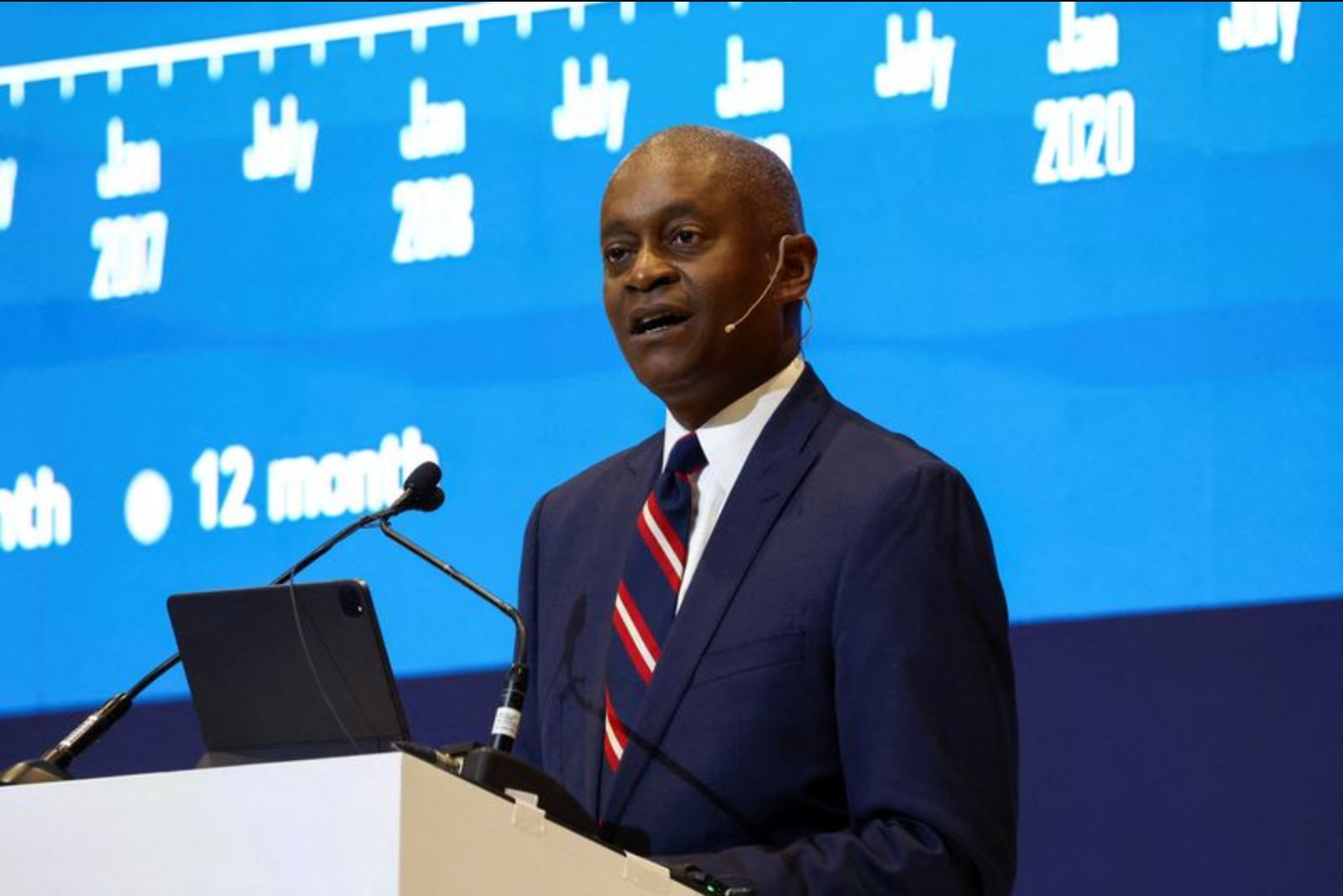
Raphael Bostic, who will leave his post as president of the Federal Reserve Bank of Atlanta at the end of his current term on February 28, cautioned that the United States may be entering a period of structurally higher unemployment as companies deploy artificial intelligence tools to reduce labor needs. In an interview, Bostic said such a shift could alter the unemployment rate the Fed views as consistent with full employment and complicate the central bank’s ability to use rate cuts to bring joblessness down.
"We could potentially be in a transformational period where employers don’t need as many workers as they did before," Bostic said, noting that the change could raise the jobless rate the Fed would consider compatible with its dual mandate of price stability and maximum employment.
Why lower rates may not be the answer
Bostic emphasized that if the reduction in labor demand is structural rather than cyclical, it would be inappropriate for monetary policy to try to mechanically lower unemployment through interest-rate cuts. "If we are having structural change, then we really need to lean into that truth," he said, adding that policymakers should set interest rates in recognition of that reality rather than attempting to push the jobless rate artificially lower.
He framed this challenge as part of why central banking is particularly difficult now. "This is a very hard time to be a central banker and a policymaker ... Because of structural change, the same number is actually sending a different message about where the economy is," Bostic said, explaining that identical unemployment readings could mean different things depending on whether the underlying shift is cyclical or structural.
Debate within the Fed over AI, productivity and rates
Bostic’s comments present a counterpoint to arguments made by other policymakers who suggest that an AI-driven productivity surge could allow the economy to produce more with fewer resources, thereby easing inflation and creating space for rate reductions. Fed chief nominee Kevin Warsh has expressed a view that productivity gains could justify lower rates now; Bostic highlighted the uncertainty around how sustained and how fast productivity changes will affect labor demand.
Officials at the Federal Reserve currently judge the long-run unemployment rate at the median to be 4.2 percent. The official jobless rate was 4.3 percent in January. Bostic noted that more productive firms can operate with fewer employees, a dynamic that could move the so-called natural unemployment rate away from the levels the Fed has used in its policy deliberations.
Monetary versus fiscal responsibility
While the Fed can respond to unemployment swings driven by the business cycle, Bostic said that addressing a durable fall in labor demand would typically fall to fiscal authorities. He pointed to jobless benefits, retraining programs and other fiscal measures as the traditional tools for responding to structural labor-market shifts.
"To address short-run issues that are structural in nature could put us at risk of a much more difficult situation, where both of our mandate measures seem to be moving in the wrong direction," Bostic said. That concern underlies his view that the Fed must continue to press on inflation, which he noted remains about a percentage point above its 2 percent target.
Distributional concerns and labor-market niches
Bostic also described how the transition in the labor market may already be affecting certain groups. He said new college graduates are facing a more difficult path into employment after a long period when degree holders enjoyed an advantage in hiring.
He argued that the Fed’s attention to particular "niches" of the labor market influenced policymakers to cut rates three times last year. Those cuts were, in his account, motivated by early signs of weakness in specific segments of the workforce, including people just out of college and African-American unemployment rates, concerns the Fed took into consideration when making policy decisions.
Bostic has been one of the Fed’s more vocal advocates for ensuring that economic gains reach a broad set of communities. He identified himself as among those who, especially in 2020, emphasized research and policy discussion focused on how outcomes varied across geographic areas and ethnic groups — topics he views as essential to understanding the labor market even though monetary policy cannot target narrow demographic outcomes.
Political pressure and institutional independence
Bostic addressed the heightened political scrutiny facing the Fed from the Trump administration. He referenced multiple tensions between the White House and the central bank, including the president’s calls for deeper rate cuts and a series of actions and pressures involving senior officials and research staff.
He cited specific examples of that pressure, noting an attempt by the president to remove a Fed governor, a Department of Justice inquiry involving the Fed chair, public criticism from a nominee for Fed chief, and a call from a White House economic adviser for disciplinary action against economists at another regional Fed for their research. Despite these developments, Bostic said he hoped the guardrails protecting the Fed’s independence in setting monetary policy would hold.
According to Bostic, Fed staff have not been deterred from pursuing different lines of research because of political sensitivities, though there is now greater care taken to ensure findings are presented as descriptive rather than prescriptive. He said the system remains committed to thinking broadly about labor markets and how they function.
Transition at the top
Bostic also commented on the leadership transition that accompanies the arrival of any new Fed chair. He said the incoming chair will need to build trust with staff, other governors, and the regional presidents to ensure the institution can continue to operate effectively. "He needs to have a relationship with his staff. I think he needs to have a relationship with the other governors and relationships with the presidents and others," Bostic said.
On how a new chair might respond to external pressure, Bostic observed that the reality of the role often differs from expectations. "One thing we’ll see is how, to the extent that there is pressure, ... he responds to it. We won’t know until we know on this," he said. "You think you know what the job is, and then you get in the chair, and then you find out what the job really is. Often (it is) not the same."
Implications for policy and markets
Bostic’s remarks highlight a central tension for policymakers: whether shifts brought on by technological adoption are temporary friction or permanent reconfiguration. If labor demand has been structurally reduced, the central bank’s ability to use traditional interest-rate tools to engineer a return to prior employment levels is limited. That line of thinking supports Bostic’s argument that borrowing costs do not necessarily need to fall much further, if at all, from current levels.
At the same time, the question of how to help workers through any transition — including retraining and targeted support — is primarily a fiscal policy issue, involving elected officials and budgetary choices rather than central banking actions.
Conclusion
As he prepares to leave the Atlanta Fed at the end of February, Bostic offered a cautious assessment of how AI-driven productivity gains could reshape labor markets and complicate the Fed’s policy calculus. He urged policymakers to confront the possibility of structural change candidly, to maintain a focus on distributional outcomes within the labor market, and to guard the institution’s ability to act independently in pursuit of its dual mandate.
His remarks add to an ongoing debate at the Federal Reserve about the pace and durability of productivity improvements and their consequences for inflation, employment, and the appropriate stance of monetary policy.