
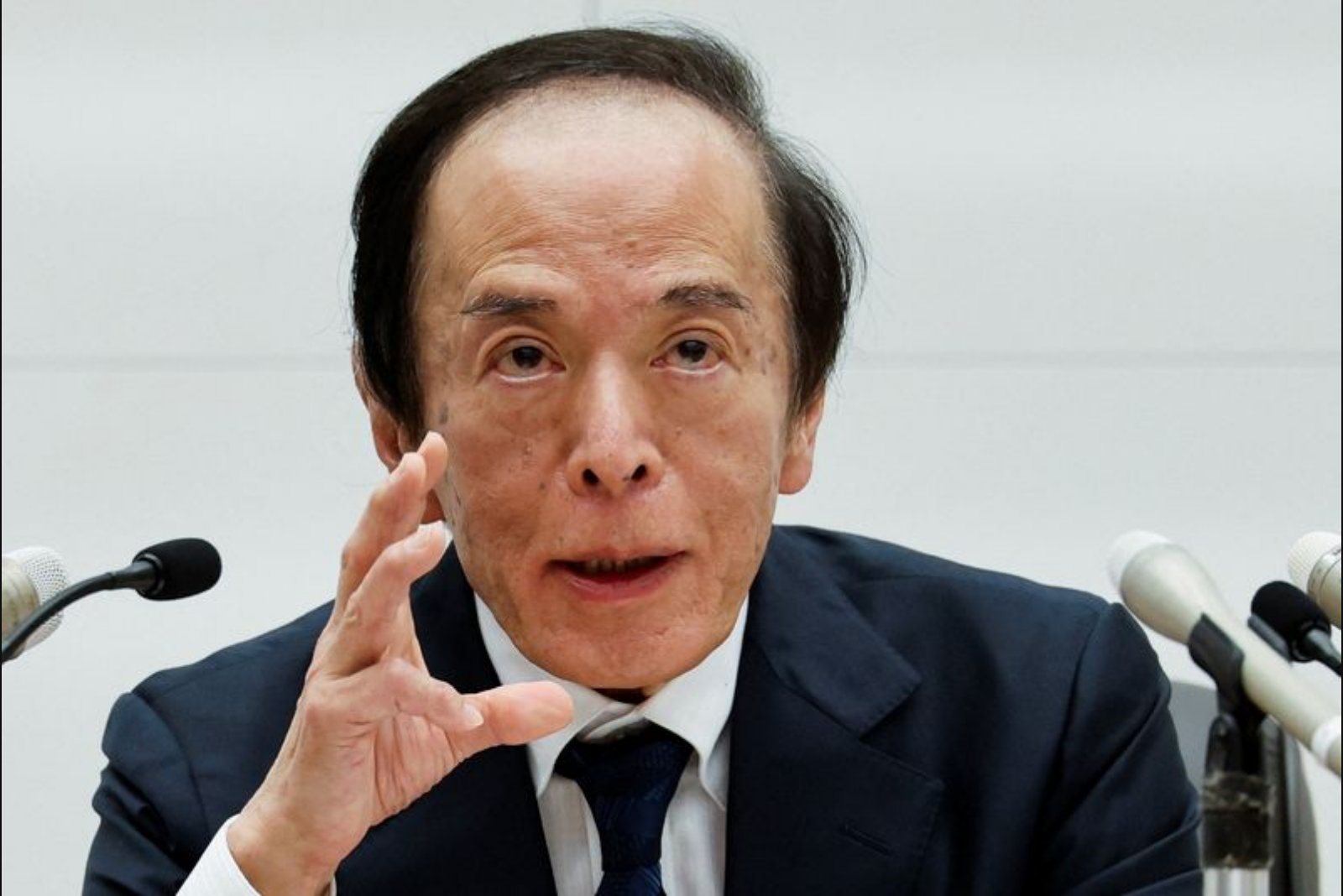
TOKYO, Feb 26 - Bank of Japan Governor Kazuo Ueda said in an interview with the Yomiuri newspaper that the central bank will scrutinize data ahead of its policy meetings in March and April when deciding whether to raise interest rates, leaving open the possibility of a near-term tightening.
Ueda, in comments from an interview conducted on Tuesday and reported on Thursday, stressed that the BOJ will continue to raise interest rates if Japan makes measurable progress against the central bank's economic and price projections. He said there had been no substantial shift to the BOJ's outlook published in January, but left room for the 2% underlying inflation goal to be met sooner if wage outcomes surprised on the upside.
Under the BOJ's current projections, published in January, underlying inflation is expected to reach the 2% target in the latter half of fiscal 2026 through fiscal 2027. Ueda said that stronger-than-expected results from this year’s spring wage negotiations between firms and unions could accelerate that timetable, potentially moving the achievement date earlier than currently projected.
Asked about market speculation that the BOJ could raise rates in April, Ueda said the bank will hold policy meetings in both March and April and aims to make any decision by carefully examining the data available at those meetings. He added that the BOJ does not necessarily have to wait for the publication of its quarterly Tankan business sentiment survey on April 1 to decide on policy, because the central bank also runs a variety of other surveys that inform its assessments.
The governor’s remarks underscore a data-dependent stance: policy action will hinge on incoming economic indicators and the evolution of wages and prices rather than a fixed timetable. By highlighting multiple survey tools in addition to the Tankan, Ueda signaled that the BOJ intends to use a range of information to judge progress toward its targets before altering its policy stance.
Those monitoring the BOJ’s path will focus on the sequence of meetings in March and April and on developments in wage negotiations and survey-based measures of business sentiment and prices. The central bank’s January projection remains the baseline, with the possibility of an earlier achievement of the inflation goal if compensation trends strengthen materially in the spring talks.
Summary: Governor Kazuo Ueda told the Yomiuri that the BOJ will scrutinize data at its March and April meetings in deciding whether to raise rates, will continue tightening if economic and price projections advance, and noted stronger spring wage talks could accelerate attainment of the 2% underlying inflation target currently projected for late fiscal 2026 through fiscal 2027. The BOJ may act without waiting for the Tankan by relying on multiple surveys.