
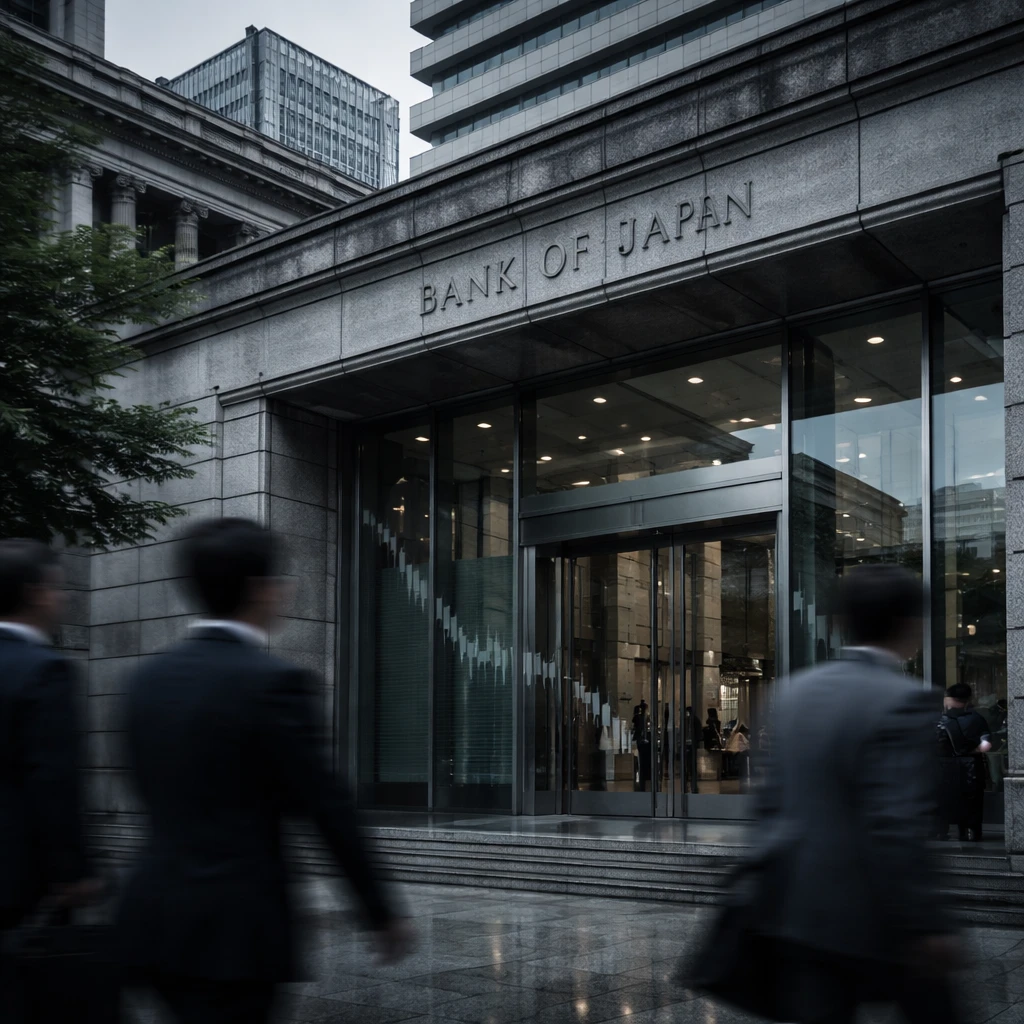
Tokyo - The Bank of Japan on Thursday left its overnight call rate unchanged at 0.75%, a decision taken almost unanimously by its nine-member policy board. Board member Hajime Takata registered the sole dissent, voting for a 25 basis point increase, citing upside risks to inflation.
In its policy statement the central bank underscored heightened caution over medium-to-long-term inflation trends amid rising crude oil prices linked to the U.S.-Israel war on Iran. The BOJ said that recent moves in oil markets present upside risks for living costs in Japan, and explicitly named developments in crude prices and the course of the situation in the Middle East as risks to the outlook.
On the outlook for inflation the BOJ reiterated that headline consumer price index measures are expected to cool in the near term. The central bank attributed that near-term easing to the fading impact of previously elevated food prices and to government measures aimed at tamping down food and energy costs.
Looking further ahead, however, the BOJ said underlying inflation is expected to pick up and to reach the bank's 2% annual target later in 2026. The statement also warned that "the rate of (inflation) increase it expected to come under upward pressure, affected by the recent rise in crude oil prices."
Markets had broadly anticipated Thursday's decision, viewing the BOJ as likely to stand pat on additional hikes until there is greater clarity on economic developments in Japan. In particular, ongoing springtime wage negotiations represent a key monitor; the BOJ has signalled that solid pay gains in those talks would give it stronger justification to raise interest rates further.
The policy pause follows a sequence of tightening that has lifted borrowing costs by a cumulative 85 basis points since early-2024, when the central bank moved to unwind more than a decade of ultra-loose monetary policy.
Capital Economics analysts restated their view that the BOJ will deliver another 25 basis point hike in April. Those analysts also noted Japan's status as a large net energy importer, observing that higher energy prices could weigh on economic activity - a risk the bank's own statement did not appear overly concerned about. They added that the recent weakening of the yen will amplify inflationary pressures.
Market reactions were muted for the currency, with the Japanese yen showing little immediate response to the decision but remaining close to its weakest levels since mid-2024. Equity markets, by contrast, moved lower: Japan's Nikkei 225 benchmark fell 2.5%, tracking broader declines across Asian markets.
Market participants and observers will now turn to a post-meeting press conference by BOJ Governor Kazuo Ueda, scheduled later in the day, for additional cues on the bank's policy intentions and the timeline for potential future tightening.
Key Points
- The BOJ held its overnight call rate at 0.75% in a near-unanimous vote; one board member dissented, favoring a 25 basis point hike.
- The central bank warned that rising crude oil prices tied to the U.S.-Israel war on Iran are an upside risk for inflation even as near-term CPI pressures ease.
- Markets expected the pause; attention is focused on spring wage negotiations and an upcoming press conference by Governor Kazuo Ueda. Immediate market impacts were seen in equities and the yen.
Risks and Uncertainties
- Oil price volatility - Rising crude prices could push living costs higher and complicate the BOJ's path to stable inflation; this affects households and energy-dependent sectors.
- Geopolitical developments - The future course of the situation in the Middle East was cited by the BOJ as a risk to the economic and inflation outlook, with potential implications for commodity markets and trade-sensitive sectors.
- Wage negotiations - The outcome of ongoing springtime pay talks is a key variable; stronger-than-expected pay gains would increase pressure on the BOJ to raise rates further, influencing borrowing costs and corporate margins.
Market Snapshot
- The yen showed little immediate change but remained near its weakest levels since mid-2024.
- Japan's Nikkei 225 dropped 2.5%, in line with broader Asian market declines.
Observers noted that while the BOJ signalled some concern about energy-driven inflation pressures, the central bank still expects headline CPI to moderate in the near term before underlying inflation resumes an upward path toward the 2% target later in 2026.