
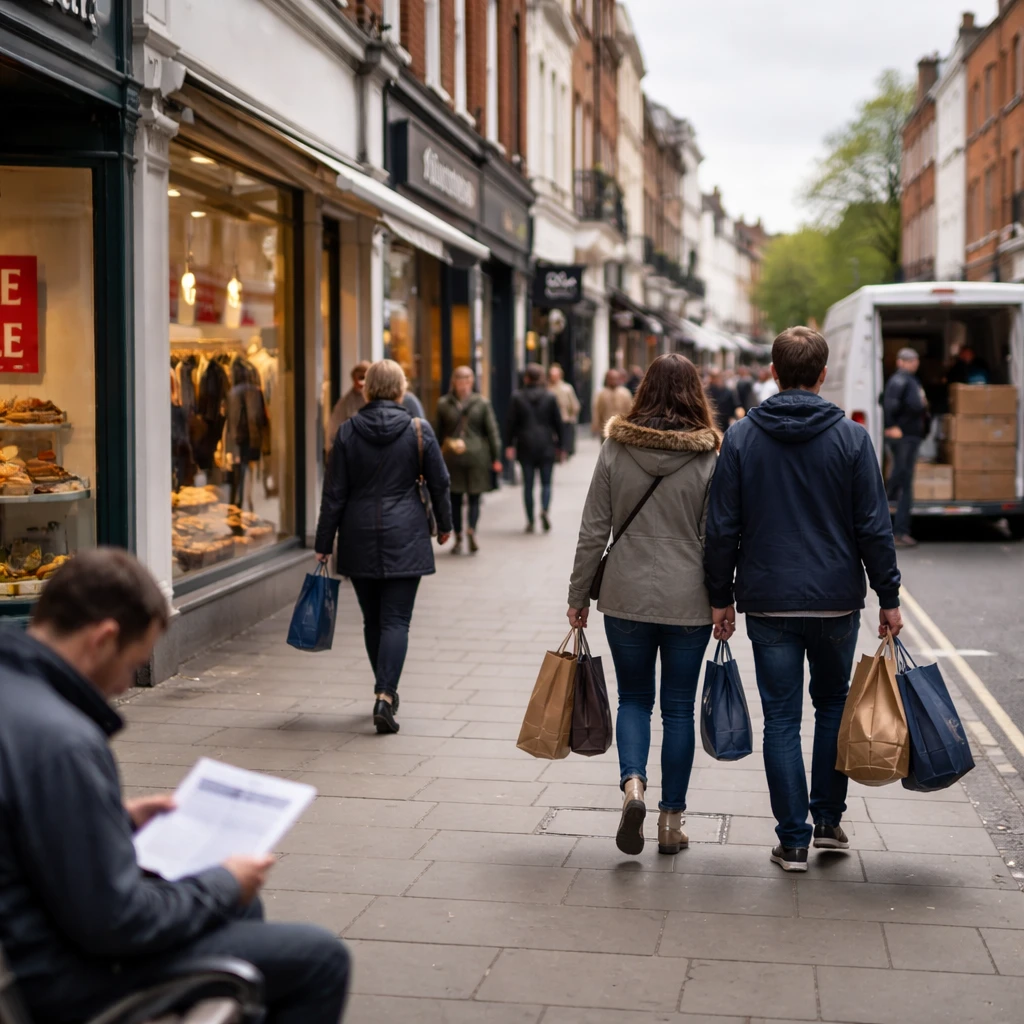
Bank of America Securities forecasts a subdued recovery in UK household spending next year, expecting consumption to grow by just 1.2% in 2026. In a note on the UK outlook, the bank highlights a slowdown in real disposable income growth and a modest decline in the household savings rate as factors that will weigh on consumer demand.
Specifically, BofA projects the savings rate will fall to 9.5% in 2026 from 10.1% in 2025, while real disposable income growth is set to decelerate to 0.6% from 1.1% the prior year. Despite several years of income recovery since the pandemic, the brokerage points out that consumption remains only marginally higher than pre-COVID levels - about 1.2% above - while real incomes sit 3.6% higher.
The note identifies four principal risks that could push the consumption outlook lower.
Energy price risk tops BofA's list. The bank notes that if oil stays at about a360 per barrel and gas around 140 pence per therm, inflation could run roughly 35 basis points above its 2.2% forecast for 2026. That outcome would likely delay the return of inflation to the Bank of England's 2% target by about a year, the brokerage warns.
Mortgage refinancing pressure is also a concern. BofA highlights that roughly 1.5 million fixed-rate households are scheduled to refinance in 2026, rising to 1.9 million in 2027. About half of those renewing this year had locked in rates below 2%. The bank estimates that 700,000 households will reset at higher rates in 2026, up from 600,000 in 2025, creating renewed mortgage stress for affected households.
Labour-market deterioration presents the sharpest potential downside scenario. BofA models a case in which the unemployment rate climbs close to 5.5% in the coming months while policy uncertainty rises back to the 2025 average. Under that scenario, the brokerage expects precautionary saving to increase and suggests that the savings rate could be around one percentage point higher than current levels, with consumption potentially turning marginally negative.
Behavioural shifts rooted in past inflation rounds are the fourth risk. BofA's analysis of GfK survey data shows that 53% of respondents in the Bank of England/Ipsos series are still cutting spending in anticipation of further price rises. The share of respondents saving because of higher interest rates fell to 23% from 34% over the past year, while the proportion saving for emergency precaution jumped from 32% to 41%.
The brokerage also flags an uneven inflation experience across income groups. Lower-income households continue to face faster inflation driven by food, energy and social rents, widening the confidence gap with higher earners and amplifying distributional pressures on consumption.
On equities, BofA says it remains cautious on UK retail stocks as the sector approaches what it calls a tough comparative year. The bank projects price reductions of 1.3% for Next and 1.4% for Primark, expecting retailers to use foreign exchange tailwinds to offset pressures rather than convert gains into margin expansion.
Implications - BofA's outlook points to a fragile consumer backdrop for 2026, where modest income growth and lingering precautionary behaviour limit spending upside. The combination of energy volatility, mortgage refinancing, labour-market risk and behavioural changes creates multiple channels that could further compress retail demand and weigh on related markets.