
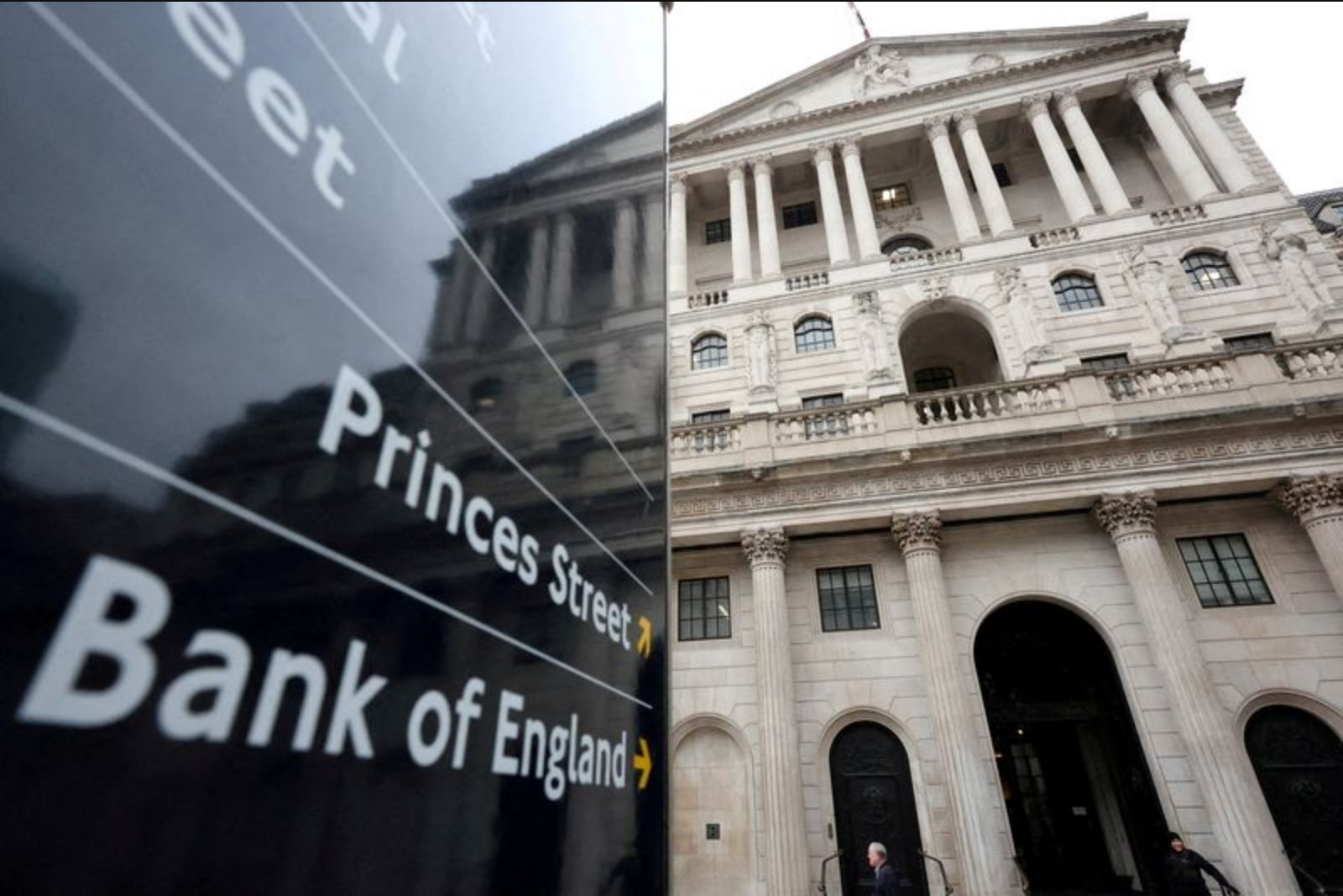
Economists surveyed this week now expect the Bank of England to reduce Bank Rate to 3.50% either at the April meeting or in June, having largely abandoned bets on a cut at the March 19 gathering. The shift in expectations follows a renewed jump in energy prices linked to the Iran war, which has increased near-term inflation risks and eroded conviction about the central bank's short-term path.
Polling responses show a degree of hesitancy among forecasters. Several economists declined to commit to the exact meeting for the first cut, with some simply moving their previous timelines forward and others removing expectations of additional easing altogether. Despite the dispersion of views, the poll's median projection still indicates Bank Rate at 3.25% by the end of the year.
Market indicators have reacted to the geopolitical shock. Benchmark British government bond yields have climbed by around half a percentage point since the conflict began, and interest rate futures are no longer pricing any cuts this year - a notable change from under two weeks ago when they implied about a 90% probability of a March reduction. The change in market pricing underscores how rapidly near-term rate expectations can shift when commodity markets move sharply.
Underlying the market move is a rise in crude prices. Brent crude has returned to levels above $100 per barrel, after almost reaching $120 earlier in the week, amplifying upside risks to consumer price inflation. That matters for the Bank because inflation, which slowed to 3.0% in January, had been expected to drift back toward the BoE's 2% target in coming months before the recent commodity spike.
The poll results show a clear reversal in near-term expectations. Over 85% of economists - 43 out of 50 respondents - now anticipated the Bank would keep Bank Rate unchanged at 3.75% on March 19, compared with a February poll in which 65% expected a March cut. Seven respondents still forecast a move to 3.50% on March 19.
Looking further ahead, roughly 60% of the economists who provided timing views - 26 of 43 - expect the first reduction to arrive next quarter. Among that group, only about 40% specified the April meeting, when the Bank will issue its next set of quarterly forecasts. By contrast, in February nearly all respondents but one expected Bank Rate to fall at least 25 basis points by mid-year.
"Given the situation we’re seeing with oil prices, we now think it’s more likely than not they will delay the next rate cut until April, but overall, we’re still looking for two cuts from the Bank of England this year," said Dean Turner, an economist at UBS. "I suspect the bias in the minutes will still point to the need for further easing in due course...I don’t think there’s any doubt rates are going to fall, it’s just by how much and when."
The Monetary Policy Committee's decisions were narrowly split in the three meetings held before the conflict began on February 28, reflecting how finely balanced the case for easing had been. Market forecasters appear to be becoming more fractured in their outlooks as a result.
"If you alternatively believe the BoE will continue easing without a clear and credible path back to the 2% target, you are overlooking their repeated warnings about inflation persistence and their heightened sensitivity after five years of above-target outcomes," said Stefan Koopman, senior macro strategist at Rabobank. Rabobank last week removed its forecast for two rate cuts this year and now expects none.
Despite the headlines and shifting short-term timing, median projections from the poll conducted March 9-12 left the outlook for the third quarter unchanged, showing Bank Rate at 3.25% by the end of September. Among 46 economists who submitted specific year-end forecasts, 23 see rates at 3.25%, 13 at 3.50%, nine at 3.75% and one at 3.00%.
Forecasters point to a weakening labour market as one reason many remain inclined to expect easing at some point this year. The poll noted that unemployment in the final three months of 2025 rose to its highest level in more than a decade outside the pandemic, a development that supports the case for lower policy rates in some economists' models.
Overall inflation expectations offered little change from February's poll, implying that most economists judge the recent oil price spike to be temporary. The panel's forecasts put inflation at an average of 3.0% this quarter and 2.4% next quarter - both figures above the projections in the Bank's Monetary Policy Report.
Growth projections in the poll show a modest outlook, with average economic growth forecast at 1.0% in 2026 and 1.4% in 2027. The mix of elevated commodity prices, rising bond yields and labour market softness has created a more uncertain backdrop for policymakers and markets as they weigh the timing and scale of future easing.
Key takeaways:
- The first BoE cut is expected at 3.50% in April or June, with reduced confidence on timing.
- Energy price spikes and higher gilt yields have materially altered market pricing for rate cuts.
- Labour market weakening supports the case for future easing, but views among economists are increasingly split.