
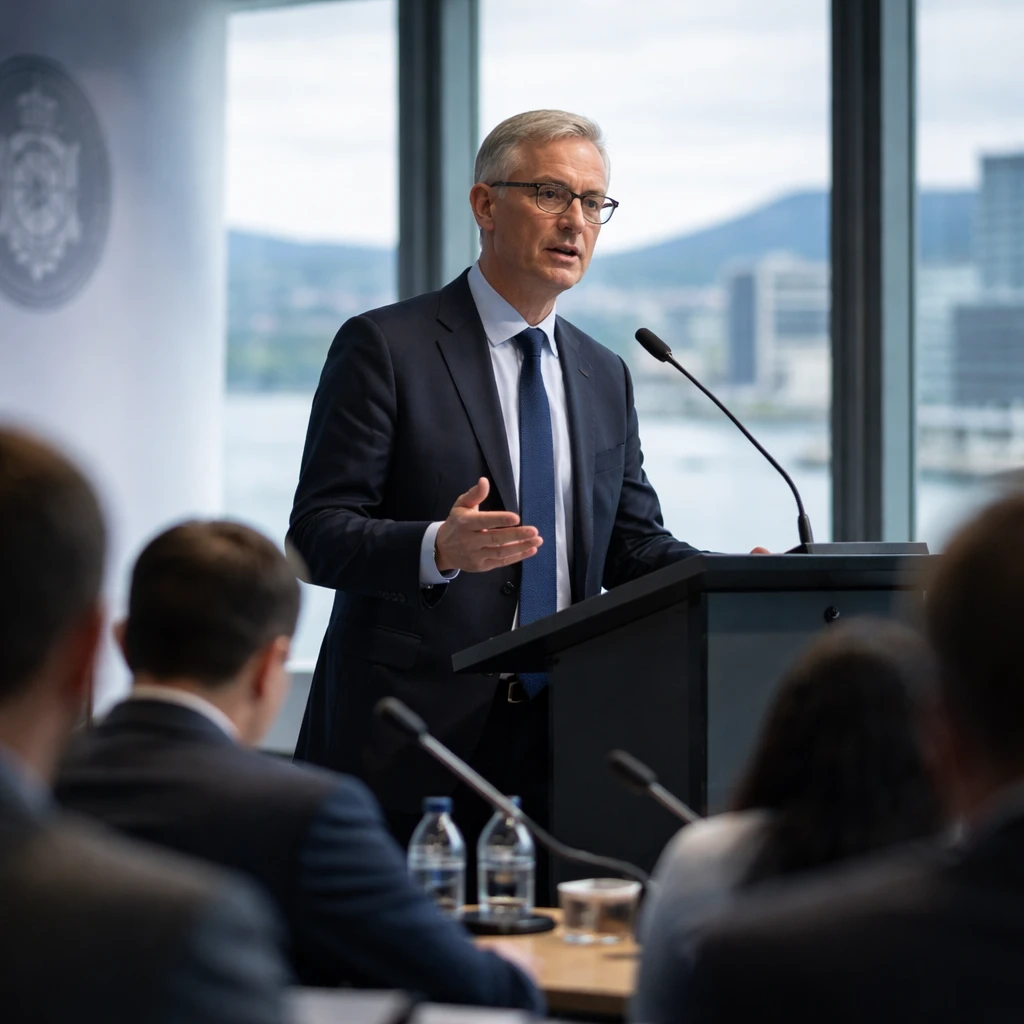
Alan Taylor, a policymaker on the Bank of England's Monetary Policy Committee, said Monday that the central bank may soon no longer be balancing a trade-off between a slowing economy and inflation pressures, and that the institution faces a tangible risk that demand could fall too low.
Speaking at a conference hosted by Norway's central bank in Oslo, Taylor said he judges the Bank will "soon find ourselves largely outside of trade-off territory - and even at risk of entering the familiar realm of deficient demand."
Taylor cited a number of weakening economic indicators as the basis for his assessment. He said that over 2025 and into 2026 inflation has been weaker than expected in successive Bank of England forecasts, and that at the same time unemployment has been higher and wage growth lower.
Those developments, Taylor suggested, shift the central bank's policy calculus away from the classic tension between containing inflation and supporting activity toward a situation in which insufficient demand becomes the primary concern.
Last month, Taylor was part of a four-member minority on the Monetary Policy Committee that sought to reduce the Bank's benchmark interest rate from 3.75% to 3.5%. At the time of that vote he expressed concern that inflation could persistently undershoot the Bank of England's 2% objective going forward.
Taken together, Taylor's remarks underline his view that recent data and the Bank's own forecasts point toward a weaker inflation profile and a softer labour market than previously anticipated in successive projections.
Context limitations: The remarks recorded here are limited to Taylor's public statements at the Oslo conference and the fact of his vote as described. The material does not specify particular policy paths beyond noting his prior preference for a rate cut, nor does it identify specific sectors affected by these trends.