
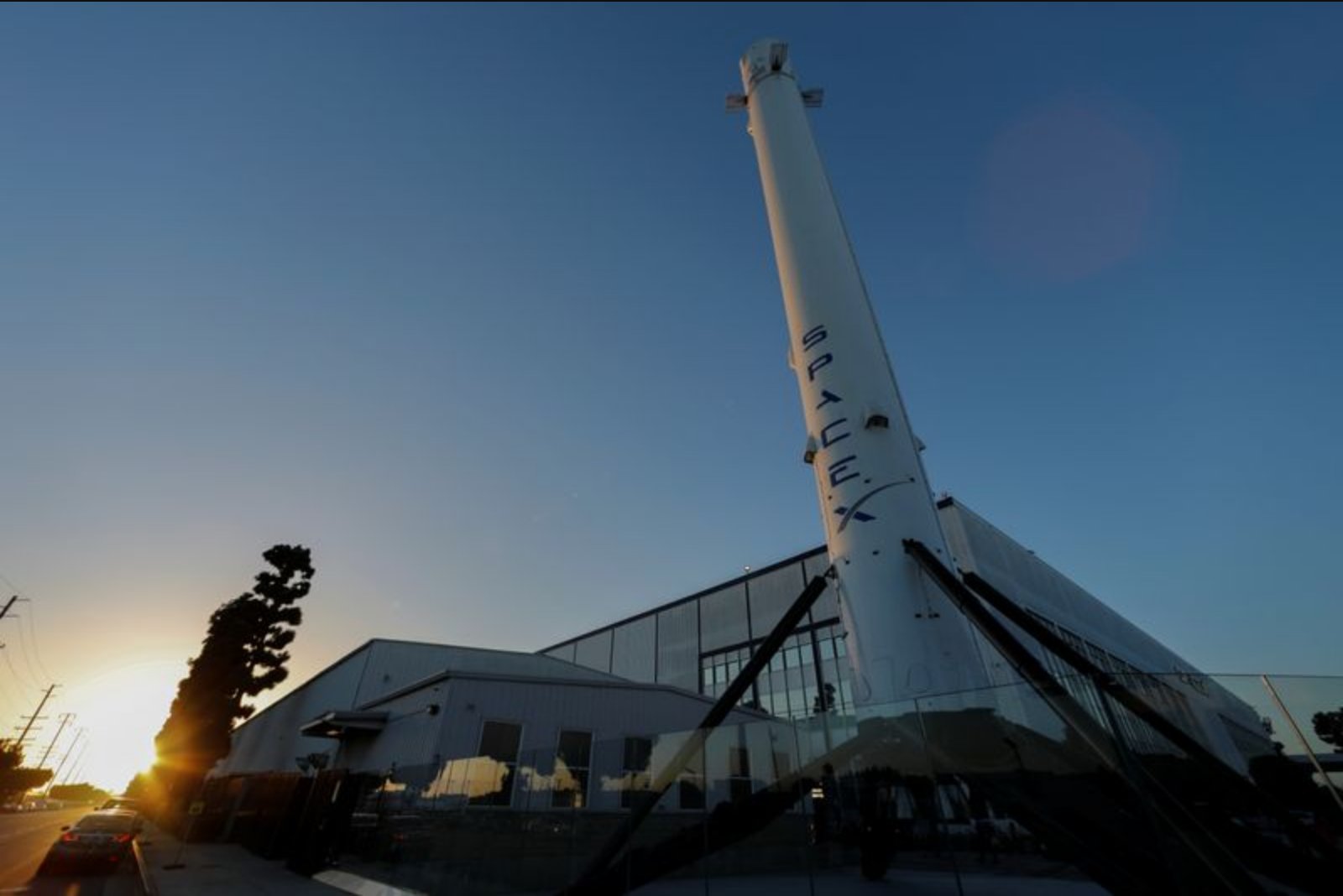
The competition among U.S. space entrepreneurs has tightened as two high-profile private companies pivot toward the moon. SpaceX is moving to establish a permanent presence on the lunar surface and to deploy a launch capability there, while Blue Origin has redirected resources into its lunar lander program as a path to crewed moon missions.
SpaceX’s chief executive has described plans to create what he calls "Moonbase Alpha" and to place a device on the lunar surface capable of launching satellites. Those developments are intended to feed into an expanded plan for distributed AI computing linked to a large constellation of satellites. The shift toward the moon represents a notable change in emphasis for SpaceX, which has long centered its ambitions on Mars exploration.
Company statements and recent public remarks indicate that SpaceX’s leadership now views lunar infrastructure as a strategic priority. Executives say the lunar base would support a broader objective to extend AI computing into space by enabling satellite deployment from the moon. This initiative comes as SpaceX prepares for a planned initial public offering later in the year, and as the company seeks to reassure investors it will remain the dominant commercial force in space. The potential valuation being discussed exceeds $1 trillion.
Jeff Bezos’s Blue Origin has also intensified its lunar program. The company has closed its suborbital space tourism operations and reallocated those resources toward Blue Moon, its lunar lander initiative. Blue Origin shipped the lander to NASA’s Johnson Space Center for thermal and vacuum testing, a critical step toward a planned uncrewed mission to the lunar surface this year. That uncrewed flight is being framed as a precursor to carrying astronauts, in line with NASA’s planning for Artemis program landings.
Both firms are constructing lunar landers with substantial NASA funding. NASA intends to use these commercially developed landers to carry astronauts for a series of moon landings, and SpaceX’s Starship is expected to play a central role in those plans. The federal agency has urged the companies to accelerate development of their lunar landers in part to ensure the United States can maintain a lead over China, which has set a target of landing astronauts on the moon by 2030.
The renewed emphasis on lunar activity has emerged alongside technical and programmatic challenges. SpaceX’s Starship has not yet placed payloads into orbit, though the vehicle has launched 11 times since 2023 and is scheduled for a further upgraded test in about a month. The rocket’s upper stage is intended to function as a lunar lander and is associated with a crewed landing target in 2028, a milestone many industry participants consider difficult to achieve.
There remain multiple development steps SpaceX must complete for Starship to serve reliably as a lunar lander. Those include demonstrating in-orbit refueling using a separate tanker Starship and proving the ability to land safely on the moon’s uneven terrain before that system carries people. Those steps, company insiders and observers note, represent substantive technical hurdles.
Industry figures emphasize that the rivalry between the two founders is changing behavior across the broader U.S. lunar sector. One investor-focused executive said the contest has prompted a surge of interest from the investment community. Lunar Outpost, a firm that has already delivered a rover to the lunar surface, reported a wave of investor inquiries following the public repositioning of SpaceX’s priorities, indicating a shift in sentiment toward the economics of lunar infrastructure.
Commentators within the sector view the competition as beneficial to U.S. national space objectives. A former NASA human spaceflight official who now advises industry suggested that the heightened focus prompted by the rivalry could help the agency counter China’s progress. That same advisor noted that public statements signaling a new urgency have the effect of concentrating corporate effort on returning humans to the moon.
Market participants and executives in the space supply chain expect additional government spending and contractor activity tied to the renewed moon initiative. Observers say that NASA’s commitment of funds to multiple commercial landers will funnel work to a range of companies beyond the headline contractors, potentially expanding opportunities for suppliers and technology vendors involved in lunar systems, robotics, and related services.
Analysts who follow the sector underscore that the path forward is contingent on several variables that are already visible. Those include the timeline for Starship maturation, the outcome of Blue Origin’s planned uncrewed flight, and the pace at which NASA and its contractors can coordinate testing and integration work. The presence of a defined external competitor - China’s stated timeline for a crewed lunar landing by 2030 - is a factor that U.S. policymakers and industry leaders cite as a motivating force to accelerate schedules.
The reorientation by two of the United States’ most prominent space companies has prompted a reassessment among investors and suppliers about the commercial prospects of lunar infrastructure. Executives in the sector say the demand signal has strengthened and that companies positioned to supply lander components, lunar rovers, launch services, and space-rated computing systems could see increased engagement as firms and government agencies press forward.
What this means
- Private-sector competition between major U.S. space companies is focusing attention and capital on lunar infrastructure.
- NASA-funded lander programs are central to near-term plans to return astronauts to the moon, shaping contractor activity and supplier opportunities.
- Technical milestones for Starship and Blue Origin’s lander remain critical to timelines that industry participants view as ambitious.