
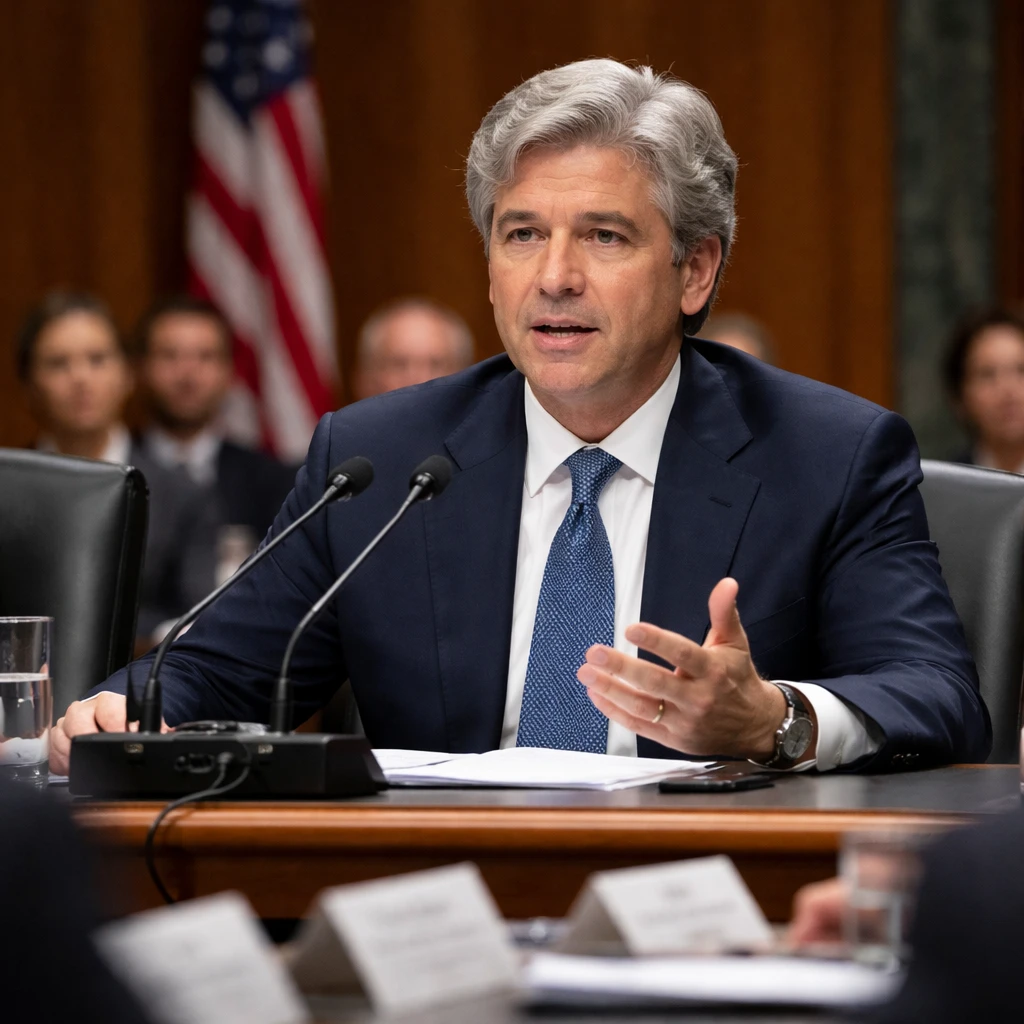
U.S. Treasury Secretary Scott Bessent moved to clarify comments made by President Donald Trump after the president joked that he could sue Kevin Warsh, his nominee for Federal Reserve chair, if interest rates are not reduced.
The exchange occurred during a Senate Banking Committee hearing on Thursday, when Senator Elizabeth Warren pressed Bessent about the president's weekend remarks at a Washington dinner. Bessent told committee members that the comment should not be taken literally and characterized it as humor.
In defending the president's words, Bessent referenced a television interview he gave the previous day. He said he had already addressed the matter on CNBC and relayed that the president's statement was intended as a joke. Bessent reiterated that the president holds the Federal Reserve and its independence in high regard.
On CNBC, Bessent said, "I tried to explain to Senator Warren ... who seems to have no sense of humor, that it was a joke," and added, "And again, the president has great respect for the Fed, for the Fed’s independence." Those remarks formed the basis of his explanation to senators during the hearing.
The matter originated from the president's weekend comment at a Washington dinner in which he suggested legal action could be taken against Warsh if interest rates were not lowered. Bessent's public clarification aimed to frame that remark as lighthearted rather than an expression of intent to intervene in central bank decision-making.
Senators at the Banking Committee sought Bessent's view on the implications of the president's comment and on whether it reflected any intent to influence monetary policy or the Federal Reserve's operations. In response, Bessent maintained the line that the president respects the central bank's autonomy and that the dinner remark was humorous.
The transcript of the exchange shows Bessent using his CNBC remarks to support his explanation before the committee, emphasizing the distinction between jest and intent in the president's words.
Scope and limits of the reporting
This article reports on Bessent's clarification and the questions raised at a Senate Banking Committee hearing, and on his comments to CNBC explaining the president's remark as a joke. It does not include additional commentary or outside analysis beyond those statements.