
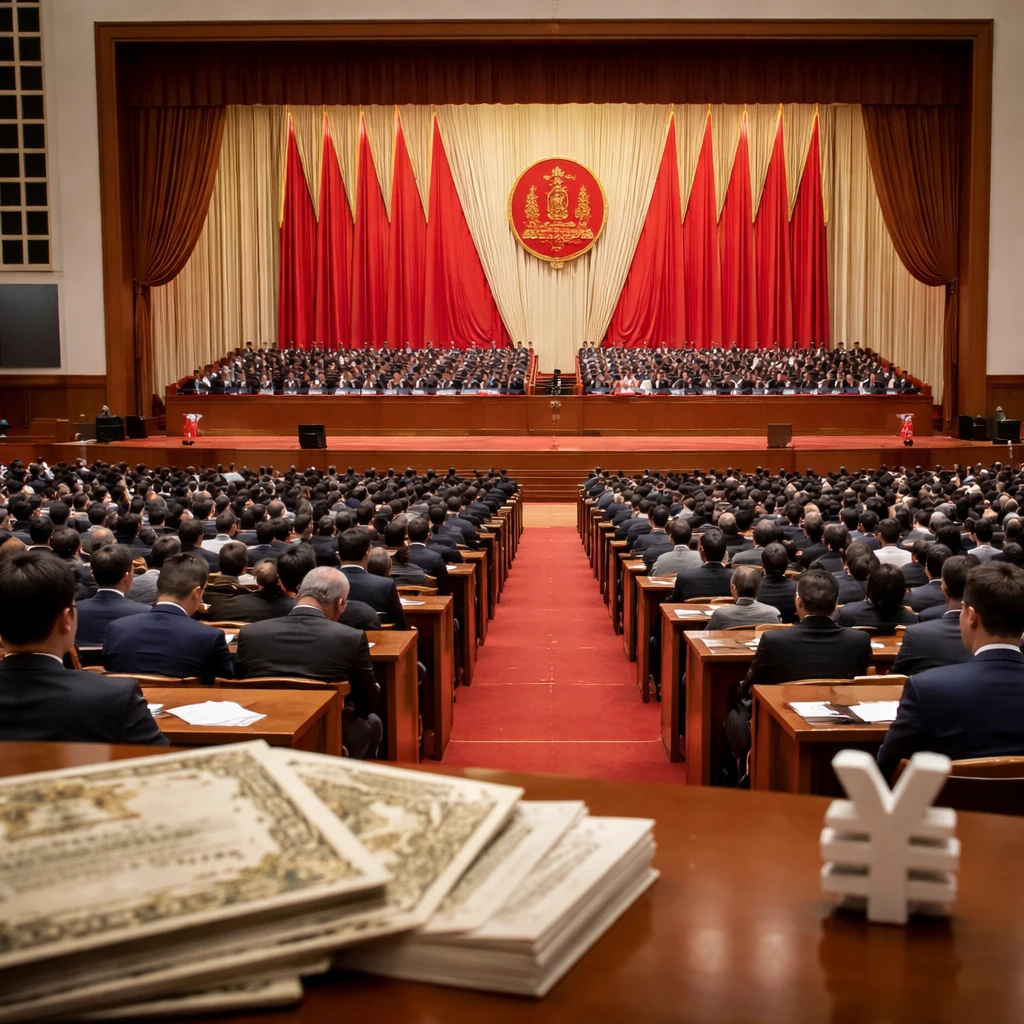
China’s annual policy gathering will convene on March 5 with officials preparing to announce a 2026 economic growth target in the range of 4.5% to 5.0%. The National People’s Congress will double as the forum to release a new five-year plan, and it is expected to set the tone for Beijing’s policy priorities for the coming period.
At the center of discussions will be efforts to shore up a weak consumer market and to manage a persistently troubled property sector. Authorities have signaled a willingness to accept a slower headline expansion in exchange for actions aimed at improving the economy’s long-term structure.
Observers say the policy meeting could act as a fresh catalyst for Chinese equities, which have performed tepidly this year. Historically, cyclical and property-related stocks have tended to post their best gains in the month after this event when policy signals are clear, a pattern market participants will watch closely this time around.
Anti-involution drive and a technology rotation
One major theme expected to feature prominently at the NPC is the so-called anti-involution campaign, which was launched in 2025 to curb aggressive price competition that has disrupted industries such as solar and electric vehicles. The policy emphasis is on moving away from volume-driven competition toward quality and innovation.
There are early indications that the approach is having an effect. Prices across parts of the solar supply chain have begun to stabilize, and shares in the sector have reached two-year highs. In the technology sector, investment patterns are shifting even as artificial intelligence remains the primary market driver. Capital appears to be rotating away from large internet incumbents like Alibaba Group Holdings Ltd ADR (NYSE:BABA) and Tencent Holdings Ltd ADR (F:NNN1y) and flowing into smaller, more specialized firms that investors see as direct beneficiaries of the AI transition. Companies such as MiniMax Group Inc (HK:0100) have been cited as beneficiaries of that rotation.
Debt issuance to underpin growth and consumption
To support growth targets and stimulate domestic demand, Beijing is expected to increase reliance on the bond market. Analysts anticipate the issuance of roughly 1.5 trillion yuan in ultra-long special sovereign bonds, up from 1.3 trillion yuan issued in the prior year. This fiscal push is intended to finance major infrastructure projects and to encourage consumer spending, an area where earlier policy steps were described as light on specifics.
Despite the scale of planned issuance, some analysts remain cautious. Firms including Morgan Stanley have warned of the risk of policy disappointment if the NPC does not deliver a sufficiently forceful rescue plan for the housing market. Home sales have yet to find a firm bottom, leaving the property sector an open vulnerability that could blunt the impact of broader stimulus.
The forthcoming plan is also expected to take a firmer stance on expanding the yuan’s international role, reflecting Beijing’s stated interest in contesting the global dominance of the U.S. dollar.
As the NPC approaches, market participants will be parsing the meeting for concrete steps on infrastructure spending, targeted support for consumption, and explicit signals on housing policy. The balance Beijing strikes between managing near-term economic challenges and steering longer-term structural change will be central to how investors and firms in cyclical, property, energy, and technology sectors respond in the coming weeks.