
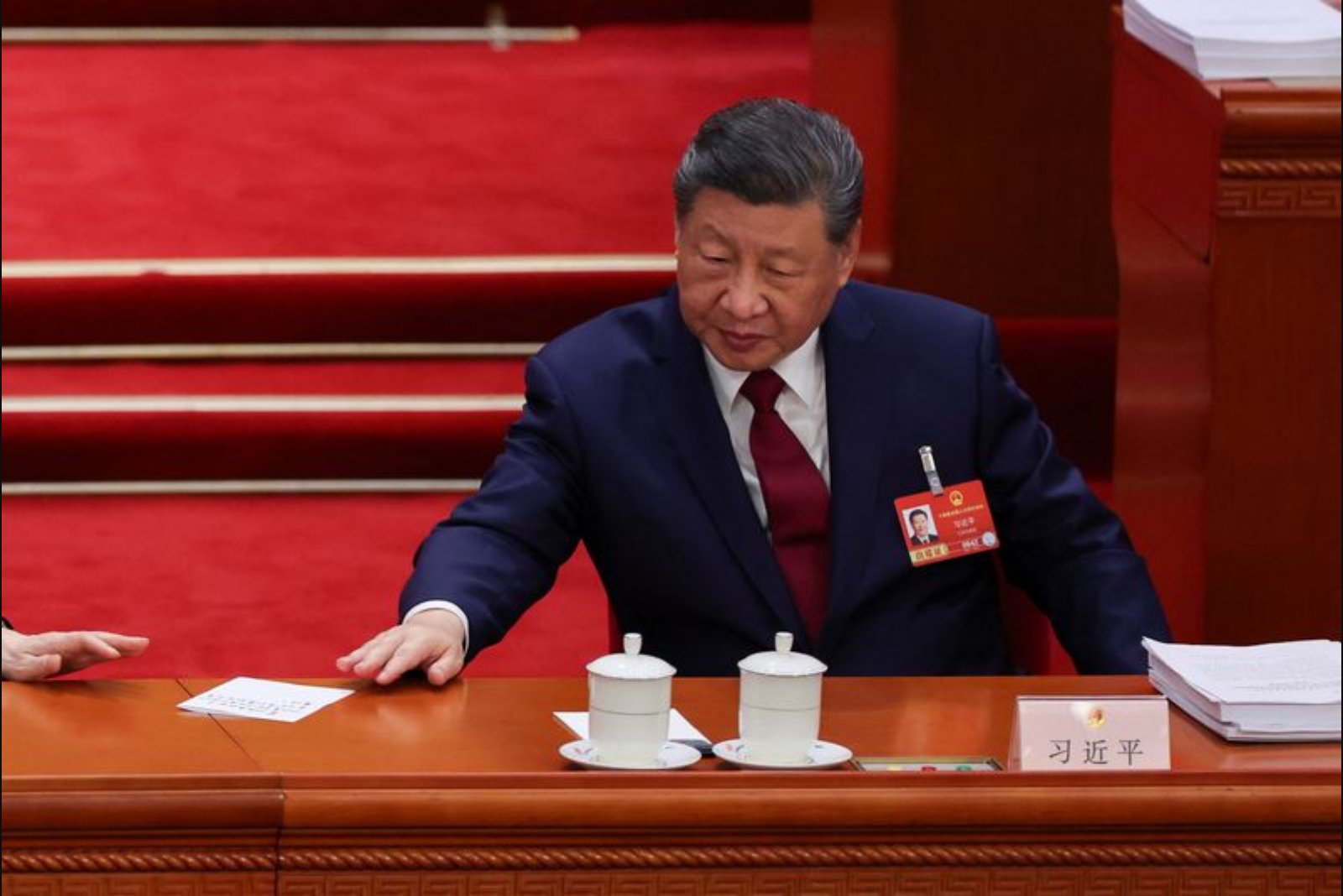
China's political leadership convened in Beijing on Thursday as President Xi Jinping presented a detailed roadmap for the country's economic and political direction for the coming years. The National People's Congress (NPC), described in state terms as the nation's legislature, published a Five-Year Plan that sets objectives on growth, fiscal policy, industrial priorities and national defence, reflecting Beijing's intent to pursue technological leadership while navigating heightened tensions with Washington.
The plan lays out a series of cross-cutting goals and commitments intended to shape policy across economic management, national security and social measures. Below are the principal elements highlighted by the NPC.
Growth and fiscal approach
The administration has set a gross domestic product growth target of 4.5% to 5.0%, modestly below the roughly 5% outcome recorded last year. This target accompanies an intent to rein in industrial overcapacity and to rebalance the economy, while continuing measured stimulus to revive activity that has been described as operating in a lower post-pandemic gear. Fiscal settings include a budget deficit target equal to 4.0% of GDP, a level noted to be similar to last year.
Technology and US rivalry
Amid an intensifying strategic rivalry with the United States, Beijing is accelerating efforts to reduce dependence on foreign technology and to develop homegrown capabilities. The plan asserts that China is now a world leader in research and development for artificial intelligence and other priority fields, including quantum technology, and sets the objective of achieving greater self-reliance across high-tech sectors.
Defence modernisation
Premier Li Qiang said the country will improve combat readiness and speed up the development of "advanced combat capabilities". The defence budget is scheduled to increase by 7% in 2026. Observers will track Beijing's stated aim to modernise its military by 2035, even as the leadership continues an internal anti-graft campaign targeting senior officers amid rising regional tensions, including over Taiwan.
Financial system support
To address strains in the financial sector and to support broader stability, the state will inject 300 billion yuan into state-owned banks this year and will press forward with reforms of state-owned financial enterprises. These measures are presented as part of a response to an extended property sector crisis and persistent deflationary pressures affecting the economy.
Demographics and social policy
Beijing has pledged to construct a "childbirth-friendly society" over the next five years. The commitment highlights policy attention to employment, education, healthcare and income concerns as authorities seek to counteract the economic effects of an ageing and rapidly shrinking population, a demographic trend that complicates efforts to lift domestic consumption and manage public and private indebtedness.
Food security
The plan includes an agricultural production objective to raise grain production capacity to around 725 million metric tons for the 2026-2030 period. This target forms part of long-term food security planning, in a context where the nation remains highly dependent on imports of certain crops, including soybeans, for which the United States is cited as the second-largest supplier.
The NPC blueprint bundles economic objectives with strategic and social priorities, revealing where Beijing intends to concentrate resources and policy action. Implementation of these goals will be watched closely by markets, industrial planners and international interlocutors as the government balances growth management, technological ambitions and national security considerations.
Note: The article includes an embedded promotional segment that poses questions about investment opportunities and describes an analytics product designed to combine institutional-grade data with AI insights to help investors evaluate options for 2026.