
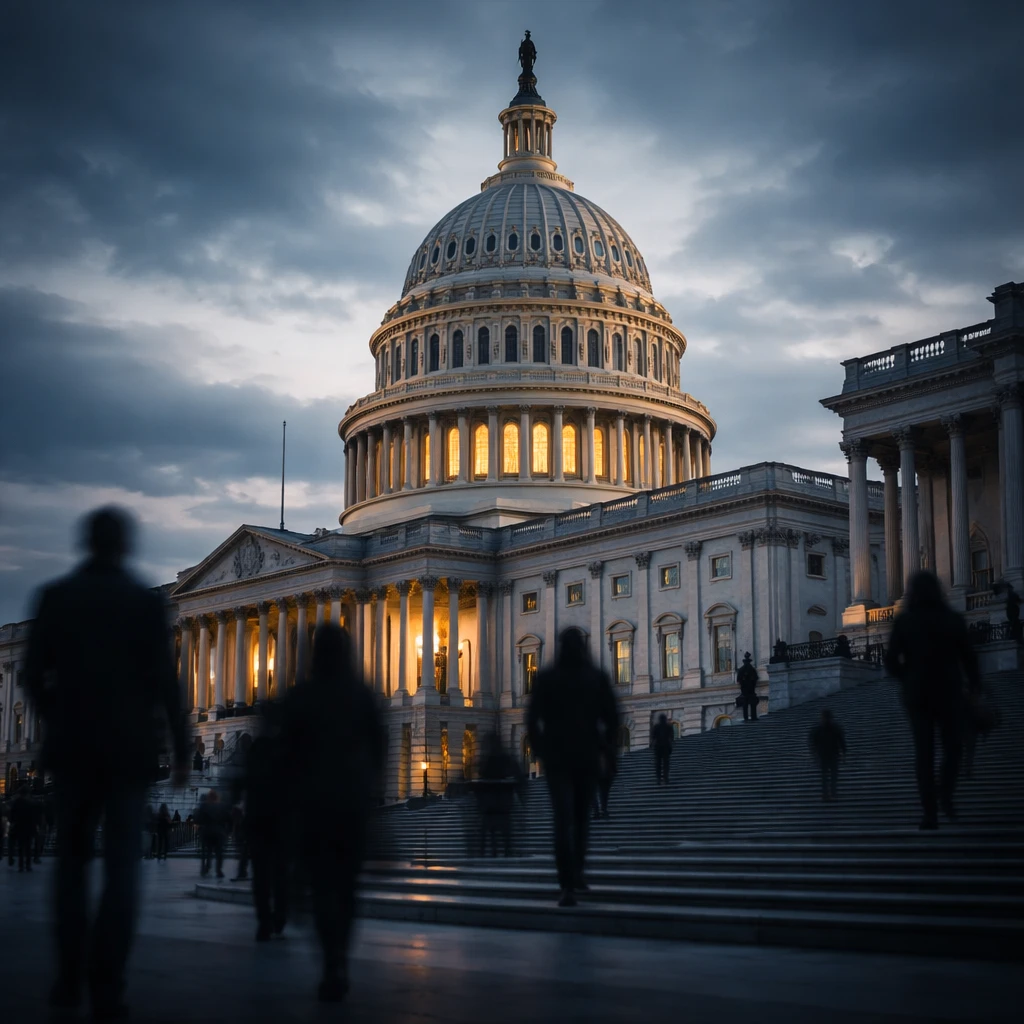
BCA Research analysts say U.S. President Donald Trump's political capital now sits at a "moderate" level after a series of disruptive policy measures in the opening year of his second presidential term. In a client note, the team - which included Jesse Anak Kuri - framed political capital as a combination of executive ability to enact policy and the strength of institutional checks that can limit that power.
According to the analysts, strong political capital allows a leader to push through preferred policies, while a lack of it forces the leader to conserve remaining influence or to "recapitalize" in order to regain the ability to implement policy. Their assessment places Mr. Trump neither at the peak of influence nor at complete political impotence, but in a middle range shaped by both opportunities and constraints.
Basis for the assessment
The research note highlights structural advantages Mr. Trump enjoyed coming into his second term. His Republican Party controlled majorities in both the Senate and the House of Representatives. In addition, three of the nine sitting Supreme Court justices were nominees of the president, resulting in a court where conservative justices outnumber liberal ones.
From that position of institutional strength, the administration moved quickly. The analysts catalogued a string of sweeping initiatives including an international trade war, a domestic immigration crackdown, and a large budget bill that contained tax cuts. The note states some economists believe those tax reductions could contribute to stronger U.S. growth in 2026.
Signs of erosion
Despite the early momentum, BCA's analysts identify several indicators that the president's political capital is eroding. Even with Republican control of both congressional chambers, Mr. Trump presided over the longest-ever federal government shutdown last year, an episode the analysts view as evidence of friction inside government.
They point to growing dissent among some GOP lawmakers, who have voiced opposition to the administration's tariffs and to its investigation of Federal Reserve Chair Jerome Powell. Those intraparty tensions, the analysts argue, could reflect a party beginning to fracture as members weigh their own political calculus ahead of upcoming midterm contests.
The analysts further caution that the Supreme Court has not acted as an unreserved ally. They cite the court's decision to allow California to redraw certain electoral maps in ways that were unfavorable to Republican interests. BCA also notes the court may rule against the president's attempt to remove Fed Governor Lisa Cook and could decline to uphold the legality of the administration's emergency tariffs.
Outlook and investor guidance
While BCA does not expect the institutional strength of Republicans to materially weaken before the crucial midterm elections in November, it anticipates more party figures may seek distance from Mr. Trump. "The president, while still nominally in full control of the government, will increasingly face resistance from his own party, as the party seeks self-preservation ahead of the midterm," the analysts wrote.
At the same time, the note argues that Mr. Trump's strategy of "front-loading" disruptive measures early in his term means his political capital is recovering from a low point and "has a chance to strengthen this year." That dynamic leads BCA to forecast "lower policy risk" during the current year as Republican actors take steps to constrain the president's most disruptive impulses.
For market participants, BCA recommends a relative long position on the benchmark S&P 500 versus the MSCI All Country World Index excluding the U.S. The analysts state they are neutral on U.S. Treasuries and assign a 38% probability to a major oil shock occurring.
Implications
The analysts' assessment underscores a balance between the executive branch's capacity to act and the moderating influence of legislative and judicial actors. Their investment guidance reflects the view that policy-driven market volatility is likely to be more limited this year, while still recognizing the non-negligible tail risk of a significant oil disruption.