
Residential real estate in the United States continues to show signs of weakness even as mortgage rates have eased recently, prompting BCA Research to caution against expecting housing to power economic growth in 2026. In its strategy report, analysts stated plainly: "It is too early to bet on US housing becoming the engine of growth for the US economy this year."
The firm notes that after several years of turbulence - from the pandemic-era buying surge when mortgage rates dipped below 3% in mid-2020, to the sharp pullback after the 2022 spike in rates - real residential investment has settled back to approximately the level seen before the pandemic. According to the report, real residential investment was "a mild drag on growth in 2025," on the heels of two years in which the sector contributed nearly zero to GDP growth.
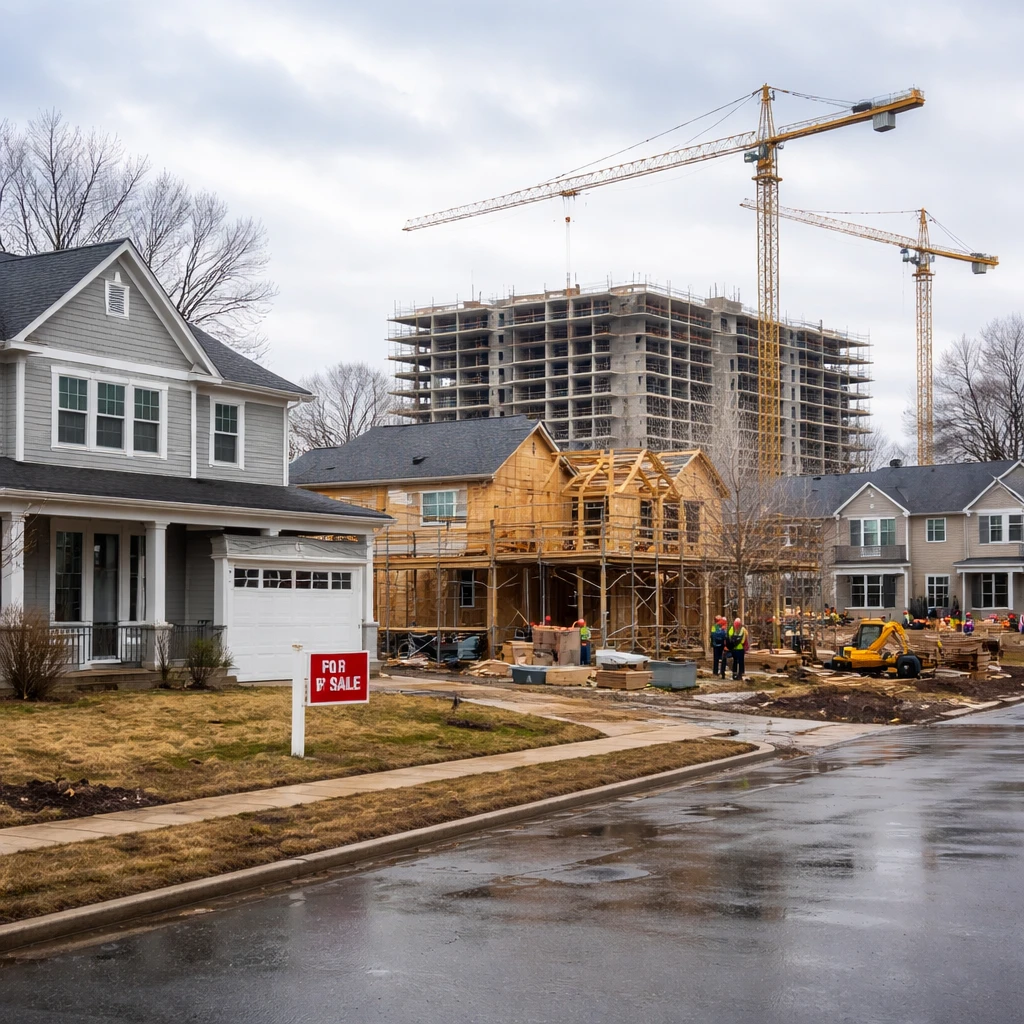
Indicators tied to construction and transaction activity point to little momentum. Housing starts fell to a five-year low in October 2025, while building permits have been described as "flat-to-down over the past three years." Mortgage purchase applications, although showing a slow uptick, still "remain at historically low levels," the report says.
Sales activity offers a mixed picture. Existing home sales rose in December, but the report highlights a pullback in pending home sales - a leading indicator of actual transactions - which it says "casts doubt over the pace of growth in home transactions." That combination suggests that recent gains in closed sales may not continue without a pickup in deals under contract.
Affordability remains the central obstacle. For first-time buyers, mortgage payments are "hovering close to the highest level since the 1980s," the report notes, reflecting what BCA describes as a "big gap between prevailing rates and effective rates on already contracted mortgages." That gap helps explain why consumers broadly view the conditions for buying a home as "very poor."
On prices, the report documents a downward trend in real house prices over the prior 12 months, with only tentative signs of recovery in the fourth quarter of 2025. BCA cautions that "the affordability issue implies that there is limited scope for significant price gains," signaling that meaningful upward pressure on prices is unlikely unless affordability improves.
The supply-side picture is uneven. The homeowner vacancy rate remains historically low, which argues against a broad surplus of unsold homes. At the same time, newly finished homes for sale reached a 16-year high, indicating elevated completions in certain segments.
In the multifamily market, vacancy rates have "risen briskly and now slightly exceed pre-pandemic levels," while multifamily units under construction remain 54% higher than peak activity during the previous housing boom. That divergence between single-family supply tightness and brisk multifamily construction adds complexity to the market outlook.
Policy proposals intended to ease affordability face constraints. The report references a directive from the White House instructing Fannie Mae and Freddie Mac to buy $200 billion of mortgage-backed securities, an action designed to narrow the spread between mortgage rates and Treasury yields. Still, BCA's bond strategists argue that "there is limited scope to bring down the mortgage spread further" because it currently sits near its historical average.
Labor market considerations are also relevant. The Home Builders Institute estimates immigrants account for roughly a quarter of construction industry jobs, meaning that tighter immigration policies could hamper efforts to increase affordable housing construction, the report warns.
There are a few modest positives. Home equity lines of credit have begun to grow again, albeit "off a low base," and HELOC interest rates declined from 10% at the end of 2023 to 7.3% in February 2026. BCA notes the recent drop in mortgage rates is encouraging for the near term, but concludes that housing remains "a problem child for the US economy."
Summary
BCA Research finds the U.S. housing market remains weak despite lower mortgage rates. Real residential investment was a mild drag on growth in 2025 after two years of near-zero contributions to GDP. Construction activity and transaction indicators show limited momentum, affordability is stretched for first-time buyers, and supply dynamics vary across single-family and multifamily segments. Policy measures face constraints, and labor availability in construction could be affected by immigration limits. While HELOC activity and recent rate moves offer some relief, the report concludes it is too soon to expect housing to drive economic growth in 2026.
Key points
- Real residential investment was "a mild drag on growth in 2025," following two years of nearly zero contribution to GDP.
- Construction indicators are weak - housing starts fell to a five-year low in October 2025 and building permits have been "flat-to-down over the past three years." Mortgage purchase applications "remain at historically low levels."
- Affordability is a major constraint: mortgage payments for first-time buyers are near the highest level since the 1980s, limiting potential price gains and suppressing transaction activity.
Risks and uncertainties
- Limited scope to narrow the mortgage spread further, according to BCA's bond strategists, could keep borrowing costs elevated for prospective buyers - affecting mortgage lenders, real estate agents, and homebuilders.
- Immigration restrictions could reduce labor availability in construction, as immigrants constitute about a quarter of construction jobs - a risk to affordable housing supply and the broader construction sector.
- Weak leading sales indicators, such as a slump in pending home sales, create uncertainty about the durability of recent gains in closed transactions, with implications for residential real estate activity and related services.
Overall, the report paints a picture of a housing market constrained by affordability and uneven supply dynamics. While selective pockets - such as HELOC growth and lower headline mortgage rates - offer some solace, BCA Research stresses that these developments do not yet amount to a broad-based recovery capable of powering U.S. economic growth in 2026.