
Economy March 4, 2026

BCA Research Repositions Around Energy Winners as Hormuz Disruption Intensifies

Firm upgrades Canadian and Australian equities and shifts currency and hedging posture after Strait of Hormuz effectively closes

By Caleb Monroe
BCA Research Repositions Around Energy Winners as Hormuz Disruption Intensifies

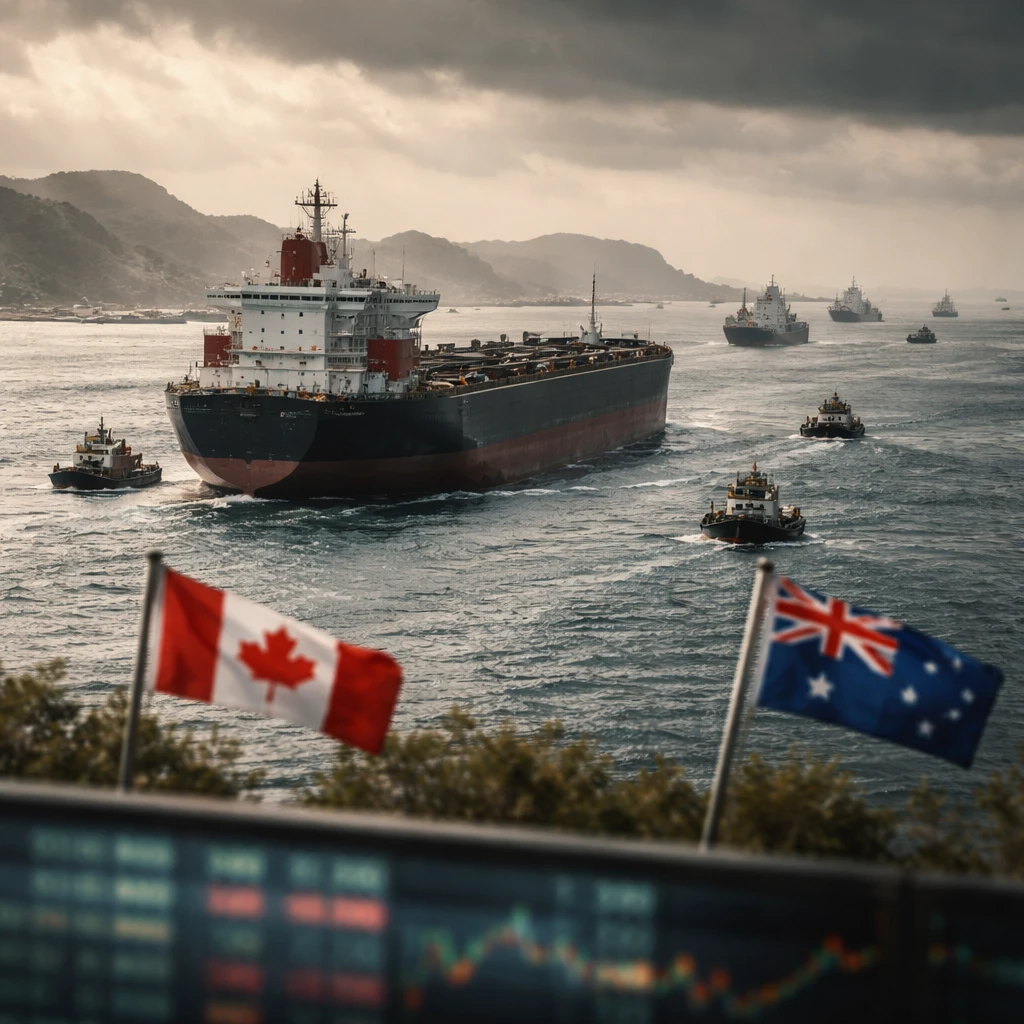
BCA Research has formally upgraded Canadian and Australian equity positions to overweight and moved its currency allocations to favor the Canadian and Australian dollars, citing the effective closure of the Strait of Hormuz and the resulting change in global trade terms. The firm also increased its allocation to tail-risk hedges to a "max overweight" stance and signaled continued caution on costly consumer stocks amid rising oil prices and constrained household incomes.

Key Points

  • BCA upgraded Canadian equities from neutral to overweight and Australian equities from underweight to overweight - impacts equity markets, especially energy-linked sectors.
  • Tail-risk hedging raised to "max overweight" with targeted SPY September 30th puts at a 610 strike - impacts derivative and risk management strategies.
  • Canadian Dollar (CAD) and Australian Dollar (AUD) moved to overweight, positioned to benefit from improved terms of trade as energy prices stay elevated - impacts currency markets and exporters/importers.

BCA Research has altered its tactical allocations in response to what it describes as a material shift in global energy dynamics following the effective closure of the Strait of Hormuz.

In a Tuesday research note, Chief Strategist Juan Correa acknowledged that "the closure of the Strait of Hormuz, one of the key risks we had flagged to our sanguine view on risk assets, has come to fruition." That development underpins a broader repositioning toward economies with energy surpluses.

Among the concrete portfolio changes, BCA moved Canadian equities from neutral to overweight and upgraded Australian equities from underweight to overweight. The firm framed these moves as a strategic tilt toward "countries that have energy surpluses" to limit direct exposure to the immediate trade and energy disruptions tied to the Hormuz situation.

Hedging tactics were also sharpened. BCA elevated tail-risk protection from an overweight recommendation to a "max overweight" posture. The research note specifies that the firm continues to see value in such protection and is targeting SPY September 30th puts with a 610 strike price as part of that program.

Currency stances were revised in parallel: both the Canadian Dollar (CAD) and the Australian Dollar (AUD) were upgraded to overweight. BCA expects these currencies to gain from improved terms of trade should global energy prices stay elevated.

Despite the upgrades, the strategist retained a relatively balanced outlook on the conflict’s duration. The firm's "base case remains a quick resolution to the war," a result that could produce a sharp rally in risk assets if realized. At the same time, BCA stressed caution toward expensive consumer-focused stocks, noting they are vulnerable to pressure from rising oil costs and declining disposable income.

On portfolio construction, BCA advised maintaining an overweight position in global equities while employing convex instruments to limit downside risk. The note framed this as a way to participate in any potential recovery while insulating portfolios from what it described as "American military recklessness" and its knock-on effects on global energy prices.


Contextual note - The research brief also included promotional material about data and investment tools, though the core strategic shifts described above form the central, actionable guidance from the firm.

Risks

  • The effective closure of the Strait of Hormuz creates acute trade and energy-price volatility - a risk to global trade and energy-dependent sectors.
  • Rising oil prices and reduced disposable income threaten expensive consumer stocks - a risk to consumer discretionary and retail sectors.
  • Geopolitical or military escalation could amplify energy cost shocks and market drawdowns, which the firm describes as related to "American military recklessness" - a risk to global risk assets and macro stability.

More from Economy

Spain, U.S. Give Conflicting Accounts After White House Says Madrid Agreed to Military Cooperation Mar 4, 2026 Global Equity Sellers Accelerate Fundraising as Middle East Hostilities Escalate Mar 4, 2026 UK Halts Plan to Wind Down North Sea Windfall Tax as Iran Tensions Lift Prices Mar 4, 2026 Anthropic investors seek to ease standoff with Pentagon over battlefield AI use Mar 4, 2026 Europe Faces Inflationary Pressure and Slower Growth as Iran Conflict Disrupts Gulf Shipping Mar 4, 2026