
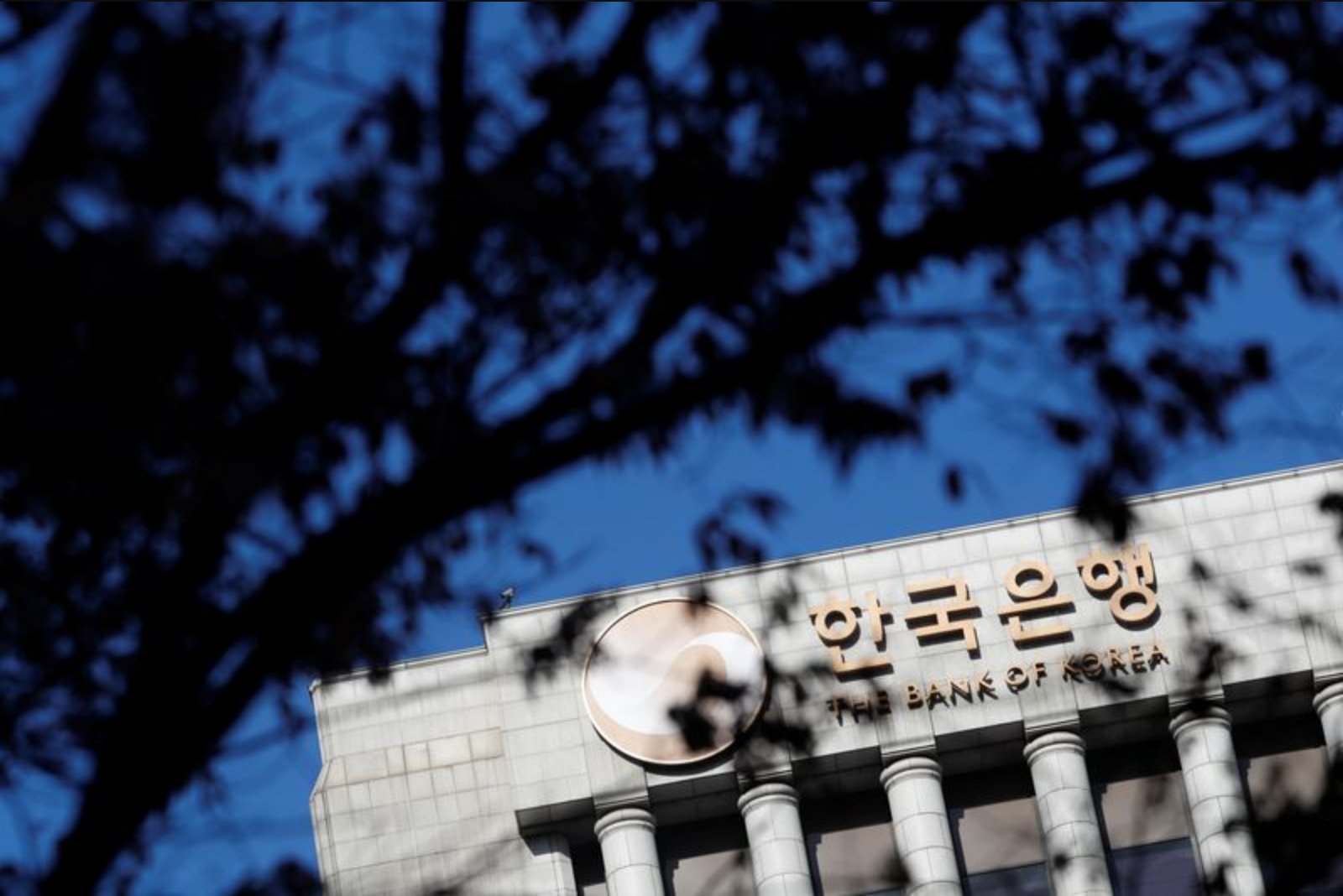
The Bank of Korea maintained its policy interest rate at 2.50% on Thursday, following a unanimous vote by its seven-member monetary policy board. The decision matched the expectations of all 34 economists surveyed by Reuters and came as policymakers weigh a stronger growth outlook against risks to financial stability.
In an accompanying update, the central bank lifted its growth projection for this year to 2.0%, up from a previous forecast of 1.8%. The upgrade reflects a recent export surge driven by a chip industry upswing, with Samsung Electronics and SK Hynix singled out as leading contributors, according to a bank report released on Monday.
While the central bank has signalled a sustained pause in the easing cycle that began in October 2024, it cited a range of considerations that justify caution. Officials continue to monitor volatility in the currency market and the potential for rising household debt to amplify financial-stability pressures.
At the same time, the economy faces external uncertainty. The central bank noted that unpredictable shifts in U.S. tariff policy could reduce export momentum and introduce instability in sectors such as automobiles and steel, creating downside risks for trade-dependent portions of the economy.
Market participants are pricing in the possibility of interest rate hikes over the next 12 months, but that outcome is conditional in some analysts' views. "While market yields are pricing hike possibilities in the next 12 months, we see the case would be likely only if inflation growth jumps above 2.5% with dollar-won (rate) above 1,550," Lee Seung-hoon, a Seoul-based analyst at Meritz Securities, said. Lee is among the majority expecting rates to remain unchanged through the year.
Equity markets have reacted strongly to the positive growth signals. On Wednesday, the benchmark KOSPI surpassed the 6,000 level for the first time, extending what the central bank described as a world-beating rally after the index doubled in value over the past year.
Governor Rhee Chang-yong is scheduled to hold a press conference at 0210 GMT to discuss the policy decision; the event will be livestreamed via YouTube.
Should you be buying 000660 right now? ProPicks AI evaluates 000660 alongside thousands of other companies every month using 100+ financial metrics. Using powerful AI to generate stock ideas, it assesses fundamentals, momentum, and valuation. The AI has no bias - it identifies which stocks offer the best risk-reward based on current data with notable past winners that include Super Micro Computer (+185%) and AppLovin (+157%). For investors seeking to know whether 000660 features in any ProPicks AI strategies or to find alternative opportunities in the same sector, the service provides tools to explore those questions.
Key takeaways
- The Bank of Korea kept its policy rate at 2.50% after a unanimous board vote, in line with a Reuters economist poll of 34.
- Growth expectations for the year were raised to 2.0% from 1.8%, driven in part by a chip industry boom led by Samsung Electronics and SK Hynix.
- Policymakers cited financial-stability concerns and currency market volatility as reasons for maintaining a prolonged pause in easing, while trade uncertainty from shifting U.S. tariffs remains a downside risk.
Risks and uncertainties
- Unpredictable U.S. tariff policy moves could reduce export growth and destabilise sectors such as automobiles and steel.
- Rising household debt and currency volatility pose risks to financial stability that could constrain the central bank's policy options.
- Higher-than-expected inflation or a significant depreciation of the won (above a dollar-won rate of 1,550) could prompt market-priced expectations of future policy tightening.