
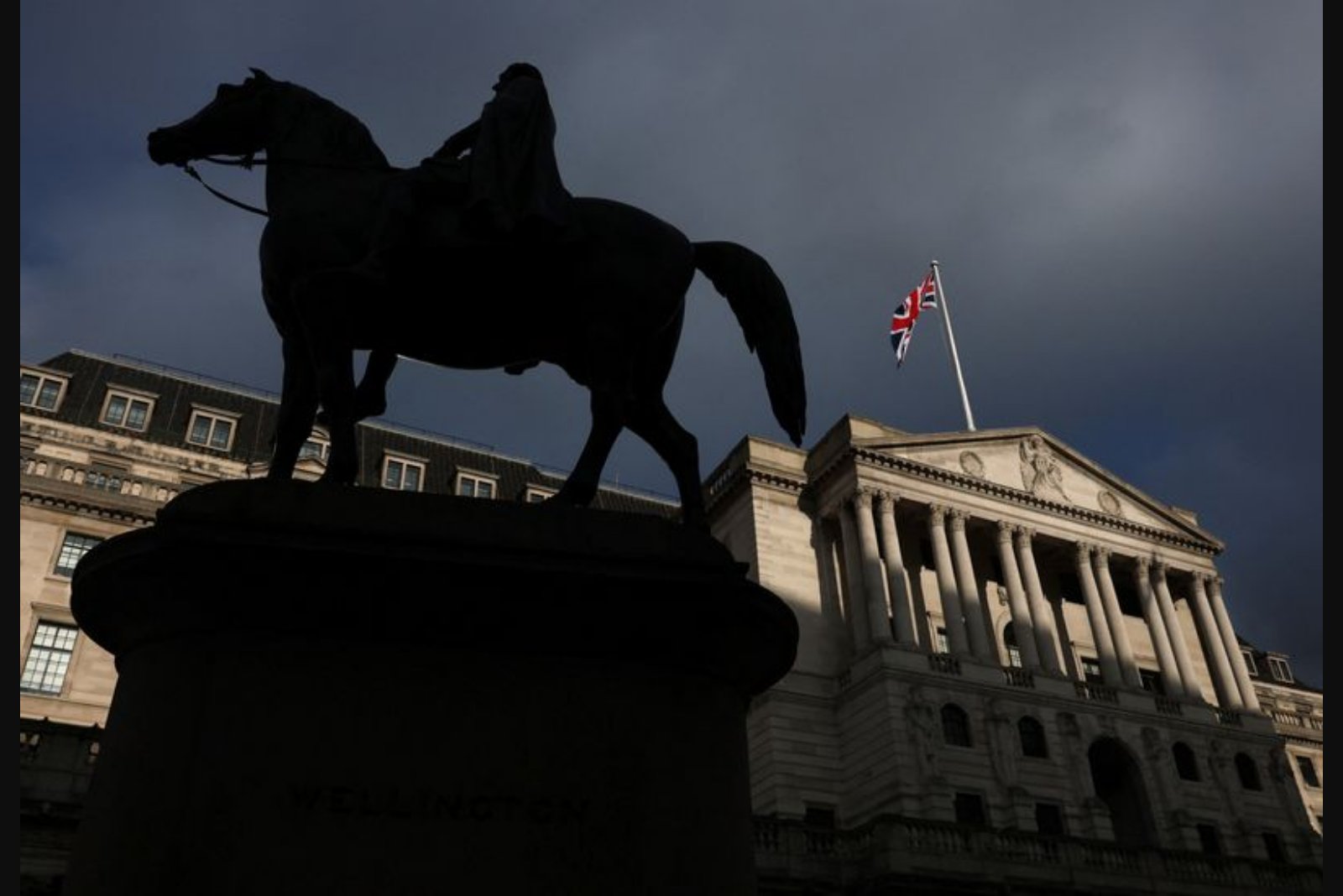
The Bank of England’s nine-member Monetary Policy Committee (MPC) voted 9-0 to maintain the Bank Rate at 3.75%, the central bank announced on Thursday. The unanimous decision came as policymakers weighed the upward pressure on prices from the war in the Middle East against signs of a fragile domestic economy.
Economists polled by Reuters had mostly expected a 7-2 vote in favor of a hold, making the unanimous outcome notable for its uniformity. In its statement, the MPC highlighted BoE staff forecasts that inflation could rise to as high as 3.5% over the next two calendar quarters and said it was vigilant to the risk that higher inflation expectations could become embedded in the economy.
BoE Governor Andrew Bailey framed the decision in terms of uncertainty around energy markets, noting that petrol prices are already higher and that household energy bills would increase later in the year if the conflict persists. "We have held interest rates at 3.75% as we assess how events unfold," he said. "Whatever happens, our job is make sure inflation gets back to its 2% target."
Differences within the committee on the path for rates
While the vote on the bank rate was unanimous, members expressed differing views on the outlook for policy. Some officials signaled that further tightening cannot be ruled out if energy-related price pressures intensify.
Catherine Mann indicated she thought the Bank should consider a longer pause in its easing cycle "or even a hike some point" to prevent inflation from becoming persistently higher. BoE Chief Economist Huw Pill, who in recent votes opposed the bank's rate cuts, said he was "ready to act" should the recent energy shock raise the risk of longer-term inflationary pressures.
By contrast, Alan Taylor, a more consistent advocate of rate reductions, cautioned against treating the hold as a turning point for policy. He said that "given massive uncertainty around energy prices, I currently see a high bar to hiking." The MPC noted there could be more information available by its next meeting in late April to better judge how developments should shape policy.
Economic backdrop and inflation trajectory
The central bank acknowledged that the conflict is occurring at a time when Britain’s economy is expanding only weakly. Data released earlier on Thursday showed pay growth in the three months to January was at its slowest pace since late 2020, a development that could ease some inflationary pressure.
Nonetheless, the BoE signaled that inflation risks remain tilted to the upside because of energy market disruptions. The committee highlighted fresh intelligence from its regional agents showing that pay settlements in 2026 were likely to be 0.2 percentage points higher than its forecast at 3.6%, suggesting upward pressure on wage growth beyond current projections.
Just when inflation appeared set to fall to the bank's 2% target and remain there, the rebound in oil and gas prices threatens to push consumer price inflation higher. Analysts using recent energy prices have suggested inflation could climb toward 4-5%, though the committee noted that any such rise would still be well short of the 11.1% peak recorded in 2022 following Russia's full-scale invasion of Ukraine.
Market reaction and investor expectations
Investor expectations shifted sharply after fresh reports of damage to energy infrastructure in Qatar. Where markets had priced in two rate cuts for the BoE this year as recently as last month, by Thursday they were assigning probability to a rate increase by the end of the year and even a possible second hike.
Most economists mentioned by the committee and market participants still judge that a pause lasting some months in the BoE’s sequence of rate cuts is more likely than a complete reversal to a sustained hiking cycle, given the fragile state of the UK economy. The MPC decision and commentary underline that the policy path is conditional on evolving energy price developments and incoming economic data.
International context
The Bank of England’s stance comes as other major central banks also proceed cautiously. On Wednesday, the U.S. Federal Reserve held interest rates steady and projected a single reduction in borrowing costs this year, while Chair Jerome Powell emphasized high uncertainty. The European Central Bank, meeting on Thursday, was similarly expected to approach decisions warily in light of the conflict.
What the MPC said about the near-term outlook
The committee reiterated that it will continue to monitor developments carefully and adjust policy if the balance of risks shifts. It stressed that there were a range of possible outcomes for how monetary policy might need to respond to different developments and risks, and that further clarity may emerge by the late April meeting.
For now, the Bank of England has paused at a Bank Rate of 3.75% while communicating clearly that the next move could be in either direction depending on how energy markets, inflation expectations, and domestic wage trends evolve.