
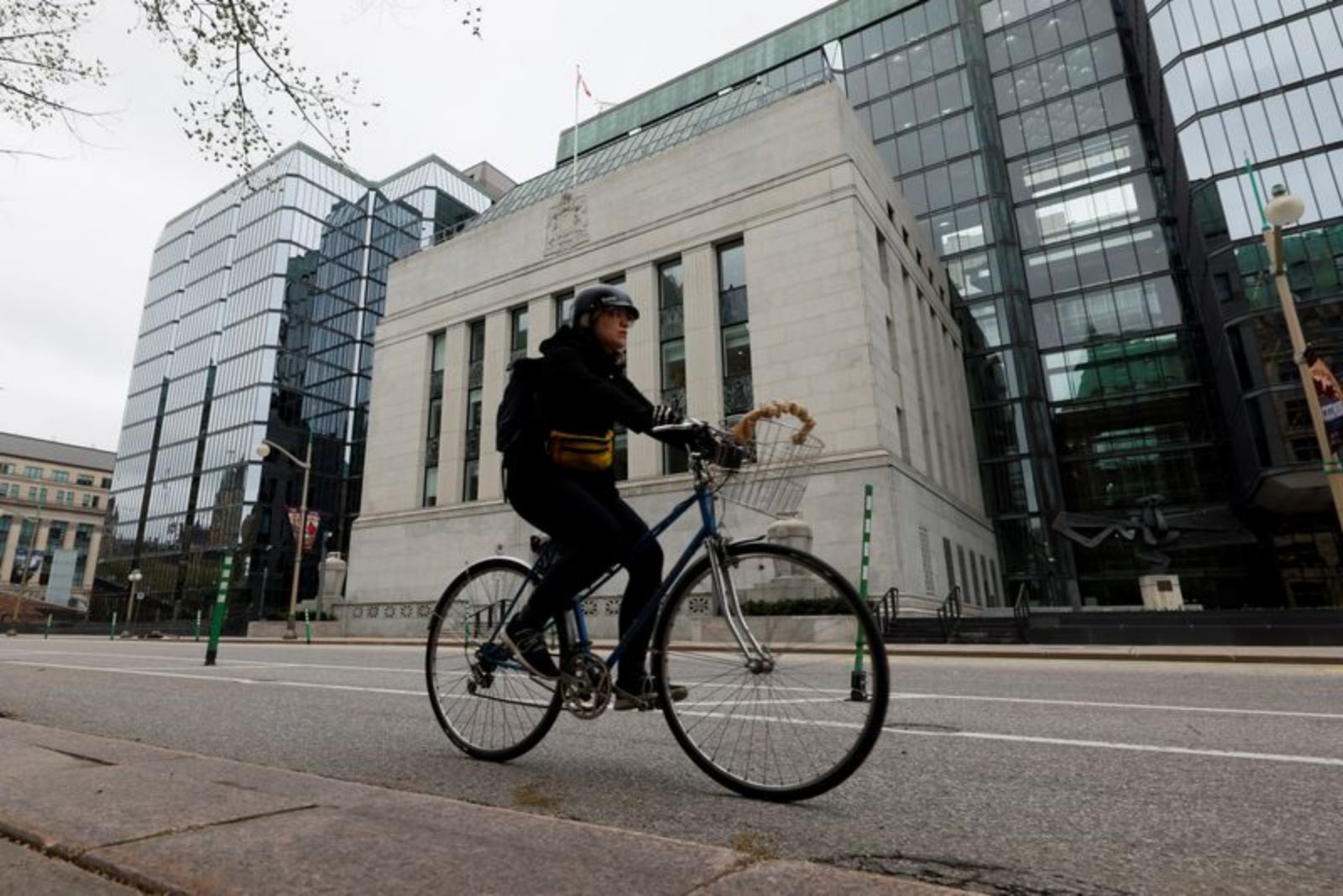
The Bank of Canada is widely expected to leave interest rates unchanged at its policy announcement on Wednesday, keeping the benchmark rate at 2.25% after cutting it to that level in October and leaving it on hold since then. The move would come as headline inflation sits around 2%, the midpoint of the central bank's 1% to 3% control range.
Economists polled ahead of the decision said the central bank is likely to pause and monitor evolving risks rather than move immediately in response to a recent jump in oil prices triggered by fighting in the Middle East. The spike in crude has raised concerns that inflation could accelerate, but analysts say it is premature for the bank to change course without first signalling how the shock might affect the outlook.
"We think the Bank will stay on hold at this meeting and is likely to stay on hold through the end of the year," said Randall Bartlett, deputy chief economist at Desjardins. Bartlett added that the inflation implications from the oil shock remain uncertain and that it is too early for the Bank of Canada to react before flagging the developing risks.
Governor Tiff Macklem, in his previous policy announcement, emphasised the difficulty the Governing Council faces in setting a clear path for monetary policy amid uncertain economic conditions and geopolitical risks. Money markets, meanwhile, are not anticipating a rate cut this year and are pricing in a 25-basis-point rate hike in December.
The Bank of Canada will publish its decision at 9:45 a.m. EST (1345 GMT). Markets will be watching closely for language on how the central bank plans to weigh the competing forces of higher energy prices and domestic weakness.
The war in the Middle East has sent global oil prices sharply higher. Brent crude has risen by more than 40% to $102.65 since the U.S. and Israel attacked Iran on February 28, a move that has implications for Canada's open energy-exporting economy. Higher crude receipts could boost national income, but consumers are likely to feel the effect at the pump, reducing disposable income as gasoline prices climb.
Domestically, several factors are damping growth. President Donald Trump's tariffs have affected critical sectors, business investment remains weak, the labour market is soft, and uncertainty persists around the review of the three-country free trade agreement with the United States - a review that Trump has frequently criticised. Mexico is also a party to that agreement.
Doug Porter, chief economist at BMO Capital Markets, said the Canadian economy still appears weak overall and suggested there is a stronger case for a rate cut later in the year than for a hike. Porter also said he expects higher oil prices to ease soon and expressed the hope that Macklem does not sound overly hawkish at the upcoming announcement.
The U.S. Federal Reserve is scheduled to announce its own rate decision the following day and is also widely expected to hold rates steady. Analysts say the near-term path of global and domestic interest rates will hinge on how central banks interpret the inflationary impact of rising energy costs versus still-soft growth indicators.
Key takeaways:
- Bank of Canada expected to keep policy rate at 2.25% and monitor oil-driven inflation risks.
- Inflation sits around 2%, the midpoint of the BoC's 1% to 3% control range; money markets price a 25-basis-point hike in December rather than a cut this year.
- Higher oil prices benefit Canada as a net oil exporter but raise gasoline costs, reducing household disposable income; weak business investment and a soft labour market weigh on growth.
Officials and markets to watch
- Randall Bartlett, deputy chief economist at Desjardins, expects a hold and cautions that it is too soon for a policy response to the oil shock without clearer signals.
- Doug Porter, chief economist at BMO Capital Markets, sees a better argument for a later cut than a hike and expects oil price pressures to ease.