
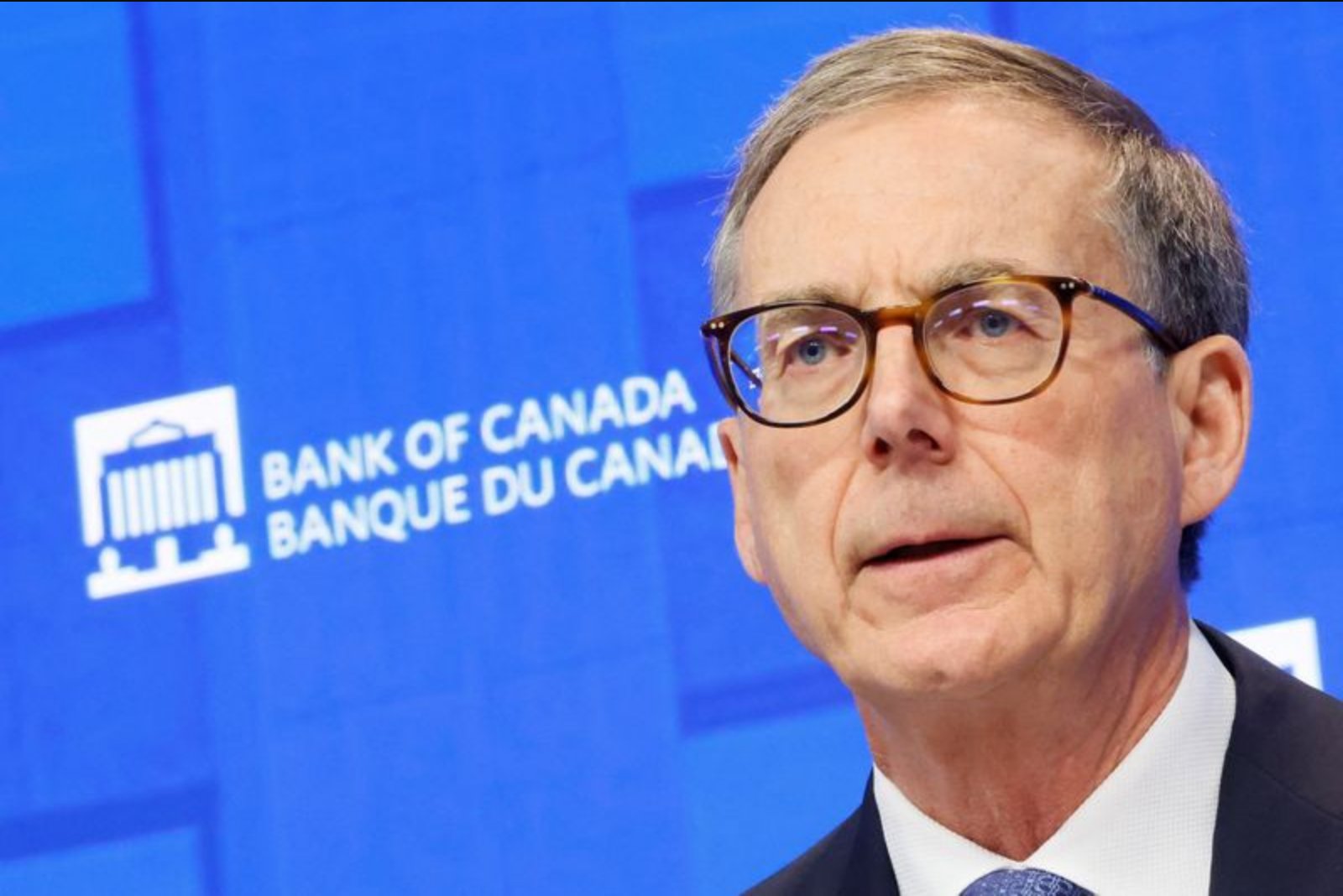
Bank of Canada Governor Tiff Macklem warned on Wednesday that non-bank participants such as hedge funds and private credit firms are creating potential stresses in debt markets that may be developing faster than oversight frameworks can keep up with.
Speaking to the Global Risk Institute in Toronto, Macklem said that economic uncertainty is elevated and that adding financial instability to current conditions is a risk policymakers cannot afford. "Economic uncertainty is already high - we cannot afford to add financial instability to the mix," he said.
Macklem said that the outlook for growth is weaker than usual and skewed to the downside. He also flagged that recent U.S. and Israeli strikes on Iran have pushed up volatility in energy and financial markets, and that the duration and broader consequences of that conflict remain unclear.
While emphasizing that non-bank actors play a legitimate role in a functioning financial system, Macklem cautioned they are generally more susceptible to stress. "These new and rapidly growing players do bring vulnerabilities that need more attention. Risks may be growing faster than our ability to understand and mitigate them," he said.
The governor highlighted several market developments that concern Bank of Canada officials. Hedge funds now account for nearly half of purchases of Canadian government bonds, making them central to the operation of sovereign debt markets. At the same time, these funds often operate with high leverage and greater sensitivity to market disruption.
"One scenario we worry about is a shock to markets that leads to a spike in interest rate volatility," Macklem said. He explained that if leveraged investors face forced reductions in positions, they could be compelled to sell sovereign bonds into markets that are already under stress - and that the size and speed of such unwindings could pose systemic risk.
Macklem also drew attention to private credit, noting that it is stepping in to fill gaps within the financial system. He was careful to distinguish the concept from an inherent defect: "The issue is not private credit itself. It’s how private credit will behave under stress ... the opacity of private credit means investors may not have enough information about the quality of loans held in their funds," he said.
That lack of transparency, the governor warned, could become acute if defaults rose. A surge in loan losses could prompt investors to seek rapid exits from private credit positions, with the potential to produce severe strains and spillovers into public credit markets.
In addition to these market structure concerns, Macklem observed that fiscal flexibility is constrained and valuations in equity and credit markets are elevated. He warned that these conditions could interact with the vulnerabilities he described, while noting that global surveillance and regulatory frameworks have not fully kept pace with recent market changes. "These risks could also interact with vulnerabilities in the financial system ... and our global surveillance and regulatory frameworks haven’t kept pace with the change," he said.
Implications for market participants
For investors and institutions focused on fixed income, credit and market liquidity, Macklem’s remarks underscore potential amplification channels in a stressed environment. The intersection of high leverage among hedge funds, growing private credit exposure and stretched valuations raises the likelihood that market shocks could transmit quickly across public and private credit markets.