
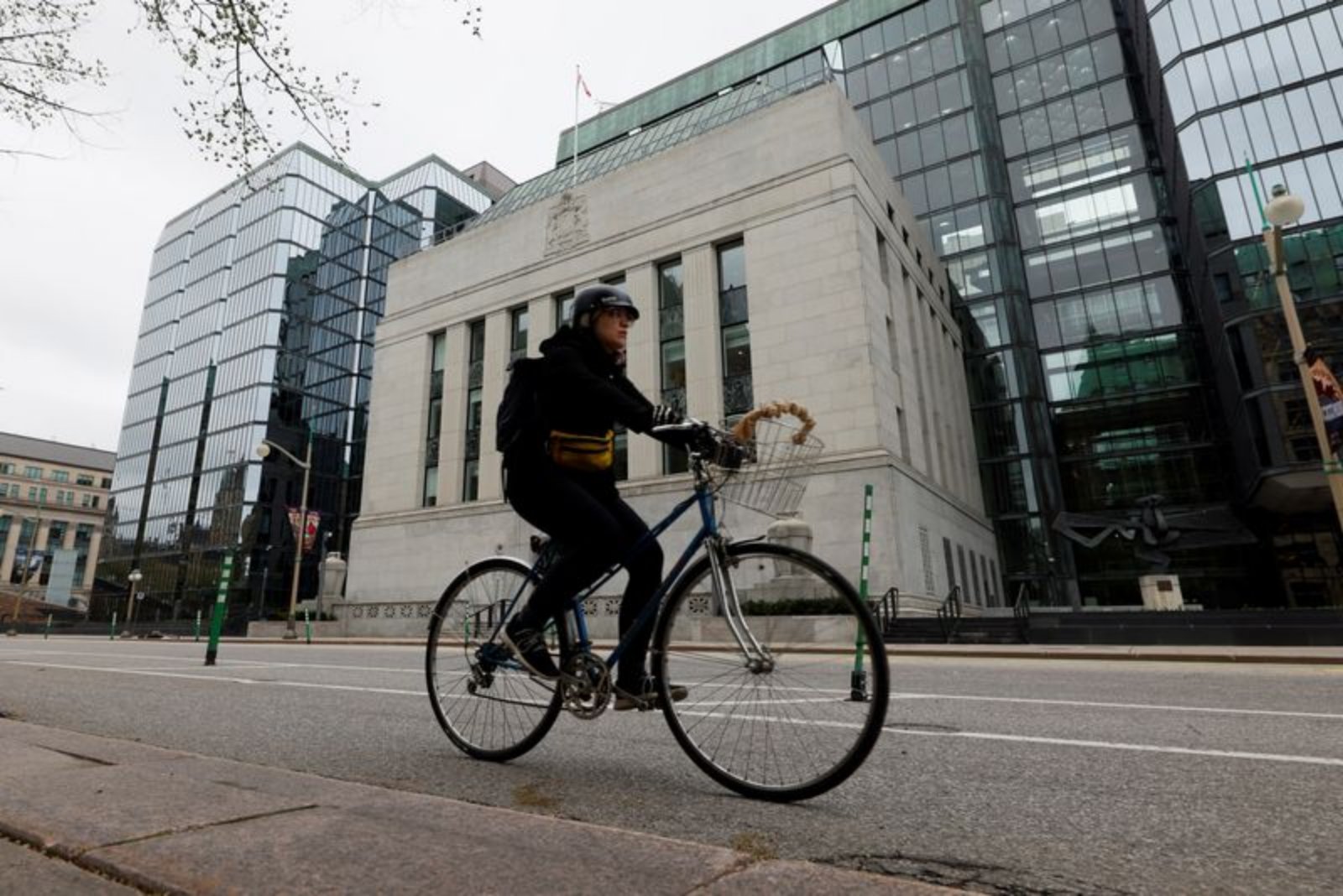
The Bank of Canada’s senior leadership laid out their assessment of the country’s financial resilience, presenting the institution’s latest Financial Stability Report and underscoring that, on balance, Canada’s financial system has functioned well despite repeated tests over the past year.
Senior Deputy Governor Carolyn Rogers opened the remarks by emphasizing the distinct purpose of the Financial Stability Report (FSR) - it is a diagnostic of system resilience rather than a forecast or a guide for monetary policy. She stressed that the report aims to identify key vulnerabilities that could, under the right conditions, magnify shocks and threaten the broader system.
"A stable and efficient financial system is essential to our economy," the Bank’s statement said, noting that it underpins growth and helps households and businesses save, invest and manage risks. The FSR, published annually, is the Bank’s vehicle for sharing its system-wide assessment with Canadians.
Overall assessment
Rogers summarized the Bank’s top-line view: Canada's financial system has held up across a turbulent year. Households and businesses, on average, remain in stable financial positions, and banks have strengthened their ability to absorb losses. Nevertheless, she cautioned that vulnerabilities have increased in some corners of the system.
Among those vulnerabilities, she pointed to elevated stock and corporate debt valuations relative to historical norms, a development that raises the risk of a rapid market correction. Meanwhile, global sovereign debt issuance has been on the rise, with hedge funds increasingly active buyers of that paper and frequently using borrowed funds to finance their positions.
In normal market conditions, hedge funds can enhance liquidity and facilitate market functioning. However, Rogers warned that if market conditions turn strained, leveraged activity by hedge funds could amplify stress and disrupt key funding markets.
Interaction of vulnerabilities and the prospect of cascading stress
While many of the individual vulnerabilities identified in the FSR appear manageable on their own, Rogers noted that the global environment has become more volatile. That heightened volatility increases the chance that a new shock - or a combination of shocks - could cause multiple vulnerabilities to crystallize simultaneously.
She described how interacting vulnerabilities could produce a cascade of events: a sharp loss of investor confidence, a spike in demand for liquidity, rapid asset sales and pressure on funding markets, with stress radiating across the financial system. The FSR's role, she reiterated, is to assess how these existing pockets of stress could amplify shocks, not to predict that such an event will occur.
Geopolitical and trade-related uncertainty
The Bank noted earlier concerns flagged in the 2025 Report about tariffs and trade uncertainty, which the Bank had deemed capable of producing market volatility, liquidity strains or even market dysfunction. So far, the Bank said, the impacts have been less widespread than previously feared, but it stressed that the risk has not disappeared. In particular, the future of Canada’s trade relationship with the United States remains uncertain.
More recently, the war in the Middle East has contributed to global uncertainty. That conflict has produced bouts of market volatility and short episodes of reduced liquidity, although, to date, markets have continued to function.
Rogers acknowledged lingering uncertainty about the conflict’s duration and ultimate resolution.
Emerging technology risks
New risks tied to artificial intelligence also feature in the Bank’s assessment. The institution recognizes that AI is expected to raise productivity and support economic growth over time, but it also flagged concerns around potential disruption in specific sectors and the risk of overinvestment. Additionally, the Bank warned that AI could increase the speed, scale and sophistication of cyber attacks, introducing a new channel for financial stability risk.
Sector-by-sector conditions
Deputy Governor Toni Gravelle took up the granular review of the five sectors the Bank monitors closely: financial markets, households, businesses, banks and non-bank financial intermediaries.
On households, Gravelle said the broad picture has not changed markedly since the prior year. Canadians continue to hold high levels of debt relative to income, but household wealth has risen overall and the share of borrowers behind on payments has stabilized. The Bank has been attentive to risks arising when pandemic-era mortgages come up for renewal. To date, most borrowers have managed these renewals without major difficulty. The Bank expects the remaining wave of renewals, set to occur over the next 12 months, will have fully passed by the second half of 2027.
Gravelle highlighted that the aggregate picture conceals wide variation across households. Those carrying the heaviest debt loads have limited financial flexibility and are therefore more vulnerable to job loss or unexpected expenses.
Turning to businesses, Gravelle described corporate financial health as broadly stable, including among firms most exposed to shifts in U.S. trade policy. However, he warned that a significant downturn could squeeze margins and constrain borrowing conditions for companies.
On banks, the deputy governor noted stronger resilience over the past year. Major Canadian banks show higher profitability, healthier capital buffers and have provisioned additional funds to cover potential loan losses. These developments, the Bank said, enhance lenders' capacity to support the economy and the financial system even in adverse scenarios.
Non-bank financial intermediaries, however, remain a growing source of vulnerability. Gravelle observed that hedge funds have increased leverage, in part to fund purchases of government bonds. While this activity underpins market liquidity in ordinary times, the Bank warned it could become a fragility point if conditions deteriorate.
On financial markets more broadly, Gravelle said that despite episodes of volatility tied to geopolitical developments, markets have generally proven resilient.
Outlook and policy posture
In summarizing the Bank’s position, the officials said Canada’s financial system is, overall, well positioned to absorb shocks. The system has been tested repeatedly without those episodes evolving into broad-based financial stress. Nevertheless, the Bank underlined the need for vigilance and ongoing monitoring of emerging vulnerabilities.
Officials said they will remain in regular contact with financial participants and domestic and international partners to watch for signposts of rising stress. "A stable and resilient financial system absorbs shocks rather than amplifying them," the Bank emphasized, adding that such resilience benefits all Canadians.
The presentation concluded with an invitation for questions from attendees.