
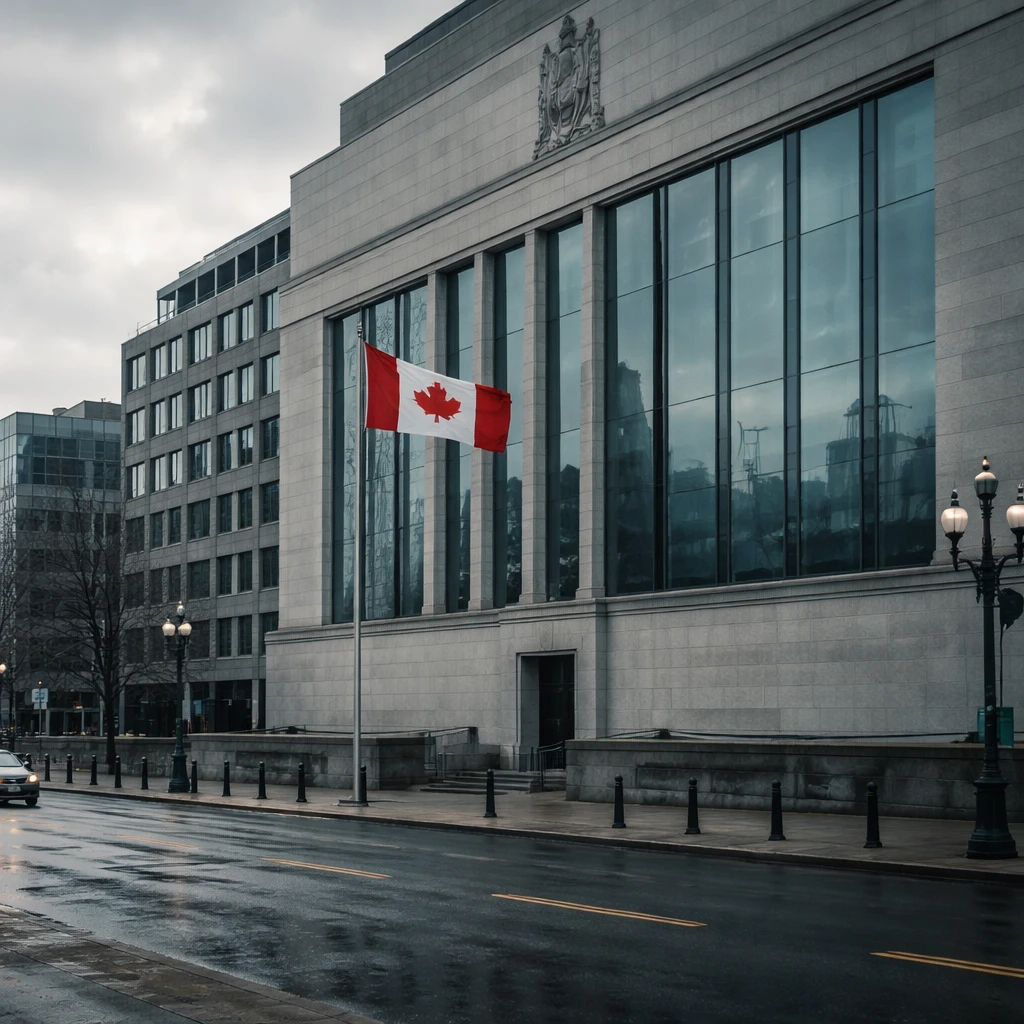
The Bank of Canada decided to keep its benchmark interest rate at 2.25% last month, pointing to an increasingly unstable global backdrop shaped by recent U.S. trade actions and rising geopolitical tensions. The central bank released a summary of its January 28 Governing Council deliberations on Wednesday that described the external environment as "more turbulent" and flagged renewed economic uncertainty stemming from developments abroad.
Council members highlighted that recent American steps in trade, foreign policy and matters touching on the independence of another major central bank have elevated risks to the outlook. The summary said that the prospects for global growth were vulnerable to unpredictable U.S. trade policy and heightened geopolitical tensions, a dynamic that complicates the path for Canadian monetary policy.
Within the U.S., policymakers and the Bank of Canada noted continued strength in consumer spending and investment related to artificial intelligence as contributors to growth. But that expansion exists alongside the risk that tariffs could transmit into broader price pressures over time. Canadian officials judged that, to date, most major economies have resisted widespread inflationary pass-through from U.S. tariffs, but they emphasized the risk of a broader pass-through to prices as an important downside concern for the North American outlook.
On the domestic side, the Bank described the Canadian economy as facing a period of "excess supply," with signs of a softening labour market and generally tepid business investment across most sectors. The council referenced recent geopolitical events in Venezuela, Iran and Greenland, and noted that perceived threats to the independence of the Federal Reserve had contributed to the heightened turbulence and resurgence in uncertainty.
Officials identified the looming review of the Canada-United States-Mexico Agreement - CUSMA - as a primary downside risk that could further weaken business willingness to deploy capital. While there are some federal efforts under way to diversify trade away from the U.S., the summary acknowledged that structural adjustments to a changed trade landscape will be slow and difficult to quantify.
Governor Tiff Macklem and his colleagues made clear that the timing and direction of the next policy move - whether a hike or a cut - will depend entirely on incoming data. In the meantime, the council concluded that maintaining the current stimulative policy stance is necessary to support the economy through a period of structural adjustment for which historical precedents provide limited guidance.
The deliberations portray a central bank balancing resilient domestic demand in some areas against a darker international horizon. For markets and firms, the message is one of vigilance: policymakers are keeping policy accommodative while watching for signs that external shocks or renewed pass-through to inflation warrant a change in course.