
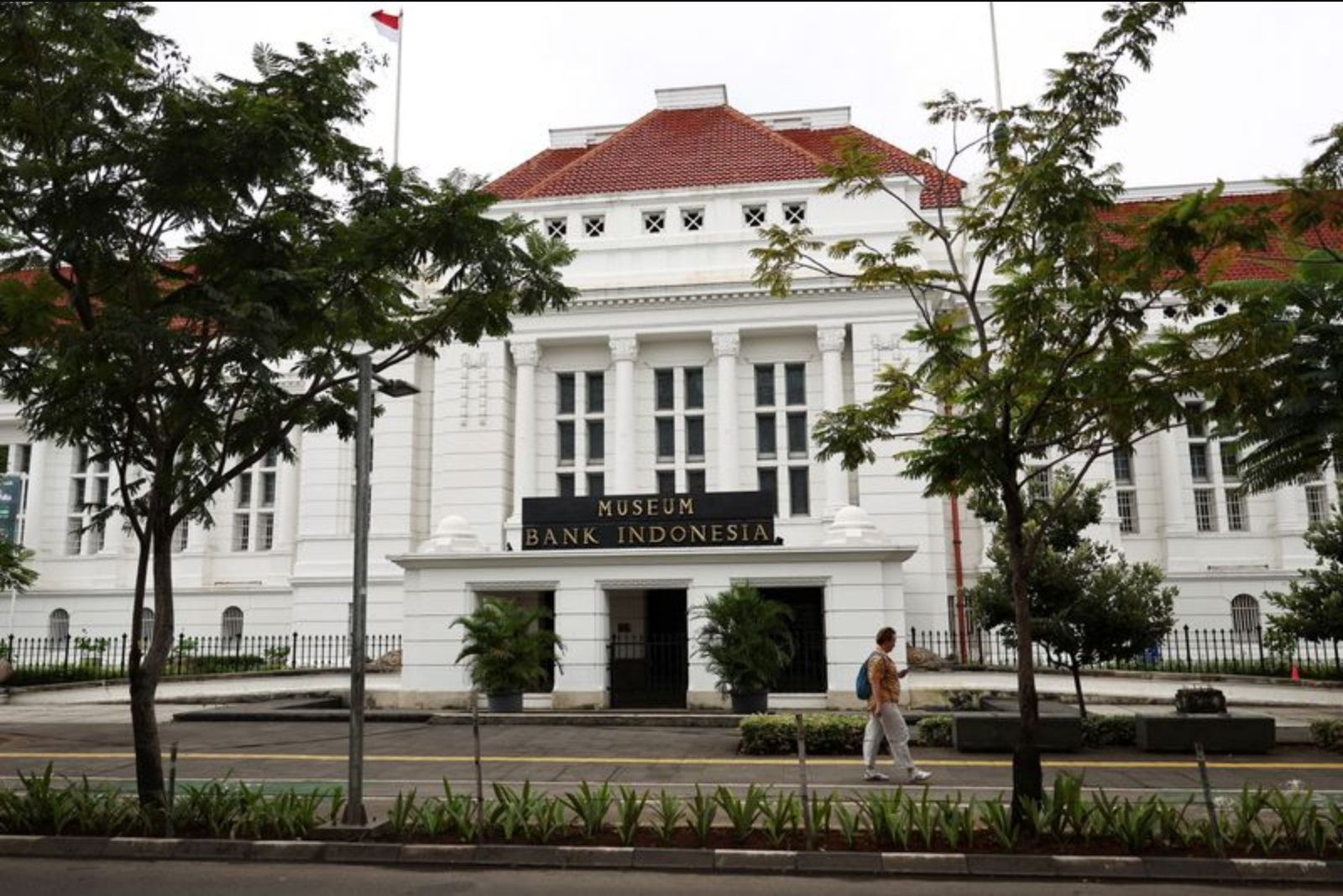
Bank Indonesia is widely expected to hold its policy rate at 4.75% at the upcoming meeting on March 17, according to a Reuters poll of economists. The central bank has refrained from cutting rates since October and is judged to have little room to resume easing as renewed pressure on the rupiah takes priority for policy makers.
Economists pointed to a sequence of factors that have eroded the policy space for rate reductions. The rupiah has weakened sharply amid heightened tensions in the Middle East, leaving currency stability - BI’s main mandate - as the dominant constraint on monetary policy. The currency touched a record low on Monday and has depreciated by more than 1% so far this year after losing around 4% last year. That slide has effectively shut the door on a rate cut at the March meeting.
Sentiment has also been dented by investor unease about fiscal credibility linked to worries that President Prabowo Subianto’s spending plans could widen budget deficits. Questions about central bank independence following the appointment of the president’s nephew as a deputy governor have further weighed on confidence and helped spur capital outflows. Those pressures have intensified following the U.S.-Israeli war on Iran.
Polling conducted between March 9 and March 12 found broad agreement on a hold. A majority - 24 of 26 economists polled - expected Bank Indonesia to leave its benchmark seven-day reverse repurchase rate unchanged at 4.75% on March 17. The overnight deposit and lending facility rates were also seen remaining steady at 3.75% and 5.50%, respectively.
While the pause in March is widely anticipated, the outlook for future easing remains mixed. Among a subgroup of 20 economists, at least 70% - or 14 forecasters - still expected rate cuts next quarter despite inflation running above the central bank’s target range. Inflation has breached the 1.5% to 3.5% target band and rose to 4.76% last month, the highest level in nearly three years.
Within that group of 20, 11 economists anticipated a 25-basis-point reduction to 4.50% by the end of the second quarter, while three projected a 50-basis-point cut to 4.25%. Six of the 20 expected no change from the current 4.75%.
"The central bank will hold as it can’t resume its accommodative stance given how much the rupiah has weakened over the past month, especially in the last couple of weeks after the U.S.-Iran conflict," said Tay Qi Hang, an economist at the Economist Intelligence Unit.
Hang added that the high February inflation print on its own was unlikely to be decisive for the March decision. "I don’t see the high February inflation print by itself having a significant influence on BI’s decision. The timing of its next rate cut will likely be delayed until June at the earliest, as rupiah weakness constrains both the willingness and ability of the central bank to ease earlier," Hang said.
Looking further out, views on the year-end policy rate also diverged. Of 19 economists surveyed on that horizon, more than half - 11 - expected the policy rate to finish the year 50 basis points lower at 4.25%. There was no consensus, however, on the timing of those cuts.
In sum, economists largely expect Bank Indonesia to prioritize currency stability at the March meeting, maintaining the current policy settings until conditions permit a move back toward accommodation. Ongoing rupiah weakness, elevated inflation relative to the target range, and investor concerns about fiscal and institutional credibility are the central factors shaping that outlook.