
Economy May 29, 2026 05:37 AM

Bailey Says Higher-Than-Target Inflation May Be Tolerable Amid Middle East Uncertainty

Bank of England governor flags conditional tolerance for inflation above 2% as growth remains subdued and the Iran war’s effects are monitored

By Jordan Park

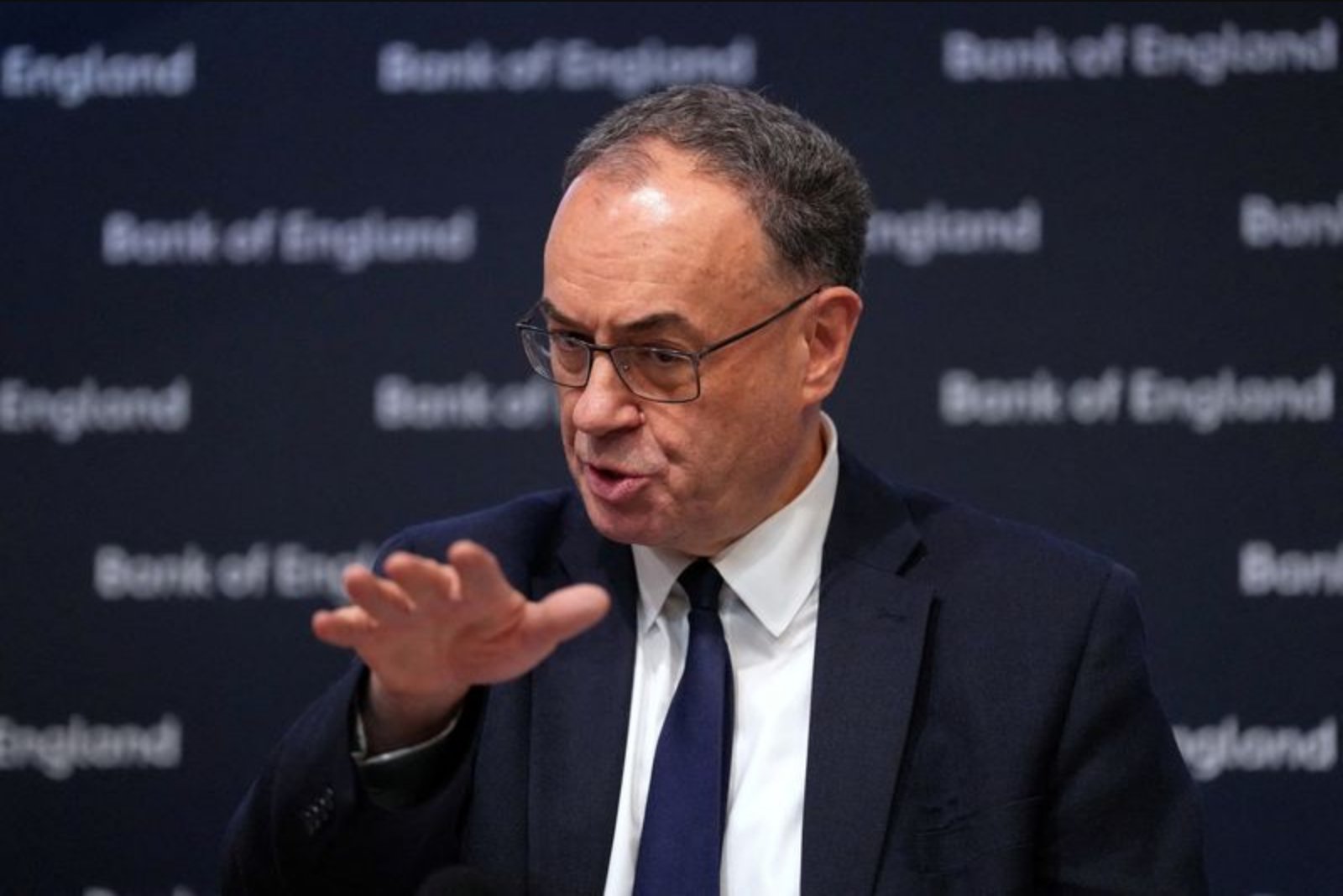
Bank of England Governor Andrew Bailey told a central banking conference in Reykjavik that allowing inflation to run above the 2% target is appropriate given uncertainty over the economic fallout from the Iran war and a weak growth backdrop. He warned that tolerance would be reduced if second-round inflationary effects appear and reiterated that previous policy tightening - notably removing rate cuts from consideration - is already influencing the economy.

Bailey Says Higher-Than-Target Inflation May Be Tolerable Amid Middle East Uncertainty

Key Points

  • Governor Andrew Bailey said allowing inflation above the 2% target is justifiable given uncertainty from the Iran war and weak growth.
  • The BoE's Monetary Policy Committee kept interest rates on hold on April 30 while assessing the economic impact of the Iran war; Bailey reiterated that taking rate cuts off the table is already affecting the economy.
  • Markets are pricing one quarter-point BoE rate increase and put roughly a one-in-three probability on a second hike over the remainder of 2026; ECB policymakers have signalled a likely rate rise in June.

Bank of England Governor Andrew Bailey said on May 29 that it is reasonable to tolerate inflation running above the central bank's 2% target while the economic impact of the Iran war remains unclear and domestic growth is weak.

Speaking at a conference in Reykjavik organised by Iceland's central bank, Bailey said that the Bank's present tolerance for above-target inflation is conditional. "But that tolerance would weaken if signs of second-round effects begin to emerge," he said in the text of the speech.

The Monetary Policy Committee of the Bank of England held interest rates steady on April 30, electing to wait for clearer evidence about how the Iran war would affect activity and price dynamics. In Reykjavik, Bailey reiterated comments he made the prior week that the Bank has tightened policy by taking rate cuts off the table, "and that is already affecting the economy."

He added that policymakers must keep a close watch on developments in the Middle East and their transmission to the UK economy and inflation, saying: "We have to monitor the situation in the Middle East and how it affects the UK economy and inflation very closely and adjust policy as required."

Bailey's remarks underline the cautious stance of the Bank's MPC, where he and most colleagues have signalled they are in no rush to lift borrowing costs. That posture contrasts with the European Central Bank, where policymakers have indicated a likely rate rise in June after having cut rates more aggressively than the Bank of England prior to the Iran war.

Financial market pricing reflects a modest expectation of further tightening by the Bank of England: markets are fully pricing one quarter-point BoE rate hike and assign roughly a one-in-three chance of a second increase over the remainder of 2026.


Context and implications

Bailey framed the Bank's tolerance for higher inflation as temporary and conditional, tied directly to uncertainty from the Iran war and the current weak growth environment. He emphasised that this tolerance would be withdrawn if evidence of persistent, broadening inflationary pressures - so-called second-round effects - emerged.

Risks

  • Uncertainty about how the Iran war will affect the UK economy and inflation could prompt abrupt policy responses - impacting borrowing costs and financial markets.
  • Emergence of second-round inflationary effects would reduce the Bank of England's tolerance for above-target inflation, potentially leading to faster tightening and higher interest rates that would affect credit-sensitive sectors.
  • Divergent signals between the Bank of England and the European Central Bank - with the ECB indicating a likely June rate rise - create cross-border monetary policy risks that can influence exchange rates and capital flows.

More from Economy

Japanese Yen Tests Critical 160 Threshold as Geopolitical Tensions Bolster US Dollar Jun 4, 2026 Japanese Real Wages Rise for Fourth Straight Month, Strengthening Case for Monetary Tightening Jun 4, 2026 Market Resilience Amidst Sector Shifts: Dow and Russell 2000 Reach New Heights Jun 4, 2026 Australian house price momentum to slow to four-year low as borrowing costs bite Jun 4, 2026 Kevin O’Leary Scales Back Utah Data Center Plan Amid Lawmaker Concerns Jun 4, 2026