
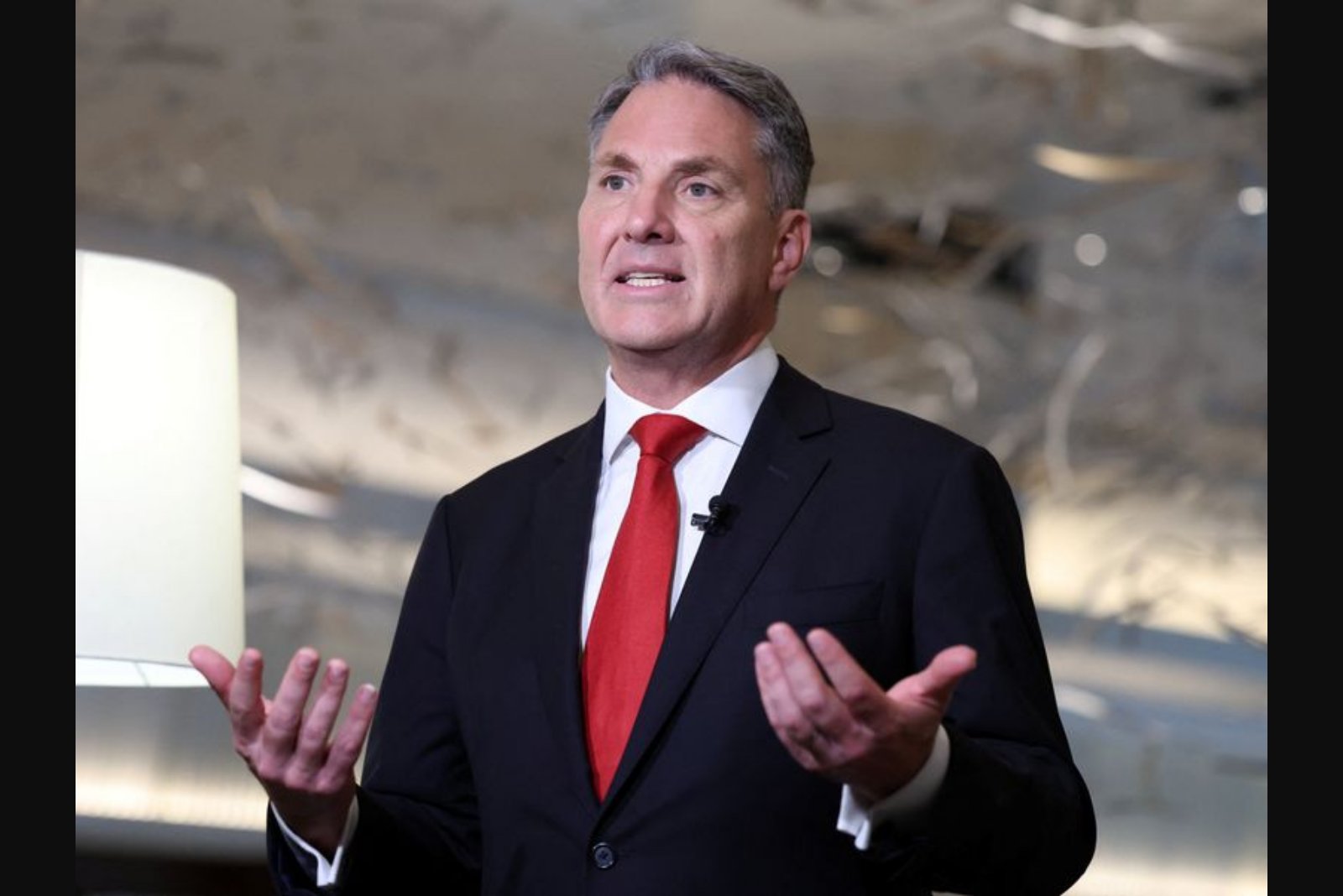
Australia’s defence minister said China’s choice to dispatch mostly academics to Asia’s largest security forum represented a missed opportunity for reassurance at a time when regional tensions are high. Speaking ahead of the Shangri-La Dialogue in Singapore, the minister described the gathering as an important venue for defence leaders and policymakers to exchange views and to strengthen personal and institutional ties.
Officials in Beijing did not immediately respond to a request for comment on the delegation. For the second consecutive year China’s defence minister, Dong Jun, did not attend the forum. Beijing indicated it would send a delegation composed mainly of People’s Liberation Army experts and scholars rather than senior military leadership.
Australia’s defence minister said that while engagement with China has previously been welcomed, the present form of participation falls short of what is needed to reassure neighbouring countries. He said the pattern of the world’s largest conventional military build-up since the end of the Second World War has not been accompanied by a corresponding strategic reassurance for other nations.
"We’ve seen China engage in the biggest conventional military buildup in the world since the end of the Second World War, and that has not happened with a strategic reassurance for other countries," he said.
The Shangri-La Dialogue convened defence chiefs and senior officials from across the globe, including the United States Defense Secretary, the Japanese defence minister, and counterparts from France, Britain, Malaysia, the Philippines and other countries. The Australian minister said that while Canberra continues to broaden defence relationships across the Asia-Pacific, the alliance with the United States remains the central pillar of the country’s security policy.
Addressing concerns that the United States might be distracted from the Indo-Pacific because of the war in Iran, the Australian minister said that from his country’s perspective America remains committed to the region and that the alliance with the U.S. is fundamental to national security.
He also warned that the global rules-based order faces pressure in the Indo-Pacific, referring to the system of shared laws, agreements and institutions that have governed international relations since World War Two. He said the present moment requires nations to identify areas of common ground and to work together where possible.
Separately, the Australian minister, together with the U.S. defense chief and Britain’s defence minister, scheduled an announcement on Saturday related to the AUKUS programme, under which Australia will acquire nuclear-powered submarines. He declined to provide specifics on the planned announcement. Media reports have indicated the three countries may announce a major collaboration on uncrewed underwater vehicles, though the minister did not confirm those details.
The minister’s remarks and the limited nature of China’s delegation highlighted a broader diplomatic challenge at the security forum: how to sustain dialogue and reduce strategic uncertainty while managing an era of intensified military investment and shifting alliances.