
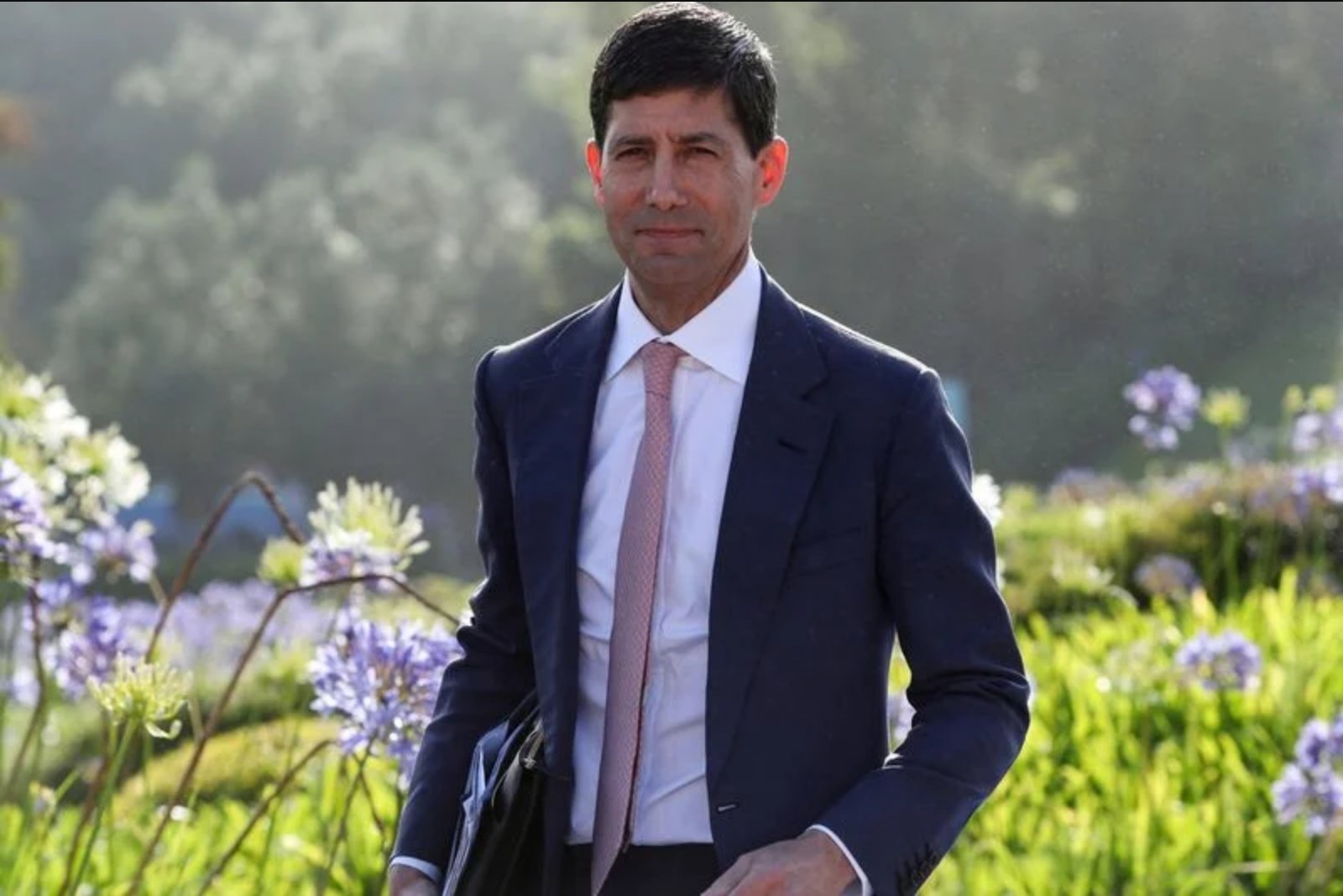
Federal Reserve Chair Kevin Warsh used the European Central Bank's annual Sintra gathering in Portugal to make a concerted showing among his central banking peers, holding private meetings and taking part in public sessions that attendees interpreted as a signal the Fed plans to remain active on the international stage.
Over three days at the conference hosted in a former convent, Warsh conducted a string of one-on-one conversations with counterparts from Europe and beyond. Among those engagements was a lengthy lunch with ECB President Christine Lagarde held in the cloistered courtyard that surrounds the conference venue. People familiar with the discussions said the talks were mostly high-level, barely delving into detailed topics such as inflation trends, shadow-banking risks or the mechanics of international policy coordination.
Even so, central bankers noted the outreach itself carried weight. In their reading, Warsh's presence and willingness to meet colleagues helped reduce anxiety that the Fed might retreat from the international forums that support cooperation between monetary authorities. That reassurance was viewed as meaningful because the Federal Reserve remains the dominant provider of dollar liquidity during times of financial stress and, for some countries, holds a large share of their gold reserves. The Fed also plays a central role in global debates on monetary policy and financial regulation.
Against that backdrop, many policymakers arrived in Sintra eager to assess whether the close working relationships cultivated under former Fed Chair Jerome Powell would continue after the leadership change. Several central bankers who have known Warsh since his years as a Fed governor between 2006 and 2011, or through his later participation in the Group of Thirty consultative body, said they recognised the same policymaker they had dealt with previously. Others urged caution, saying it is too early to draw firm conclusions about how he will perform in office as he balances maintaining credibility with managing political pressure from the White House.
Personal diplomacy on display
Warsh's reception at Sintra stood out in part because many attendees had previously rallied around Mr. Powell during his prolonged clash with the White House, with groups of current and former central bankers publicly backing Powell's independence and last year's conference giving him a standing ovation. What could have been an awkward debut for a new Fed leader instead took on elements of a warm welcome.
At the conference opening dinner, Lagarde greeted the late-arriving Warsh with air kisses and publicly expressed her interest in close cooperation. Warsh returned the gesture and engaged in informal conversation across the event. Fluent in French after studying in France, he spoke with some French participants in their language and moved beyond small, closed circles to circulate among governors at an informal dinner on Tuesday.
On a panel that included Lagarde, Bank of England Governor Andrew Bailey and Bank of Canada Governor Tiff Macklem, Warsh adopted a collegial tone. He told the audience he was "honoured to be on stage with three colleagues." In a community where personal relationships can matter when cooperation is required during moments of market stress, those small interactions were highlighted as important as the formal sessions.
Policy alignment and remaining differences
Participants at Sintra also detected areas of agreement on how central banks communicate policy. Warsh's stated preference for simpler messaging and his scepticism toward forward guidance fit into a broader "back to basics" theme that appeared across the conference. He used the platform to stress the Fed's independence and to note that policymakers share a number of common calls, despite operating from different jurisdictions.
Lagarde argued the ECB no longer needs "complex forms of forward guidance," while Bank of England Governor Andrew Bailey observed that such guidance is "much easier to put in place than it is to take it away." Lagarde also described an approach she called "framework guidance," an emphasis on explaining how the ECB will react to incoming information - a phrase that found an echo in comments from Bank of Canada Governor Tiff Macklem.
By contrast, Warsh showed limited interest in discussing the Fed's internal policy playbook in detail at the conference. Nevertheless, attendees focused more on the similarities than the differences. Some pointed to ongoing ECB discussions about normalising bank reserve requirements as another sign that central banks on both sides of the Atlantic are moving away from crisis-era practices.
While the sessions and private meetings did not produce concrete policy announcements, the interactions in Sintra provided a gauge of tone and intent among the world's monetary authorities. For now, officials and observers alike take some comfort from Warsh's visible engagement, even as questions remain about how he will navigate the intersection of policy credibility and political pressure from Washington in the months ahead.