
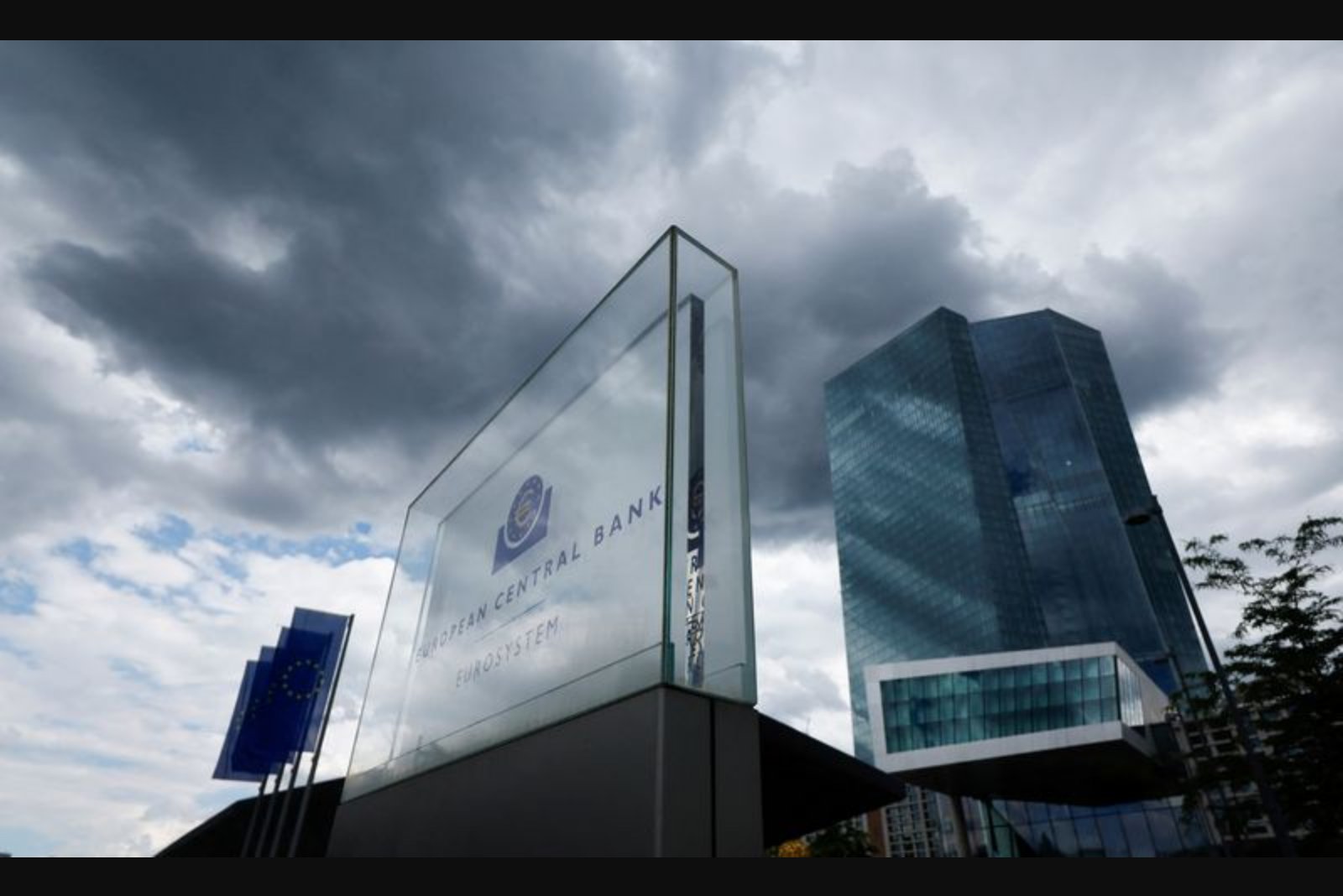
The European Central Bank will meet next Thursday against the backdrop of a sharp climb in energy prices that has left markets speculating the bank may tighten policy again before year-end. The resurgence of conflict in the Middle East has rekindled concerns that energy-driven inflation could re-emerge, reviving memories of the 2022 shock that followed Russia’s invasion of Ukraine.
Officials who had recently judged the outlook to be manageable now face a far less certain environment. One market source described the change bluntly, saying the ECB outlook was now "in the hands of military generals".
Five questions markets want answered
Below are the five central questions investors, analysts and policymakers are focused on as the ECB prepares its next decisions and projections.
1/ What will the ECB do on Thursday?
Most observers expect that the bank will keep its policy rate unchanged at 2% at the meeting itself. The path beyond that is highly uncertain because the duration of the conflict and the ultimate direction of energy prices are unknown. President Christine Lagarde has signalled that the ECB stands ready to do "everything needed to keep inflation in check" and policymakers will acknowledge the heightened uncertainty in their deliberations.
UBS chief European economist Reinhard Cluse summed up the predicament: "They can no longer say they’re in a good place because they don’t know whether they’re in a good place." How the bank responds, he and others say, will depend crucially on subsequent developments.
2/ Does the war mean a new inflation shock?
Inflation is widely expected to rise, but whether that rise becomes a full-blown shock depends on how long the conflict persists and when critical shipping lanes such as the Strait of Hormuz are again operating without disruption.
Oil prices have been volatile in recent days, touching nearly $120 per barrel earlier in the week and sitting around $100 at other points. Since the start of the conflict, oil at that level would represent roughly a 35% increase and about a 60% gain for the year so far. European gas prices have also surged, climbing nearly 60% in the past month alone. Those moves would exert a meaningful upward influence on headline inflation.
Past ECB analysis cited by officials indicates that a permanent 14% increase in oil and gas prices would boost inflation by 0.5% and subtract 0.1% from growth, with a broadly similar impact in a second year before fading.
Market instruments that hedge euro zone inflation risk over the next two years have reacted: a derivative commonly used for that purpose has risen to about 2.5% from roughly 1.75% before the war began.
Before the current conflict, ECB projections had expected inflation to undershoot the 2% target this year and next, providing the bank with some cushion. Still, some economists note that the present economy is not in the same position as that seen in 2022 when inflation was already rising out of a post-pandemic boom. TS Lombard economist Davide Oneglia observes that, compared with 2022, the risks now tilt more toward a growth hit than a pure inflation spike, given weaker labour market conditions.
3/ How would the ECB react to an energy-driven inflation shock?
At this stage, the prospect of the ECB cutting rates later this year looks unlikely. Traders are pricing in at least one hike in 2024 after being burned by the bank's reaction to the 2022 surge in energy-driven inflation. Policymakers are also expected to avoid describing rising inflation as "transitory" and have pledged to act quickly if they judge that inflation is becoming entrenched through higher inflation expectations, stronger wage demands, or broad-based price increases.
Some economists argue that policy action would likely require sustained oil prices above $100 per barrel for several months combined with clear evidence of such second-round effects before rate increases would be warranted.
4/ What will the ECB’s new projections show?
The official projections that accompany the meeting will only reflect the initial days of the conflict and therefore are unlikely to capture the full magnitude of the recent energy price spike. Market participants will watch closely for any scenario analysis the ECB chooses to publish to illustrate possible outcomes. Vice President Luis de Guindos has indicated that scenario analysis is probable, as it was when Russia invaded Ukraine.
Before the war, oil prices had already been on the rise and euro zone inflation surprised on the upside last month, creating upward pressure on the December projections the ECB issued.
5/ Will Lagarde remain at the ECB for her full term?
Speculation about President Christine Lagarde’s tenure has persisted. She has sought to temper talk she might depart early but has not issued an outright denial of that possibility. That openness would preserve the option for French President Emmanuel Macron to be involved in choosing her successor. The possibility of an early exit has not been closed.
Investors currently view former Dutch central banker Klaas Knot and Spain’s Pablo de Cos as two likely candidates to follow Lagarde. Knot is generally regarded as hawkish but pragmatic, while De Cos is seen as somewhat more dovish. Market watchers do not expect either potential successor to upend how the ECB functions.
Analysts also note uncertainty around succession because Lagarde herself was not an initial candidate in 2019, which suggests a successor could shape policy direction if given the opportunity. However, Deutsche Bank has argued that the emergence of a new inflation threat increases the likelihood Lagarde will remain for her full term through October 2027.
Investment note appearing in the original dispatch
The article contained a promotional note describing a product called InvestingPro+ that combines institutional-grade data with AI-powered insights and a reference to an offering called WarrenAI. The promotional passage advised that such tools do not guarantee winners but can help identify investment opportunities.
This dispatch focuses on the ECB's policy outlook in light of recent energy market developments and does not add or change any of the factual material presented above.