
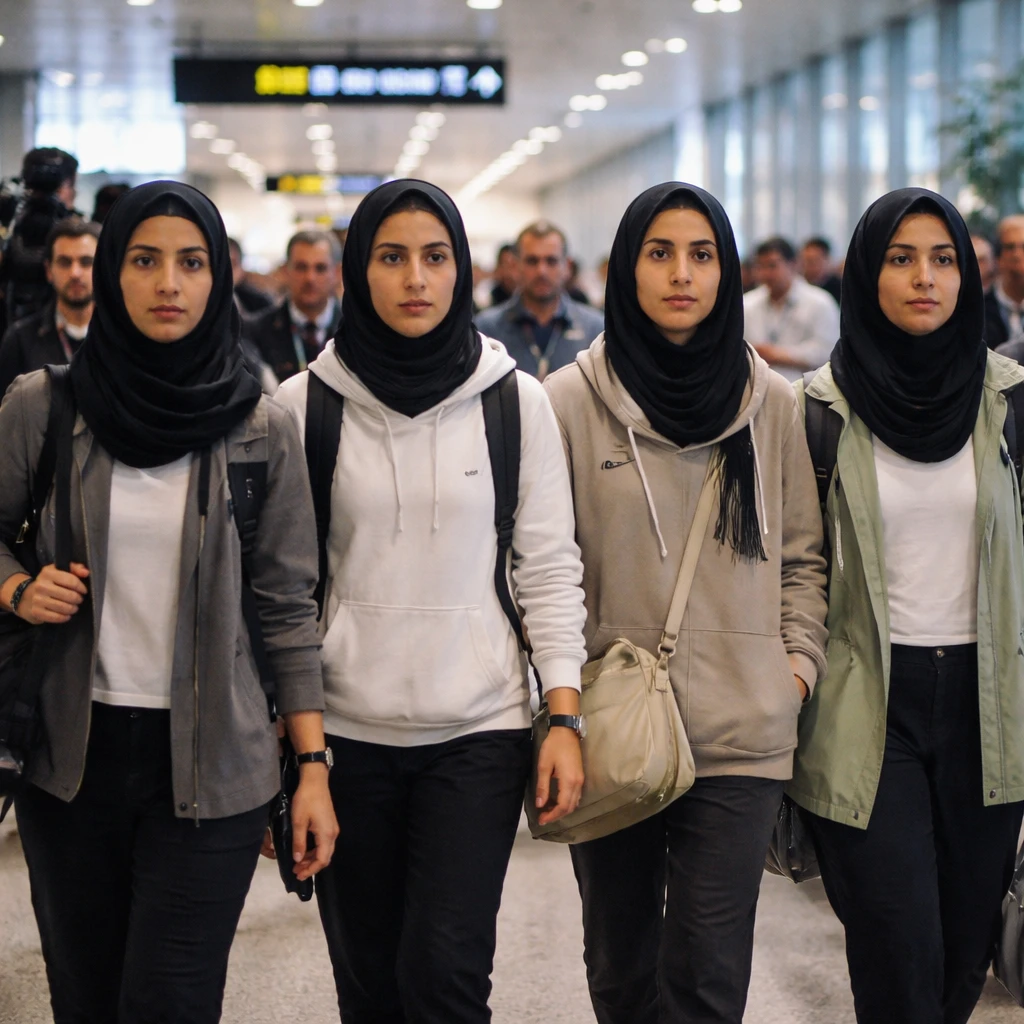
Australian Home Affairs Minister Tony Burke confirmed that a majority of the Iranian women’s soccer players who were offered asylum in Australia last week have indicated they will go back to Iran. The developments follow the players' decision not to sing their national anthem during the Women’s Asian Cup, an action that drew sharp condemnation in Iranian state media.
Australia had moved quickly to extend humanitarian visas to six players and one support worker, a response that was publicly framed in humanitarian terms after Iranian outlets labeled the athletes "traitors." By Sunday, however, four of the players had withdrawn their asylum applications, according to Burke.
Burke said the Australian government repeatedly provided the athletes with opportunities to consider their options, but that officials could not ignore the broader "context" in which these "incredibly difficult decisions" were being made. His comments underscored the sensitive balance Canberra said it must strike between offering refuge and recognizing the complex diplomatic environment surrounding the case.
In Tehran, state-aligned coverage and official statements shifted tone. The semi-official Tasnim News Agency reported that the team could return with "calm and confidence." The attorney general’s office in Iran described the players’ earlier actions as "unintentional" and attributed them to "enemy conspiracies," language that signals a potential easing of immediate legal or punitive threats against the athletes.
The asylum episode has unfolded against a backdrop of broader security and diplomatic activity. Canberra’s decision to grant the initial humanitarian visas took place at the same time Australia agreed to deploy surveillance aircraft and missiles to the Middle East to augment defenses against Iranian strikes. That parallel timing highlights the interplay between humanitarian steps and defense commitments in Canberra’s approach.
Observers note the return of the players appears to reflect a layer of behind-the-scenes signaling between Tehran and Canberra as regional tensions persist. The situation has been described in terms of a "short-term excursion" of the current regional conflict that continues to strain diplomatic channels.
Whether Tehran’s invitation for the players to come home represents a genuine cooling of tensions or a calculated effort to manage international perception remains an open question in public commentary. The available statements point to both a moderated domestic posture from Iranian authorities and a careful framing by Australian officials of how humanitarian actions intersect with foreign policy and security commitments.
Summary - Four of six Iranian players and one support worker who were offered humanitarian visas by Australia have rescinded their asylum claims and plan to return to Iran, while Tehran has softened its rhetoric and Australia notes the complexity of the decisions in a tense regional context.