
Market overview
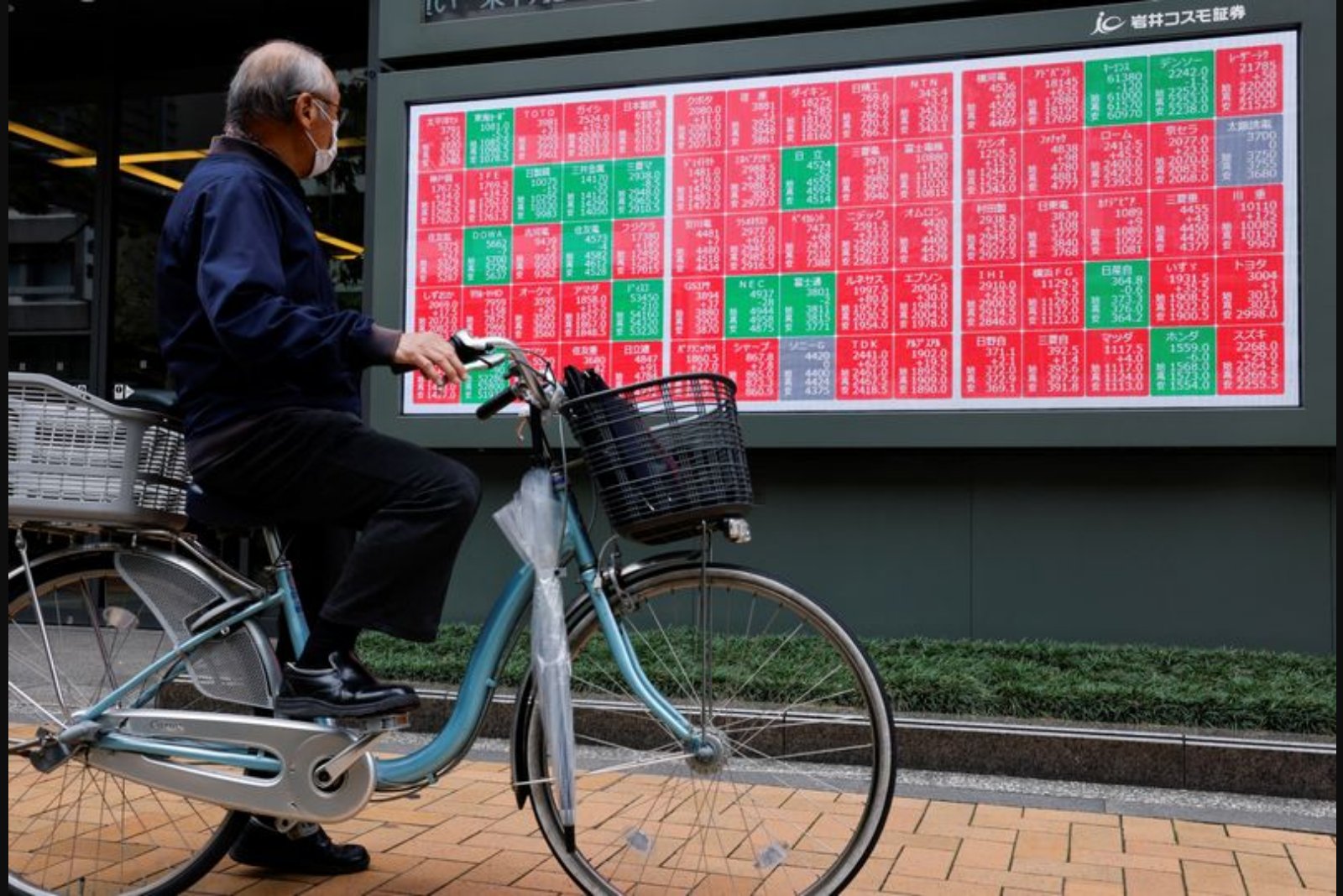
Asian equities advanced on Wednesday despite ongoing investor concern about the outlook for artificial intelligence. Japan's Nikkei 225 rose 1.4%, ending a three-day selling streak, and Australia's S&P/ASX200 gained 0.5%. Several major Asian markets - including mainland China, Hong Kong, Singapore, Taiwan and South Korea - remained closed for Lunar New Year holidays.
Sentiment in Asia built on a subdued session on Wall Street the previous day, where questions about the pace and winners of an AI-led investment cycle have unsettled investors. Futures hinted at modest gains in Europe ahead of the trading day, with Euro Stoxx 50 futures up 0.07%, DAX futures adding 0.06% and FTSE futures up 0.14% at 10,529. U.S. S&P 500 e-minis were also slightly positive, up 0.06% at 6,864.8.
Bonds and the dollar
U.S. Treasury yields edged higher in Asian trade, with the 10-year benchmark up 1.7 basis points at 4.0712% and the 30-year yield rising 1.6 basis points to 4.7011%. The U.S. dollar index held slightly firmer at 97.22 as investors weighed geopolitical developments and awaited the minutes from the Federal Reserve's January meeting, due later in the session for clues about the path of interest rates.
Major currencies showed mixed moves. The euro dipped 0.1% to $1.1843, while sterling steadied at $1.3555 after a 0.5% decline in the prior session. The yen strengthened by nearly 0.2% to 153.58 per dollar.
Central bank signals and the New Zealand dollar
The New Zealand dollar fell 0.8% to $0.5998 after the Reserve Bank of New Zealand left interest rates unchanged at 2.25% at its first meeting of the year and indicated that policy would likely remain accommodative for some time to support the economic recovery. The Australian dollar eased 0.2% to $0.7069.
Commodities - oil, gold and silver
Brent crude and West Texas Intermediate futures were up between 0.2% and 0.3% at $67.60 and $62.51 per barrel respectively, recovering from losses that pushed both contracts to more than two-week lows in the prior session. The bounce came after Tehran and Washington signalled progress in nuclear negotiations following talks in Geneva, with Iran's foreign minister saying the two sides had reached an understanding on main "guiding principles" toward resolving the dispute. That development eased concerns about a potential military escalation near the Strait of Hormuz that could have disrupted global oil flows.
Precious metals also saw gains. Gold, which opened the session lower, recovered and was trading about 1% higher at roughly $4,926 per ounce. Silver rose about 2.15% to around $74.94 per ounce.
AI-driven market volatility
Investor unease about the AI boom remains a factor for market volatility. Analysts at National Australia Bank summed up the challenge: "AI uncertainty remains a source of volatility, both in terms of the difficulty in assessing which AI companies will be the winners and losers but also what sort of impact will AI have in other companies and sectors of the economy." That mix of over-investment concerns and questions over labour market disruption has contributed to the recent choppiness in equities.
Japanese bond issuance outlook
Japan's finance ministry projects a significant rise in annual bond issuance in coming years as debt-financing needs climb. Estimates indicate issuance could increase by 28% three years from now, with up to 38 trillion yen to be issued in the fiscal year beginning April 2029 to plug a gap from expenditures exceeding tax receipts. That compares with 29.6 trillion yen in fiscal 2026.
Implications for markets
The combination of persistent AI-related uncertainty, shifting expectations around central bank policy, and evolving geopolitical developments tied to Iran-U.S. talks have driven a diverse set of moves across asset classes. Equities in Asia showed resilience on the session examined, while bond yields, currencies and commodities moved in response to policy statements and diplomatic signals.
Note: several Asian markets were closed for Lunar New Year holidays, which can influence regional trading volumes and price dynamics.