
SYDNEY, March 18 - Asian equity markets jumped on Wednesday as oil retreated from recent gains and traders refocused on an important U.S. Federal Reserve meeting that could reshape expectations for interest-rate paths. The move came despite escalating violence in the Middle East that has smashed regional stability and kept the Strait of Hormuz largely closed.
Hostilities in the region intensified after Israel killed Iran's security chief, and Iran renewed strikes on oil facilities in the United Arab Emirates. A senior Iranian official said the country's new supreme leader rebuffed de-escalation proposals relayed by intermediaries, indicating there is no obvious near-term end to the conflict that has created a global oil shock.
Nonetheless, oil benchmarks paused their rally on Wednesday. Brent crude futures fell about 1% to $102.28 a barrel, while U.S. West Texas Intermediate dropped roughly 1.6%. That relative cooling in oil proved to be a relief for equity investors across the region.
MSCI's broadest index of Asia-Pacific shares outside Japan rose 1.2% on the session. In Tokyo, the Nikkei rallied 2%. Mainland Chinese blue-chip stocks edged up 0.1% and Hong Kong's Hang Seng gained 0.3%.
Naturally, commentary from commodities strategists highlighted why crude may be temporarily contained despite the disruption at the Strait. Natasha Kaneva, head of global commodities research at JPMorgan, noted that a short-term buffer has emerged thanks to regional inventory builds, the composition of benchmarks and policy measures. She warned, however, that a prolonged closure of the Strait would eventually force Brent and WTI materially higher as Atlantic basin inventories are drawn down and the global market tightened.
The United Arab Emirates has signalled it may join a U.S.-led operation to protect shipping in the Strait of Hormuz, even as several Western nations have turned down U.S. President Donald Trump's calls for warships to escort oil tankers in the area.
In the United States, equity futures were slightly firmer after Wall Street's overnight gains. S&P 500 futures and Nasdaq futures both inched up about 0.2%, buoyed in part by expectations for robust results from Micron Technology. Investors said they would be watching the chipmaker's quarterly report for management commentary on inventory dynamics, chip shortages and pricing trends.
Focus shifts to the Fed and Chair Powell
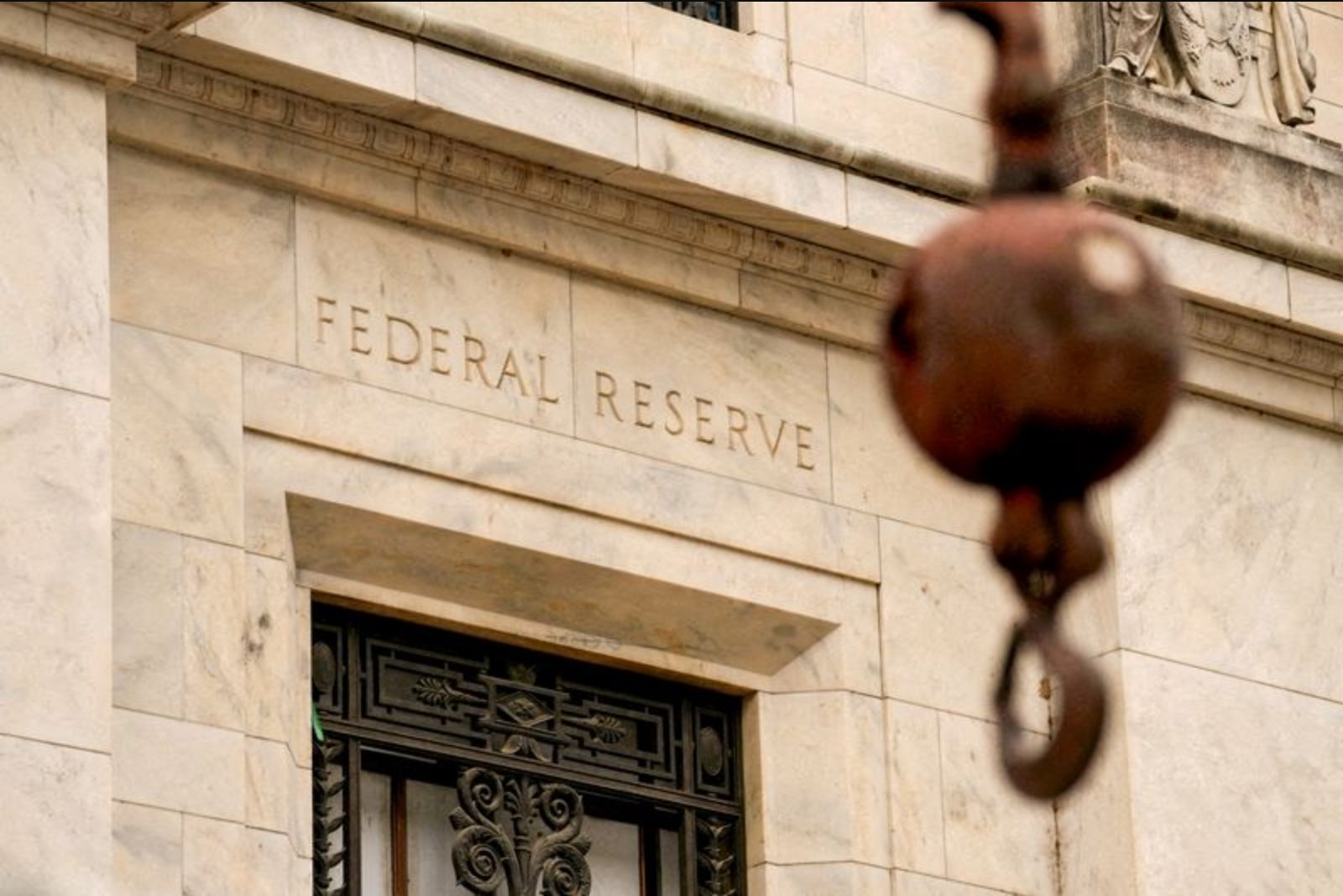
After the Reserve Bank of Australia opened a busy week for major central banks with a rate increase, markets turned their full attention to the U.S. Federal Reserve's policy meeting later in the day. Analysts will scrutinise the Fed's updated economic projections and the so-called dot plot, where the key risk is that the committee may remove expectations for rate cuts this year.
The Fed is widely expected to keep policy settings unchanged at this meeting, but debate centers on how the Iran conflict could influence growth and inflation. Policymakers must weigh the possibility that the disruption will either slow economic activity, lift inflation, or produce a complex mix of deceleration and higher prices.
Fed Chair Jerome Powell, who is due to step down as chair in May, will hold a press conference after the decision. Market participants will listen closely for any signals about whether he plans to remain on the Federal Reserve Board as a governor after his term as chair ends.
Tony Sycamore, an analyst at IG, said consensus still expects the median dot plot to show one 25-basis-point cut in 2026, in line with current market pricing. He added there is a meaningful possibility the dot plot could skew more hawkish - perhaps even showing no cuts - if the committee concludes the oil shock will cause inflation to be stickier.
The Bank of Canada also convenes later on Wednesday, where no change to policy is widely anticipated. Market pricing suggests the next move by the central bank will be up, with one rate hike fully priced in by year-end.
Fixed income and currencies
In currency markets, the U.S. dollar was softer, with the euro trading around $1.1539 after a 0.3% rise overnight. The Japanese yen steadied at approximately 159 per dollar, having strengthened for two consecutive days and moving away from the 160 level that has triggered official intervention in the past.
U.S. Treasuries saw modest support overnight, aided by a solid auction of 20-year Treasury bonds. Yields on 10-year Treasury notes were essentially flat at 4.2024%, having fallen about 2 basis points in the previous session.
Corporate earnings to watch
Investors are also focusing on corporate news flow for additional clues to demand and pricing trends. Micron Technology's results, due later in the day, are expected to spark interest in whether chipmakers are seeing improvements in shortages and how pricing is evolving in memory markets.
For investors monitoring individual stock valuations, the topic of whether shares like Micron are attractively priced remains a live debate among market participants, who use a variety of valuation approaches to assess potential upside and risk.
This market snapshot reflects trading and commentary from March 18 and is driven by developments in crude markets, geopolitical tensions in the Middle East, central bank policy schedules and forthcoming corporate earnings that together informed investor positioning across equities, bonds and currencies.