
Economy March 15, 2026

Asia-Pacific Partners Commit $57 Billion in Energy Deals with U.S. Firms, Burgum Says

Agreements signed in Tokyo cover 22 energy projects as U.S. officials push to broaden exports and shore up supply routes

By Marcus Reed
Asia-Pacific Partners Commit $57 Billion in Energy Deals with U.S. Firms, Burgum Says

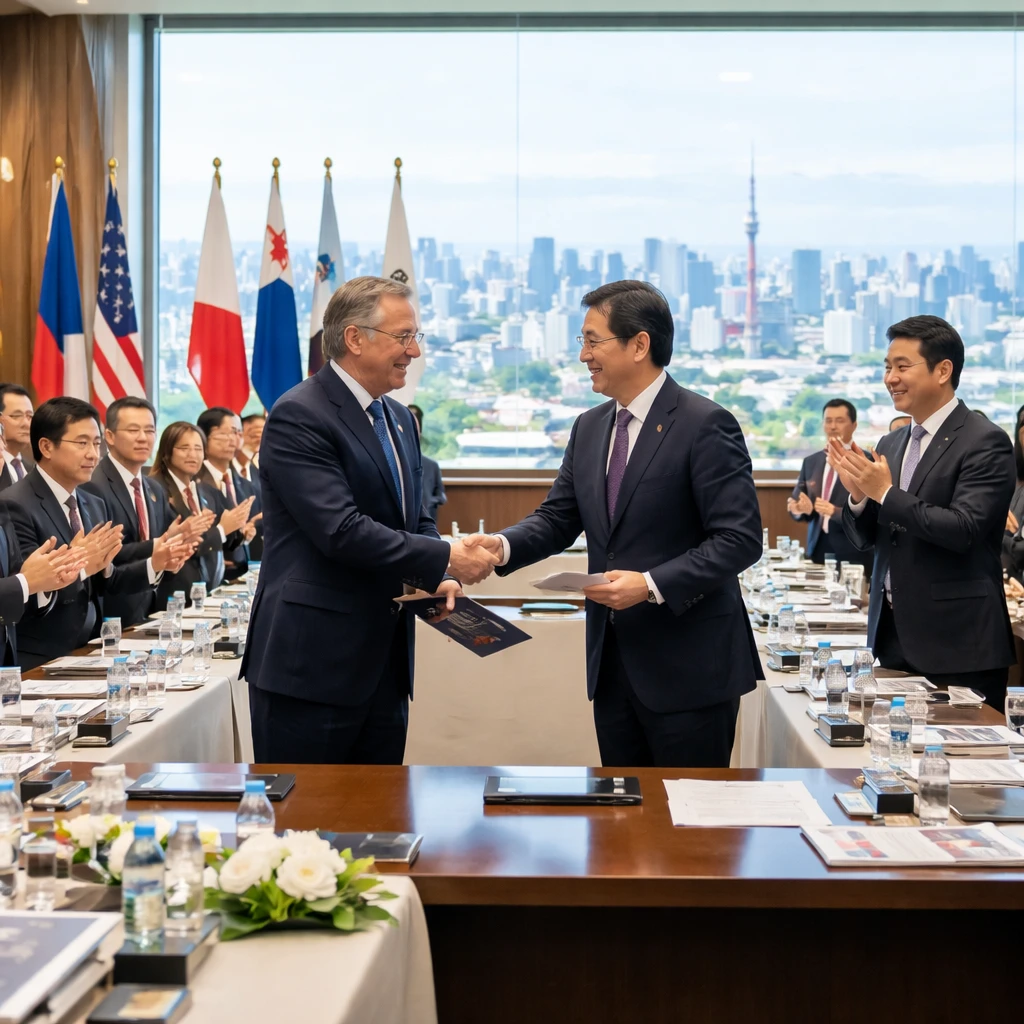
U.S. Interior Secretary Doug Burgum said Asia-Pacific allies reached $57 billion in agreements with American energy companies at the Indo-Pacific Energy Security Forum in Tokyo, covering 22 separate deals. The total was revised up from $56 billion after a post-conference agreement. Burgum emphasized efforts to expand U.S. energy exports to reduce reliance on rival suppliers and highlighted Japan's role in securing oil flows and coordinating reserve releases.

Key Points

  • Asia-Pacific allies and U.S. energy companies agreed to $57 billion in deals at the Indo-Pacific Energy Security Forum in Tokyo; the package covers 22 separate agreements.
  • The total rose from $56 billion to $57 billion after an additional agreement was finalized following the conference's close.
  • U.S. officials aim to expand energy exports to friendly nations to reduce dependence on rival suppliers; Japan is a potential purchaser of more U.S. oil and has played a role in coordinating strategic reserve releases.

U.S. Interior Secretary Doug Burgum told viewers on Fox News' Sunday Morning Futures that delegates at the Indo-Pacific Energy Security Forum in Tokyo finalized $57 billion worth of deals with U.S. energy companies.

According to Burgum, the package comprises 22 separate agreements reached during the forum held in Tokyo this weekend. He said the aggregate value of the investments was adjusted upward from an earlier $56 billion figure after an additional agreement was completed following the formal close of the gathering.

Speaking about the broader objective of the forum, Burgum described the accords as part of a wider push to strengthen energy ties between the United States and its Asia-Pacific partners. He said Washington's aim is to expand energy exports to friendly nations so they are not dependent on rival suppliers.

Burgum singled out Japan as both a key participant and potential buyer, saying Tokyo is considering purchasing more U.S. oil. He linked Japan's strategic interest to its reliance on oil shipments transiting the Strait of Hormuz, noting that that dependence illustrates why a strengthened bilateral energy relationship with the United States matters.

In Burgum's remarks, Japan's leadership role extended beyond procurement. He said Tokyo has been active in coordinating releases of strategic oil reserves to help stabilize markets, a function he presented as complementary to efforts to diversify and secure supply sources.


Details provided by Burgum were limited to the total value, the number of deals, and the broader policy aims discussed publicly during the interview. He conveyed that the post-conference adjustment to the dollar total reflected a late-stage deal completion, but he did not provide further breakdowns of the projects or the firms involved.

The announcements underscore a diplomatic and commercial focus on energy security among the United States and its Asia-Pacific partners, with particular attention on export channels and tactical reserve management as tools to address supply concerns.

Risks

  • Reliance on oil shipments through the Strait of Hormuz presents a vulnerability for countries like Japan, highlighting supply-route risk for markets and logistics operators.
  • Dependence on rival suppliers remains a concern that the agreements aim to address, indicating ongoing geopolitical risk to energy-importing economies.
  • Market instability necessitating coordinated releases of strategic oil reserves suggests persistent volatility in global energy markets that could affect energy and shipping sectors.

More from Economy

UBS Says Volatility Alone Is No Justification for Exiting Stocks Mar 15, 2026 European Insurers' Private Credit and Equity Holdings Appear Contained, BofA Says Mar 15, 2026 IEA: Governments Pledge 271.7 Million Barrels from Strategic Reserves to Relieve Oil Market Strain Mar 15, 2026 Persistent oil shocks could sap U.S. consumer demand if supply disruptions continue Mar 15, 2026 Gulf markets retreat as Iran conflict moves into third week Mar 15, 2026