
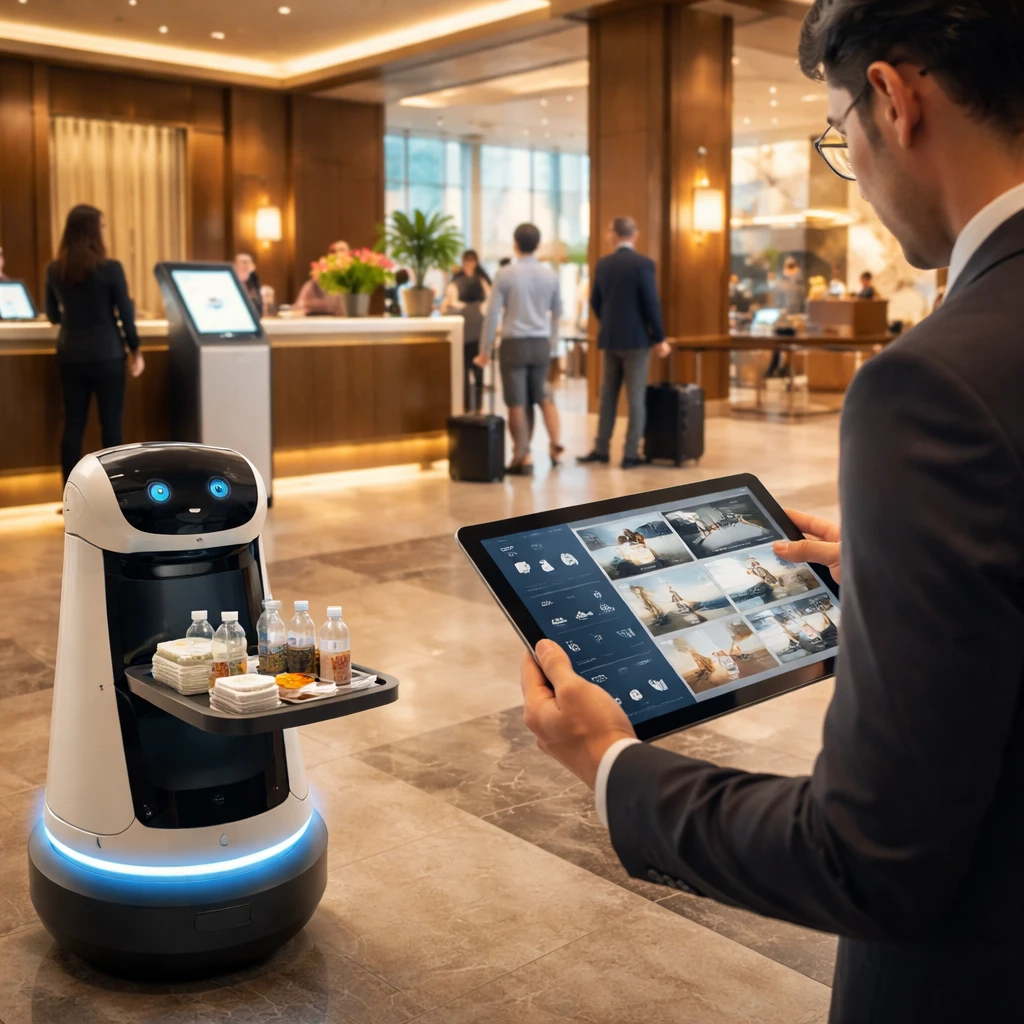
Artificial intelligence stands to change how hotel stays are structured and managed, potentially giving guests highly tailored experiences and creating fresh revenue opportunities for operators, according to a report by Bernstein.
While AI has already altered how travelers discover and plan trips online, the experience of booking and staying in a hotel has seen limited change to date. The Bernstein report argues that developments in hotel technology and the emergence of AI agents could usher in a new phase of personalization, enabling guests to configure room details, amenities and services ahead of arrival.
Under this vision, guests would be able to select specific room attributes such as floor level or view, decide on pillow types or the contents of a minibar, schedule spa appointments, or arrange transportation and dining in advance. AI agents could make many of these selections automatically by drawing on a traveler’s past stays and stated preferences, sparing guests from wading through dozens or hundreds of individual options.
The report notes that some personalization is already available in high-end properties, where patrons can request particular pillows or have services arranged prior to check-in. What AI promises is a dramatic expansion of those capabilities through automation and behind-the-scenes coordination of multiple service elements.
Realizing that potential will require changes to core hotel technology. Today’s booking and property management systems typically organize inventory by broad room types rather than detailed attributes, which constrains how much customization can be offered at booking. Transitioning to attribute-based inventory systems would allow hotels to price dynamically and manage personalized options in a more granular way.
Major hotel groups are reportedly investing in updated technology stacks to support such features. Bernstein cites hotel companies that are developing systems to capture finer room characteristics and to surface customization options during the booking process.
The report also highlights a distribution angle: AI-driven personalization may strengthen hotels’ direct booking channels. Because hotels retain control over the most detailed information about their inventory and services, they could limit the data they share with online travel agencies, which may give direct channels an advantage for selling customized experiences.
Over time, the reach of AI-powered property management could extend beyond luxury segments, according to Bernstein, particularly if automation tools such as service robots and better-integrated hotel systems reduce the labour intensity of delivering bespoke services. The report links wider adoption to the extent automation can lower the operational burden of personalization.
Implications at a glance
- AI and attribute-based inventory systems could enable fine-grained customization and dynamic pricing.
- Investment in hotel technology stacks is already under way among large hotel groups to support these capabilities.
- Direct booking channels may benefit if hotels choose to withhold detailed inventory data from intermediaries.