
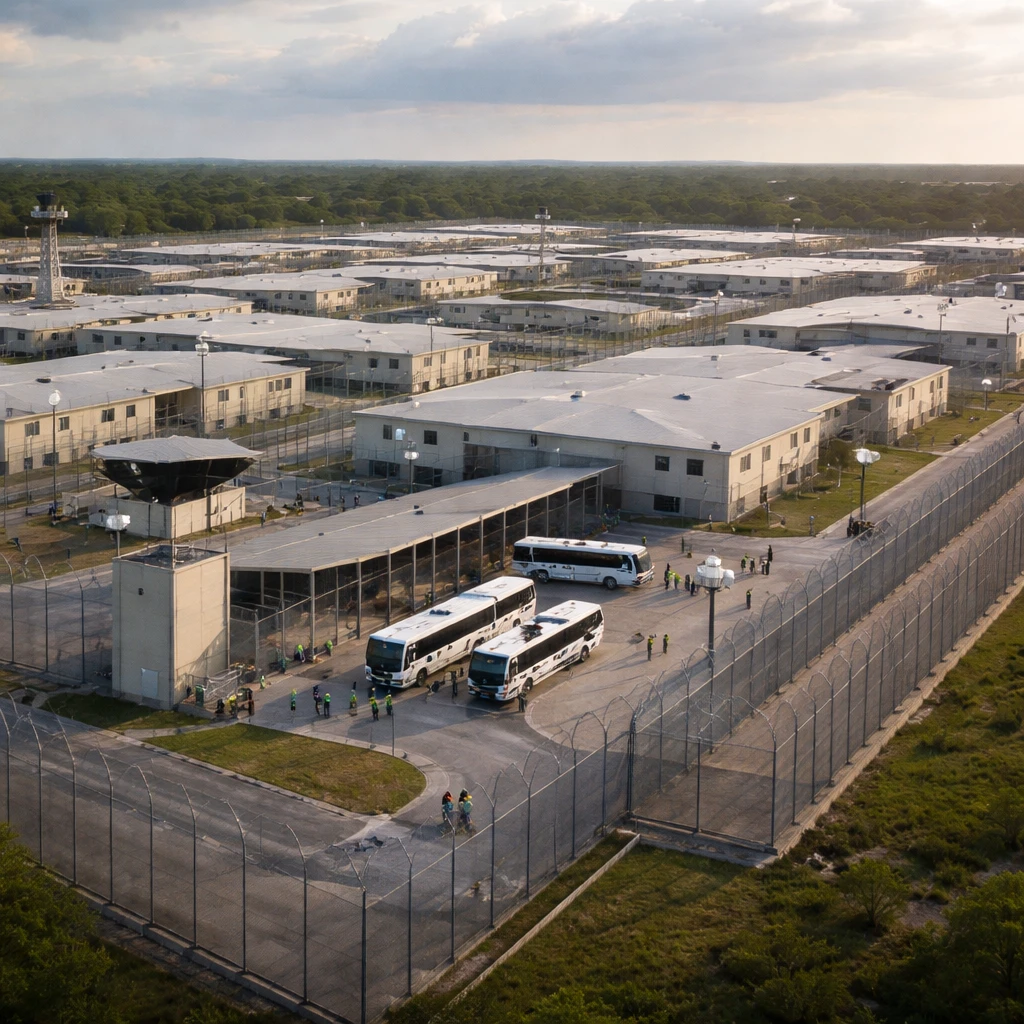
The administration has released details of a $38.3 billion plan designed to rework the U.S. immigration detention system, with an eye toward expanding capacity and speeding up removals. The proposal, called the Detention Reengineering Initiative (DRI), sets out a multi-pronged approach that combines new construction, renovations and the takeover of existing sites.
According to documents posted on the New Hampshire government website, the DRI would fund the acquisition and renovation of eight large-scale detention centers, the establishment of 16 processing sites and the assumption of control over 10 existing "turnkey" facilities where Immigration and Customs Enforcement (ICE) already operates.
Under the plan, the largest detention complexes could hold as many as 10,000 people each, with a primary focus on international removals. Overall capacity across the detention network would grow by 92,600 beds. Officials expect the program to be fully implemented by November 30, 2026.
Funding for the initiative would come from a congressional allocation included in the One Big Beautiful Bill Act, the documents state. The administration says the model will reduce the total number of contracted detention sites while expanding overall capacity, aiming to create what it describes as a more efficient detention network.
ICE has already increased its operational workforce, adding 12,000 new law enforcement officers through a surge hiring effort. The agency asserts that the enhanced detention capacity is necessary to support anticipated enforcement operations and arrests in 2026.
The plan envisions two primary facility types:
- Regional Processing Centers - Facilities designed to hold between 1,000 and 1,500 detainees for short stays, typically three to seven days, serving as staging locations for transfers or removals.
- Large-Scale Detention Facilities - Sites intended to accommodate 7,000 to 10,000 detainees with average stays of less than 60 days, serving as primary locations for international removals.
Operational requirements for the new sites, as described in the documents, include provisioning basic necessities such as food, clothing and hygiene items. Medical care coordination would be managed with the ICE Health Services Corps. The facilities would also incorporate spaces intended for legal access, religious activities and communication services.
Clear summary
The DRI proposes a $38.3 billion expansion and reorganization of the immigration detention system, adding 92,600 beds via renovated, acquired and repurposed facilities, and creating short-stay processing centers and large-scale detention sites. The program is to be funded through Congress' One Big Beautiful Bill Act and aims for full implementation by November 30, 2026.
Key points
- The initiative would add 92,600 beds and include eight renovated large-scale centers, 16 new processing sites and control of 10 existing turnkey facilities.
- ICE has increased staffing by 12,000 officers in a surge hiring effort; officials say more detention capacity is needed to support expected enforcement actions in 2026.
- Facilities would provide basic needs and coordinated medical care through ICE Health Services Corps, and include spaces for legal access and religious activities.
Risks and uncertainties
- Implementation depends on congressional funding provided through the One Big Beautiful Bill Act, creating fiscal dependency on that allocation.
- The timeline aims for full implementation by November 30, 2026, which presents scheduling and execution risks for acquiring, renovating and bringing large facilities online.
- The plan is tied to anticipated enforcement operations and arrests in 2026; changes in enforcement levels would affect utilization and operational planning.