
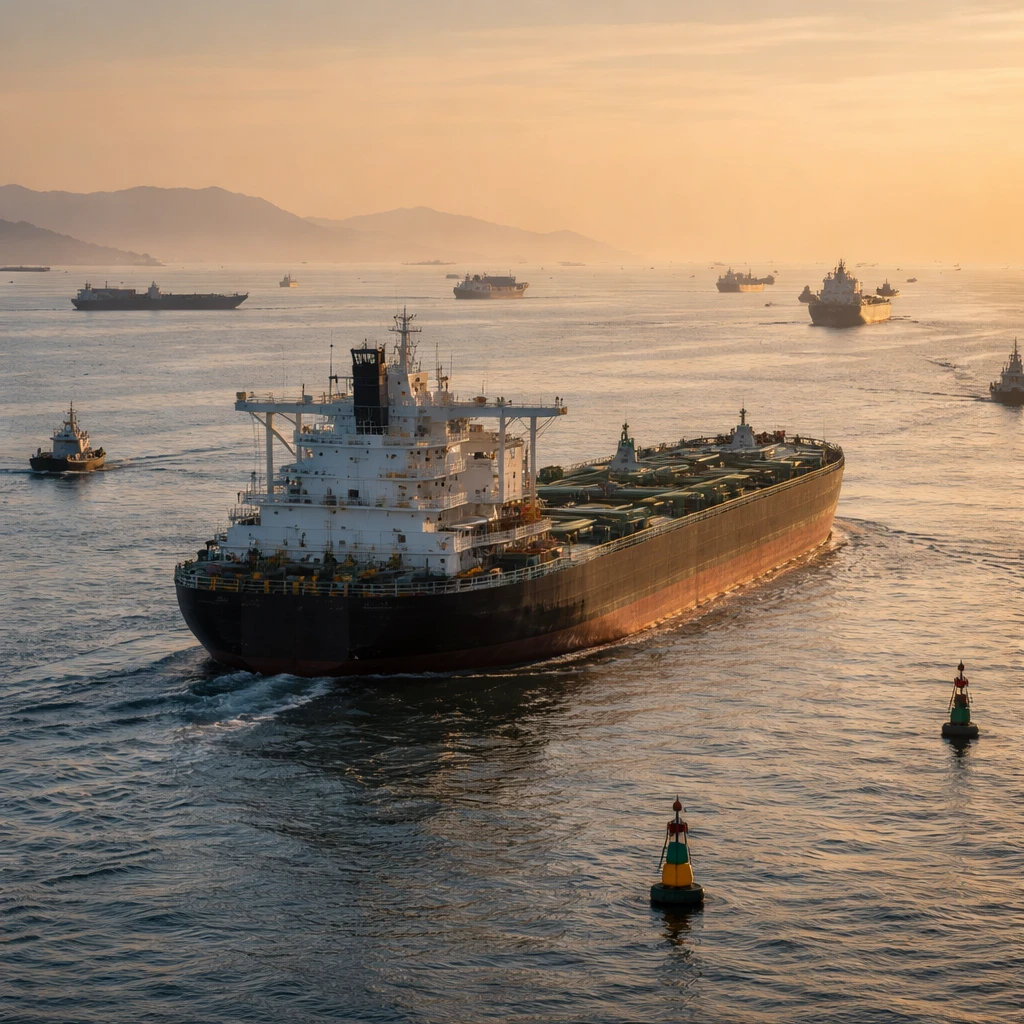
In a cautious assessment of the economic fallout from the Middle East confrontation, the Asian Development Bank's chief economist said the immediate macroeconomic hit to developing Asia would be limited if the turmoil and any closure of the Strait of Hormuz last only about a month. The view aligns with certain U.S. projections and suggests the region would see only a slight and short-lived downward blip in annual GDP.
"Most of the scenarios ... suggest that the impacts will be, of course, negative, but relatively modest," Albert Park told Reuters in an interview. He added that even under pessimistic assumptions the shock would not shave a full percentage point off regional growth.
Developing Asia comprises 46 economies, from major markets like China and India to smaller states such as Georgia and Samoa, while excluding Japan, Australia and New Zealand. Park emphasised that the scale of the region's exposure depends heavily on the duration of the disruption.
Should the conflict extend beyond initial expectations, Park warned of a sharp escalation in risks. Extended fighting or prolonged closure of key maritime chokepoints could lift energy prices, create wider disruptions to shipping and trade, dampen global demand, and inject greater volatility into financial markets. He underlined the region's vulnerability by noting that 80% of the oil and gas transiting the Strait of Hormuz is destined for Asia.
Park also flagged secondary transport effects. A protracted crisis could spill into air travel and cargo routing, adding to existing constraints related to restrictions over Russian airspace and increasing pressure on economies reliant on tourism and trade.
Before the emergence of the current conflict, the ADB expected growth in developing Asia to slow to 4.6% this year, down from a projected 5.1% in 2025. It also anticipated a modest rise in inflation to 2.1% for the year compared with a 1.6% estimate for the prior year. Park said those baseline forecasts now carry additional uncertainty, particularly if financial conditions deteriorate.
Heightened uncertainty has prompted a flight to safety into U.S. dollar assets, pushing the dollar higher and exerting downward pressure on Asian currencies. Park noted the potential feedback loop: weaker local currencies would raise the cost of imported oil for many economies in the region.
If capital flows become disorderly, Park said policymakers may need to act to prevent broader disruption. "If financial disruption becomes disorderly, then our advice is for central banks to think about stabilising markets," he said. "Not trying to target prices on exchange rates or anything like that, but certainly to try to stabilise both exchange rate markets and also possibly inject some liquidity if the financial conditions change quickly and create certain credit pressures."
The ADB chief economist's remarks underscore a dual message: a relatively contained near-term impact if disruption is brief, and a markedly higher risk profile for growth, inflation, trade and financial stability if the conflict endures.
Summary
The ADB's chief economist estimates a one-month closure of the Strait of Hormuz and a short Middle East conflict would produce a modest, temporary dent in developing Asia's GDP. However, if disruptions persist, the region faces higher energy costs, trade and transport interruptions, currency pressures, and potential market instability that could prompt central bank intervention.