
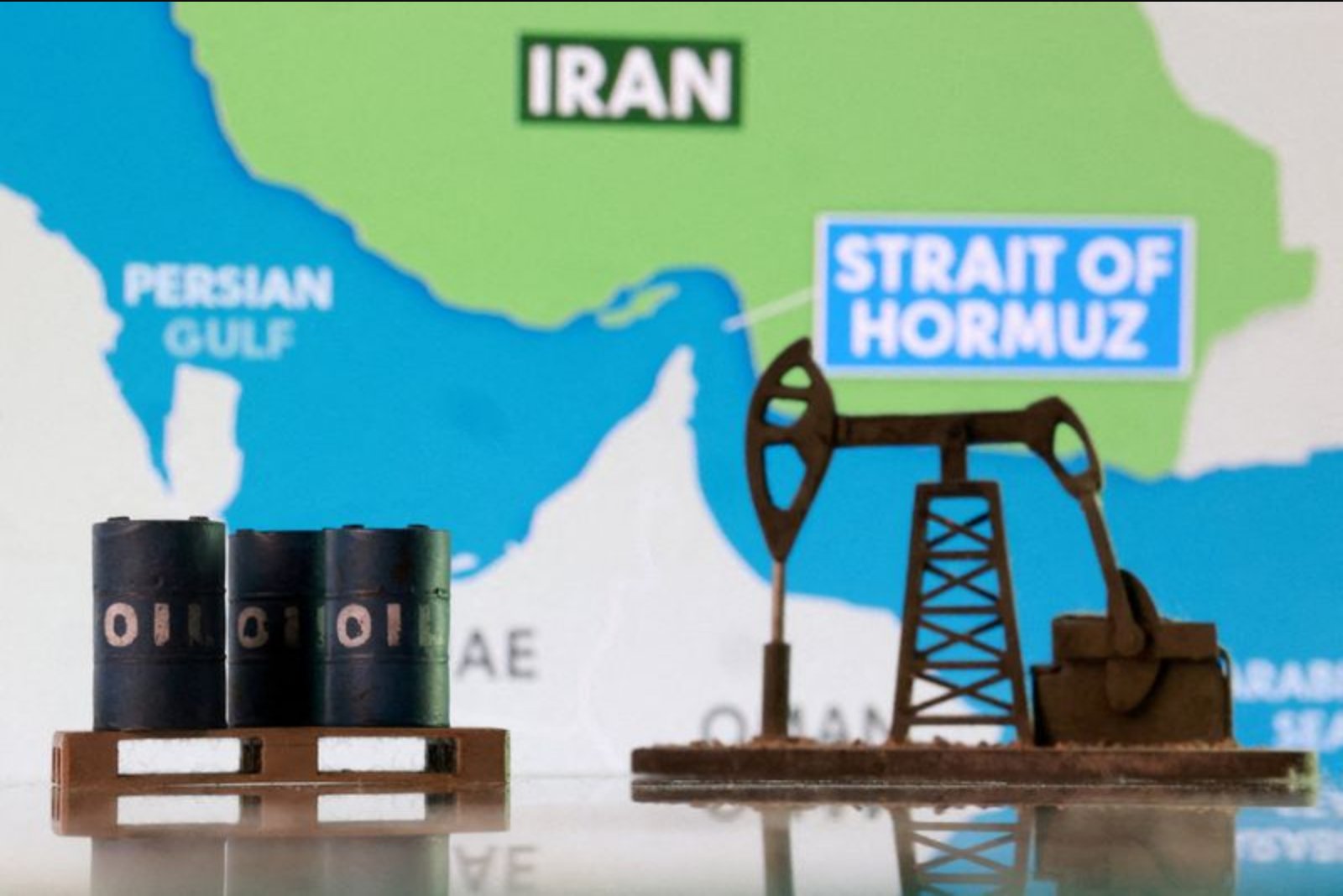
The intensifying conflict around Iran and a resulting jump in energy prices threaten to stress emerging market economies in ways that go beyond higher consumer prices, analysts caution. They say the shock could erode external balances, weaken currencies and prompt shifts in capital flows if it persists.
Several brokerages, including J.P.Morgan and Bernstein, have warned that Brent crude could climb above the $100 per barrel threshold should the conflict continue. Tehran has vowed to close the Strait of Hormuz and said it would fire on any ship trying to pass the crucial shipping route for oil and gas - a step that would deepen supply fears.
Commodity markets reacted sharply to the tensions. Brent crude futures were up $5.63, or 7.2%, at $83.36 a barrel by 1254 GMT after touching their highest since July 2024 at $85.12. The move came as the U.S. and Israeli air campaign expanded, with Israel attacking Lebanon and Iran responding with strikes against energy infrastructure in Gulf countries and against tankers in the Strait of Hormuz.
Financial markets have felt the strain. Both emerging market equities and currency indexes fell to three-week lows as investors sought refuge in the U.S. dollar. Analysts say such shifts in sentiment and asset flows can amplify the economic impact of higher oil prices for vulnerable countries.
ING analysts quantified the potential damage to external positions, noting that "a mere 10% rise in oil prices can deteriorate current account balances (for emerging markets) by 40-60 basis points. Prolonged increases would only deepen these deficits." In their assessment, Thailand, South Korea, Vietnam, Taiwan and the Philippines stand out as the most exposed in the region.
The economic exposure differs across large Asian economies. Analysts said higher crude poses only a limited risk to China unless the shock is prolonged or escalates sharply, while India would be among the most exposed to a sustained supply disruption because of its thin oil reserves.
Goldman Sachs provided a regional estimate of the macro effects, projecting that a supply-driven jump in Brent crude from $70 to $85 would add roughly 0.7 percentage points to inflation across emerging Asia and subtract about 0.5 percentage points from economic growth. The bank also said such a price move would widen current account deficits across almost every economy in the region, particularly Thailand, Singapore and South Korea.
Beyond macro estimates, Citigroup warned of a broader risk to policy credibility, saying a prolonged oil shock could "aggressively de-anchor" inflation expectations across emerging markets. The bank singled out low-reserve countries - Argentina, Sri Lanka, Pakistan and Turkey - as facing heightened risks of capital outflows and currency slides.
Against this backdrop of mounting risk, J.P. Morgan’s analysts adjusted their stance on regional foreign exchange, moving EMEA emerging market FX to "marketweight" and adding Poland’s zloty to their list of "underweight" currencies. That change underscores how currency risk is already being repriced in response to geopolitical developments and shifting commodity prices.
Analysts stress that the evolving situation and the scale of any sustained oil shock will determine how deep and broad these pressures become. For now, the combination of supply fears, market flows and reserve positions is widening the list of potential vulnerabilities across emerging markets.