
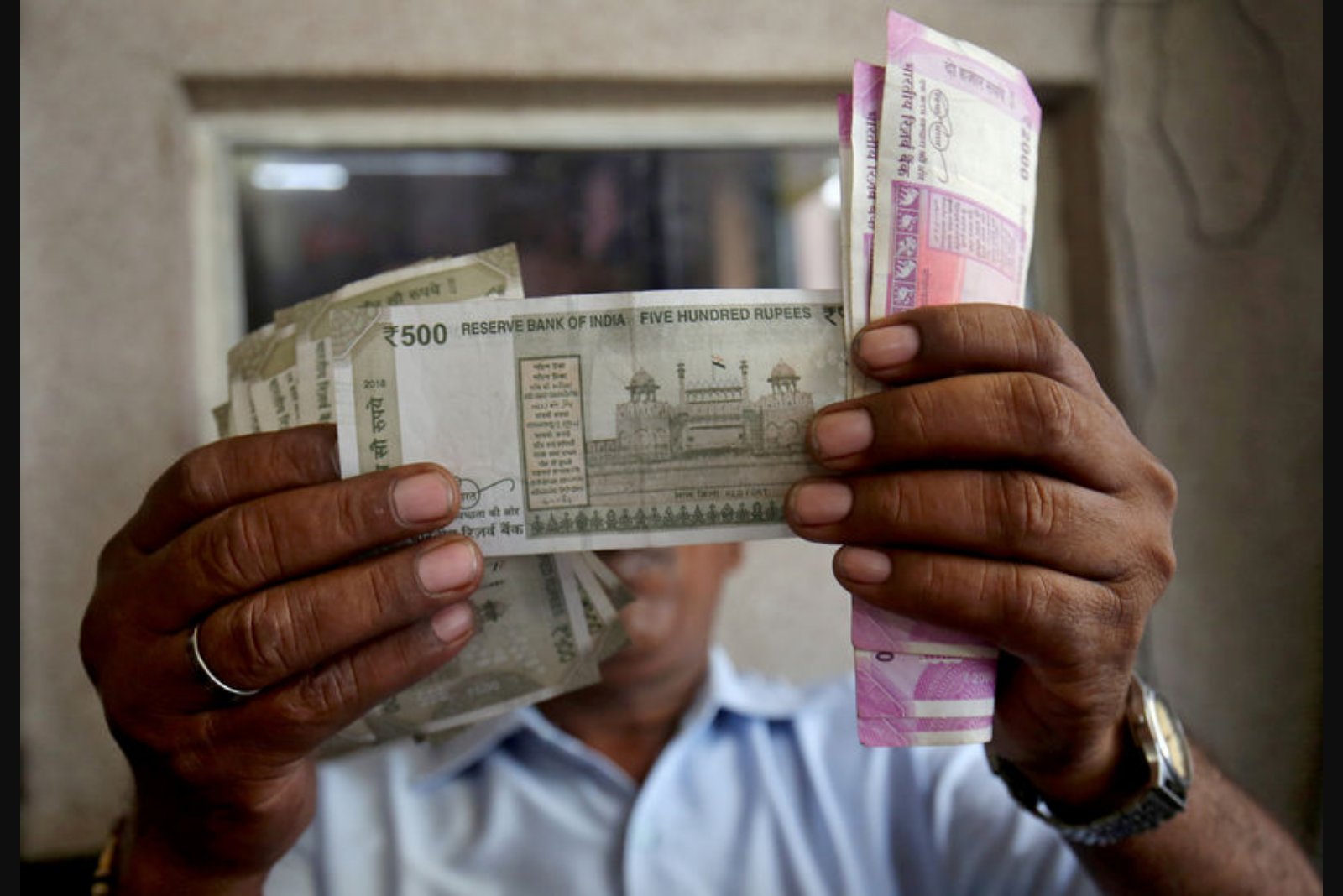
The Indian rupee hit an all-time low against the U.S. dollar on Wednesday as a surge in oil prices and heightening worries over the Iran conflict prompted significant foreign capital outflows from Indian markets.
The USD/INR exchange rate - which measures how many rupees are needed to buy one U.S. dollar - climbed to a record high of 96.8650 rupees, marking the seventh consecutive session in which the pair set a fresh record.
Market participants pointed to a spike in global oil prices this week as a primary source of pressure on the currency. The increase in crude came as the standoff between the U.S. and Iran in the Strait of Hormuz showed few signs of abating, even though officials in Washington indicated there had been some progress in negotiations.
Although oil prices eased somewhat on Wednesday, crude remained more than 50% above late-February levels. That jump in energy costs has been particularly detrimental for India, which imports over 80% of its crude oil requirements, leaving the rupee vulnerable to swings in global oil markets.
The currency has weakened by roughly 6% since the outbreak of the conflict, placing it among the weakest performers in Asia over the period.
Concerns about the conflict's inflationary effects and the economic uncertainty it has generated have also weighed on broader Indian capital markets. Government data show foreign investors have withdrawn between $22 billion and $25 billion from Indian equities and bond markets since late-February.
These outflows have unfolded alongside a wider selloff in global bond markets. In the United States, Treasury yields rose to multi-year highs in May, reflecting a broader repricing across fixed-income markets that has coincided with investor risk aversion.
Key points
- USD/INR hit a record high of 96.8650 rupees, the seventh straight session of new highs.
- Oil prices spiked this week amid a U.S.-Iran deadlock in the Strait of Hormuz and, despite a partial cooling, remain over 50% higher than in late-February.
- Foreign investors have withdrawn between $22 billion and $25 billion from Indian stocks and bonds since late-February, according to government data.
Risks and uncertainties
- Persistently high oil prices - which are inflationary for India due to its dependence on oil imports - could further weaken the rupee and pressure domestic inflation.
- Continued capital outflows from foreign investors could amplify volatility in Indian equity and bond markets.
- Escalation or prolonged tension in the Strait of Hormuz could sustain or increase risk premia in global markets, extending pressure on currencies like the rupee.